Wikimedia Commons • Public Domain
Hope
StyleSymbolism
Artwork Details
Cite or Embed This Work
APA · MLA · Chicago1-click academic citation and embeddable “On View” museum badge for articles, syllabi, and research.
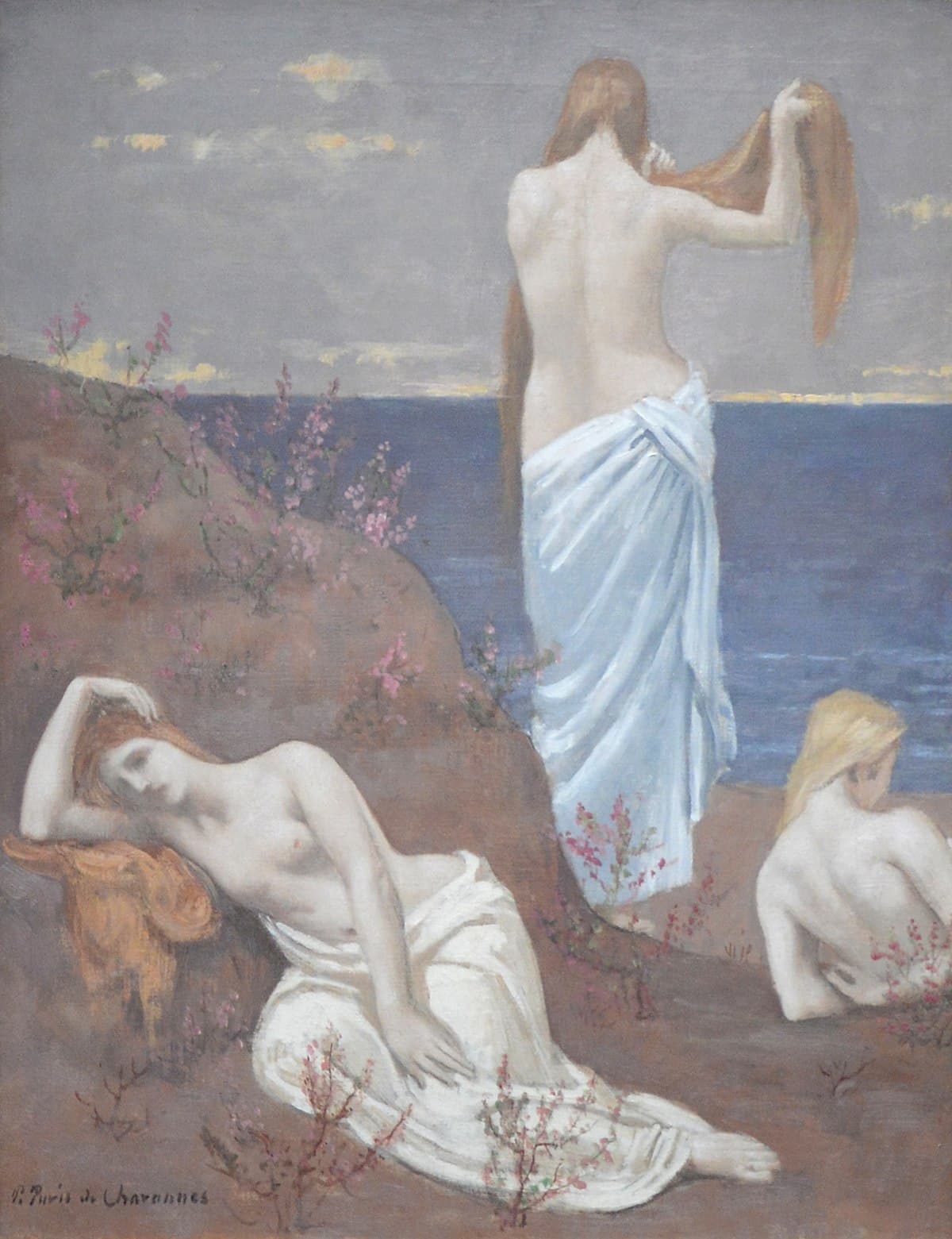
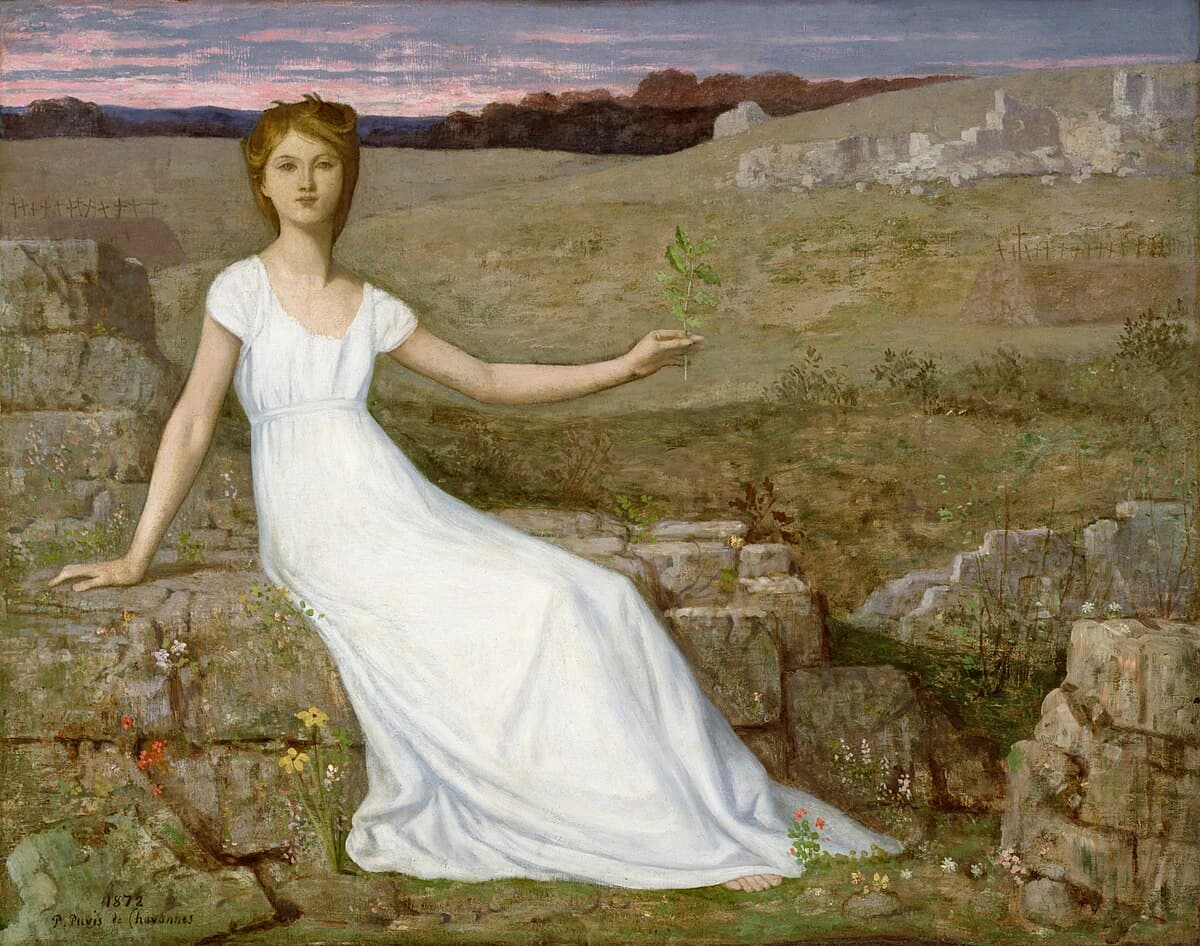
Pierre Puvis de Chavannes completed this Symbolist allegory in 1872, responding to France's devastating defeat in the Franco-Prussian War. A young woman sits on a burial mound covered with white drapery, holding an oak branch. Behind her, a desolate landscape shows ruined buildings and makeshift grave crosses.
Yet flowers grow through stones, and light glimmers on the horizon. The painting spoke to a traumatized nation, offering hope without false optimism. Puvis exhibited it at the 1872 Salon. The simplified forms and muted palette influenced younger artists; Gauguin kept a reproduction in Tahiti and featured it in his painting Still Life with Hope. A smaller, nude version exists at the Musée d'Orsay. This clothed version measures 102.5 x 129.5 cm and hangs at the Walters Art Museum in Baltimore.