Public Domain
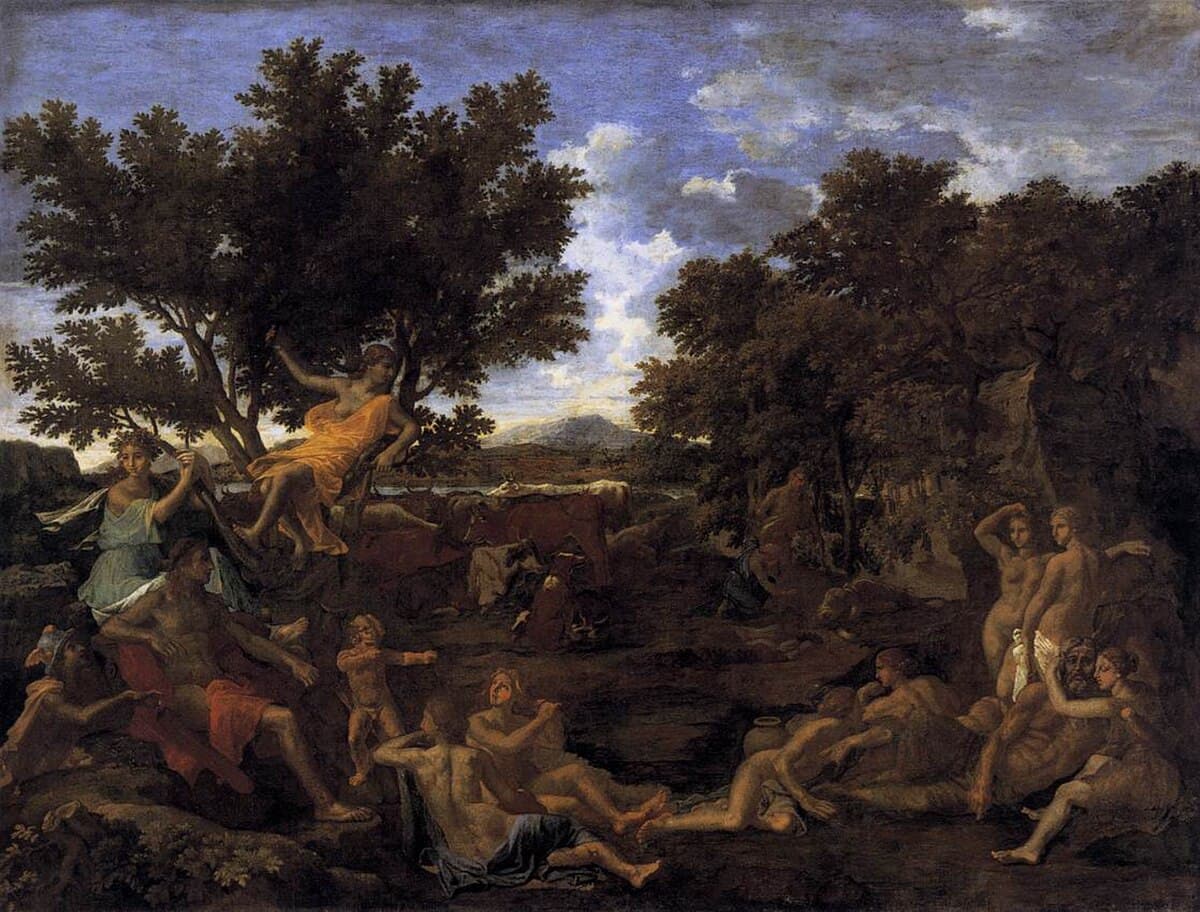
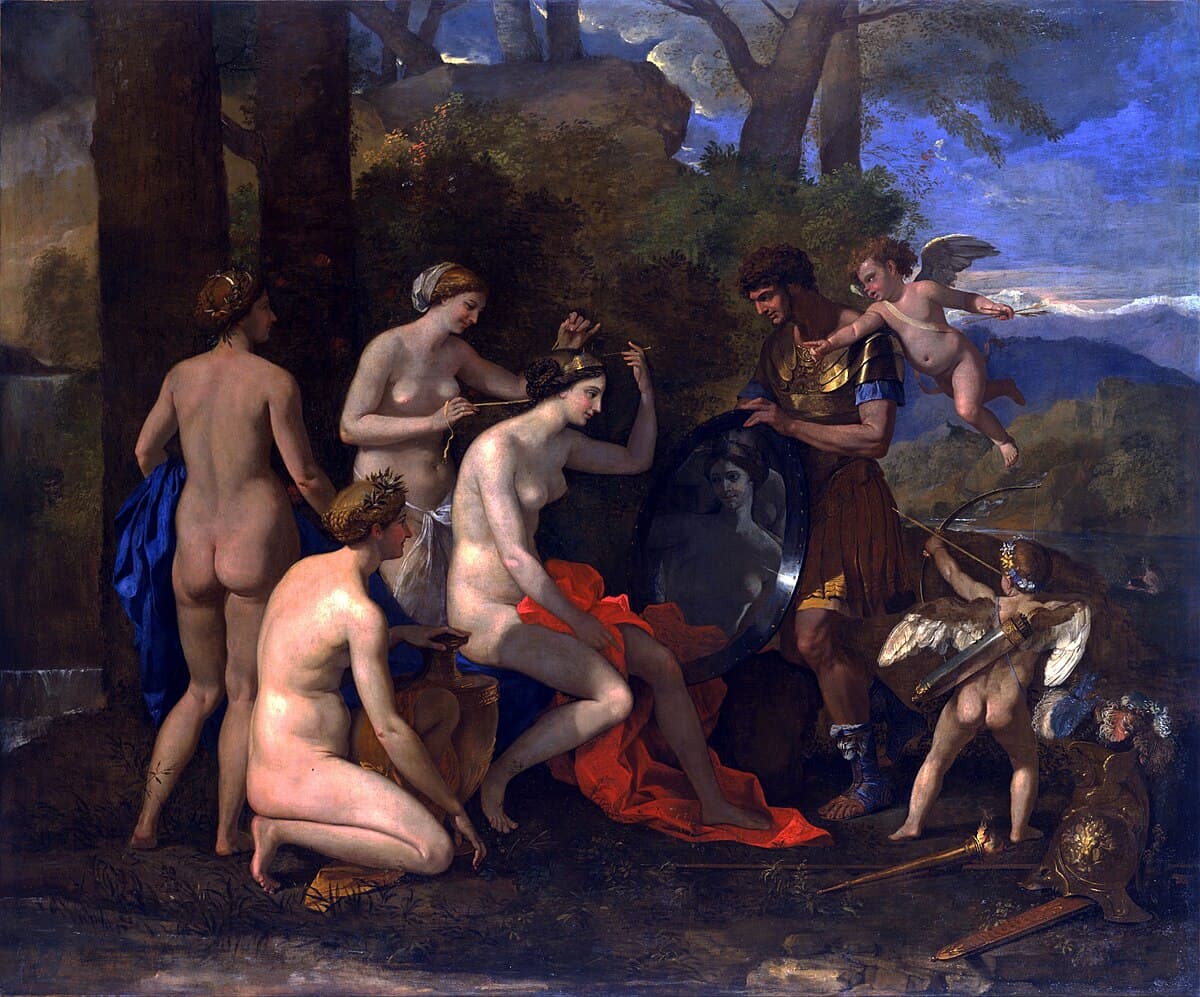
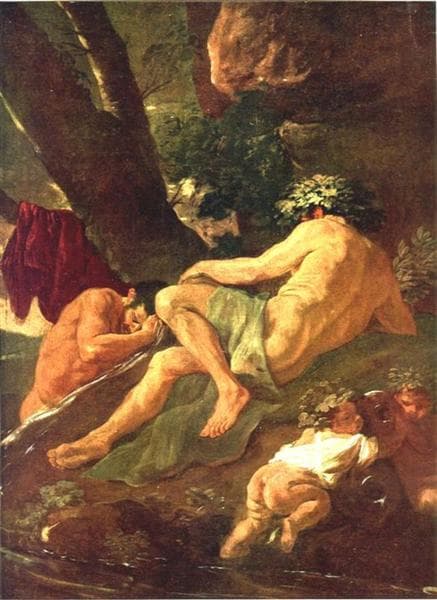
Midas washing at the source of the River Pactolus
StyleBaroque
Artwork Details
Cite or Embed This Work
APA · MLA · Chicago1-click academic citation and embeddable “On View” museum badge for articles, syllabi, and research.
Nicolas Poussin completed this mythological scene around 1627, shortly after arriving in Rome. The subject comes from Ovid's Metamorphoses: King Midas, who had unwisely wished that everything he touched turn to gold, washes in the River Pactolus to reverse what had become a deadly curse. The god Bacchus had originally granted the wish in gratitude for Midas protecting his encourage-son Silenus.
Poussin shows Midas as the smaller, humbled figure behind a classical reclining river god who personifies the Pactolus. Two putti with jugs point to the river's source and to Bacchus as the god of wine. The composition treats the story as an allegory of vanity, showing the consequences of desiring wealth above all else.
This was among the first works Poussin completed in Rome and among the first paintings acquired by The Metropolitan Museum of Art in 1871. The painting may be one originally owned by Cardinal Camillo Massimi, a close friend and patron of Poussin interested in Stoic philosophy. A version also exists at the Musée Fesch in Ajaccio, Corsica.