Wikimedia Commons • Public Domain
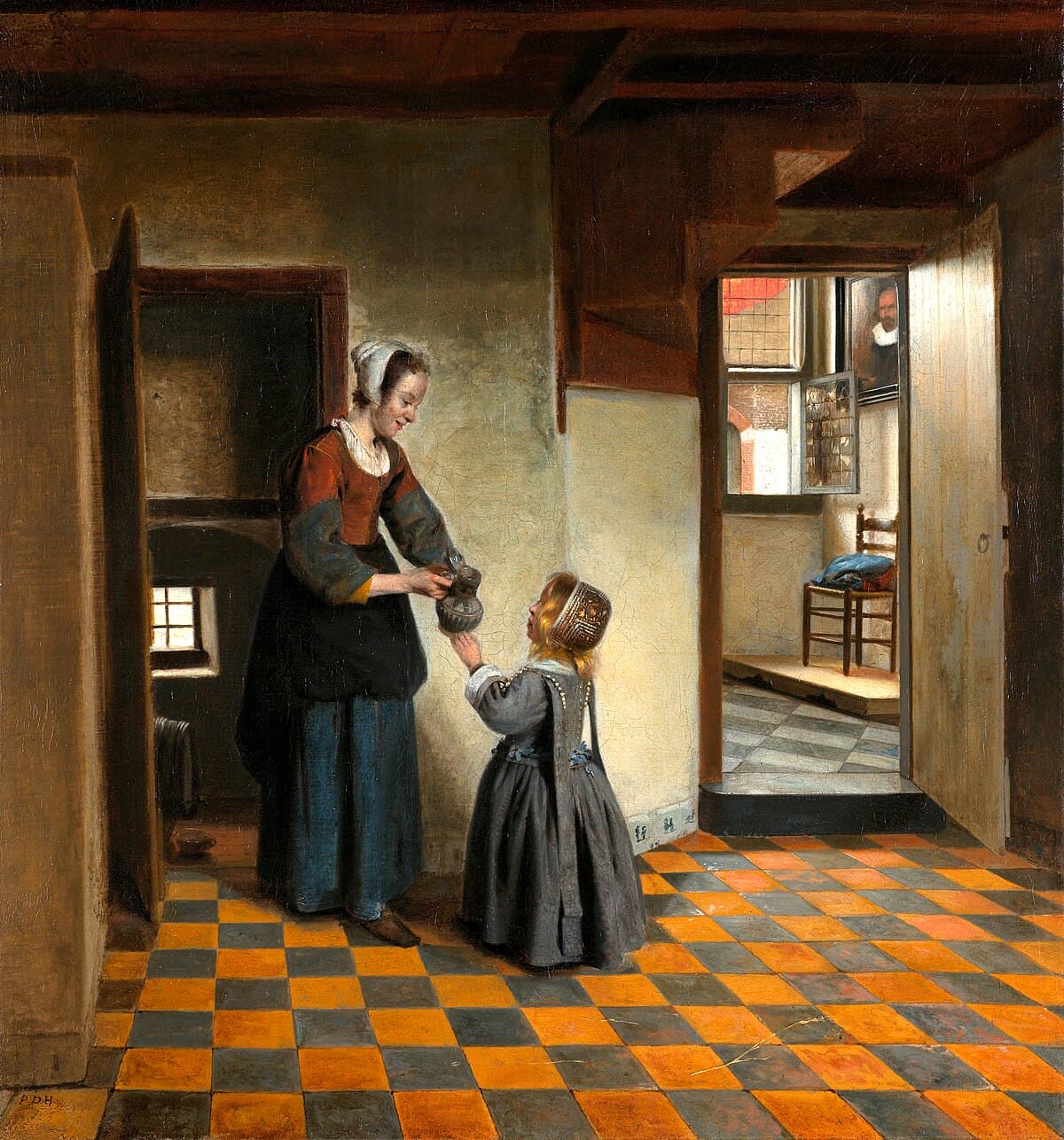
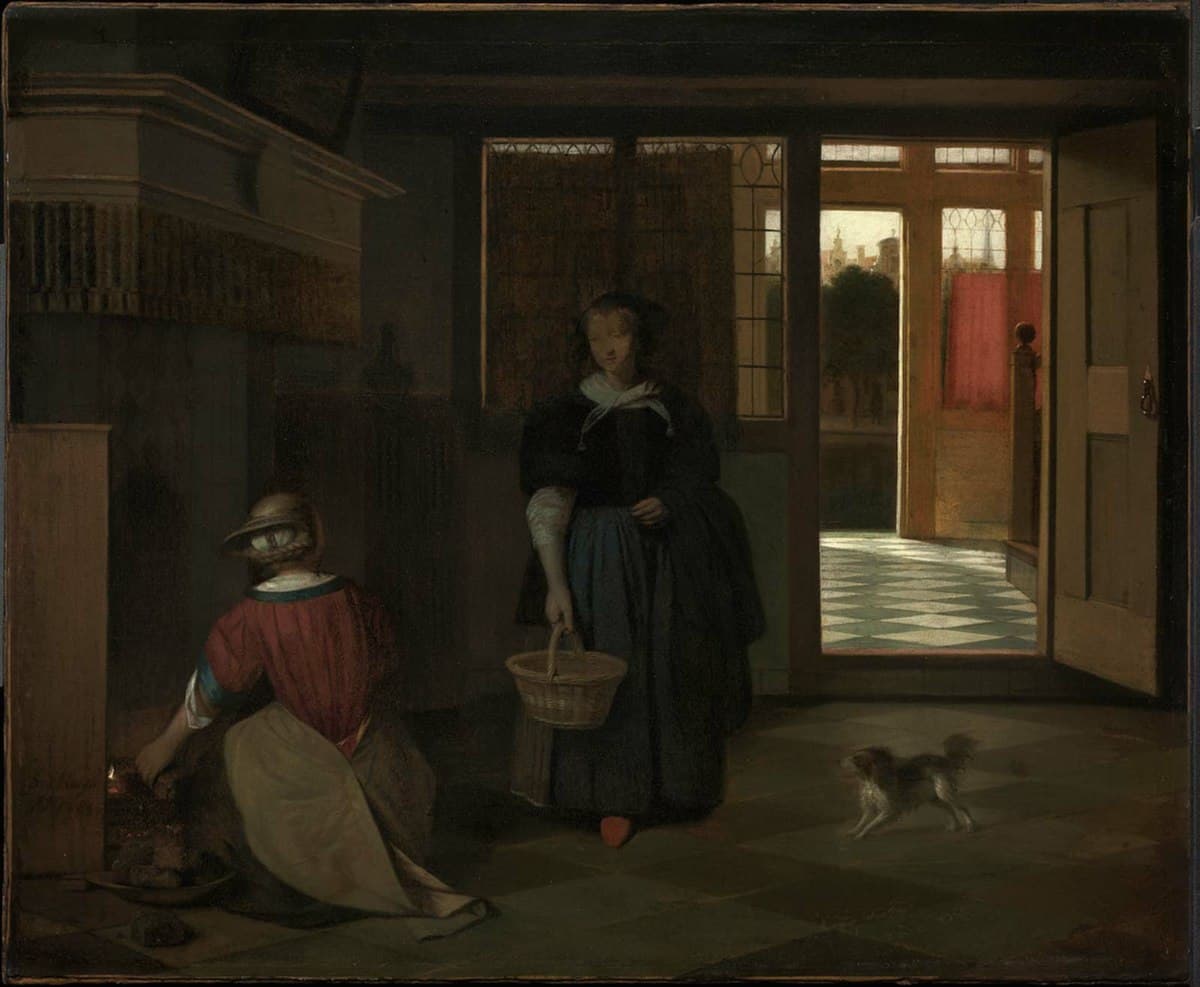
Interior of a Dutch House
Artwork Details
Cite or Embed This Work
APA · MLA · Chicago1-click academic citation and embeddable “On View” museum badge for articles, syllabi, and research.
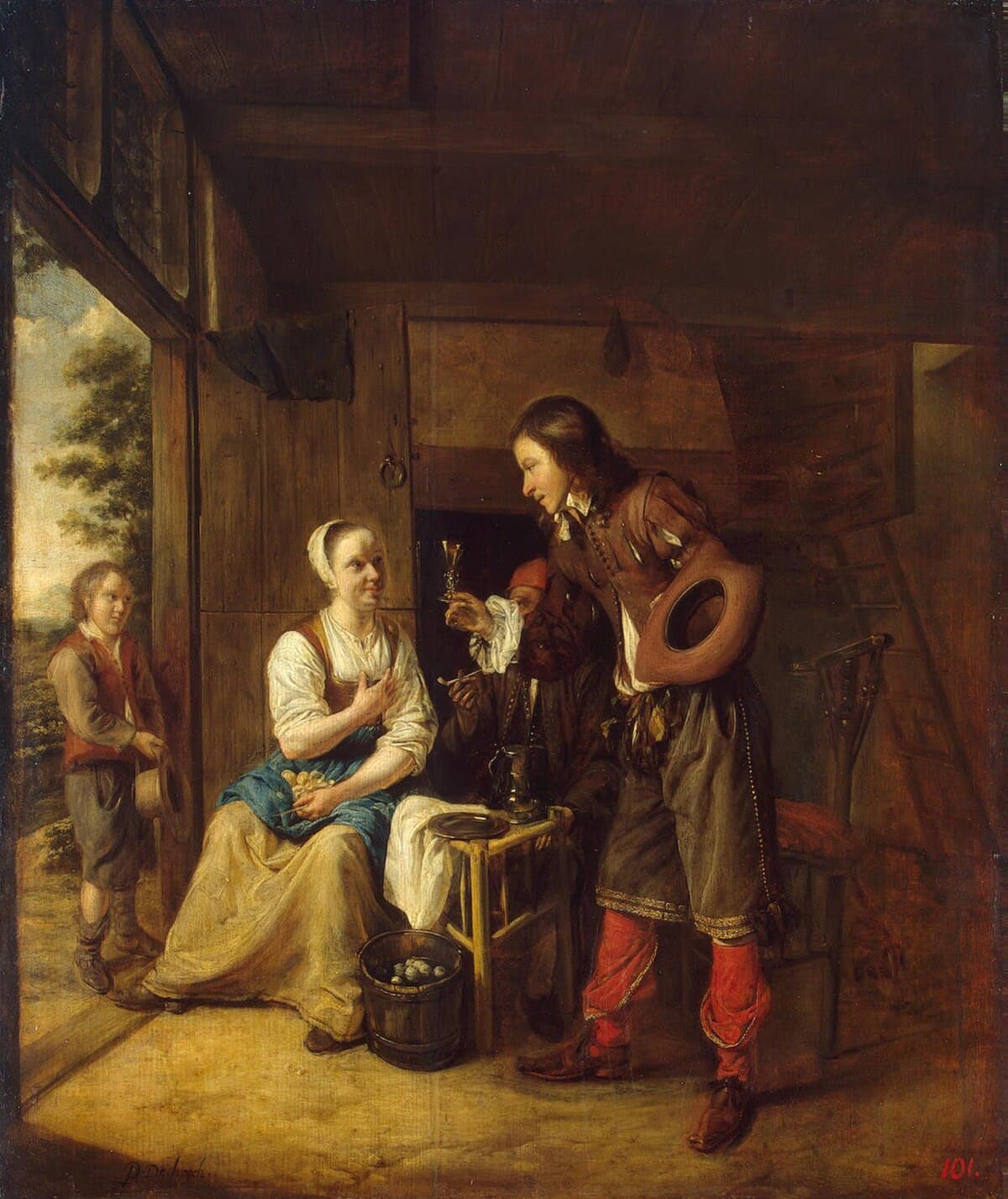
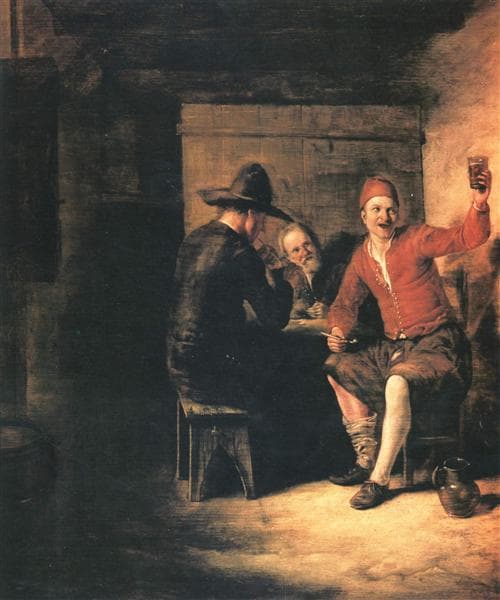
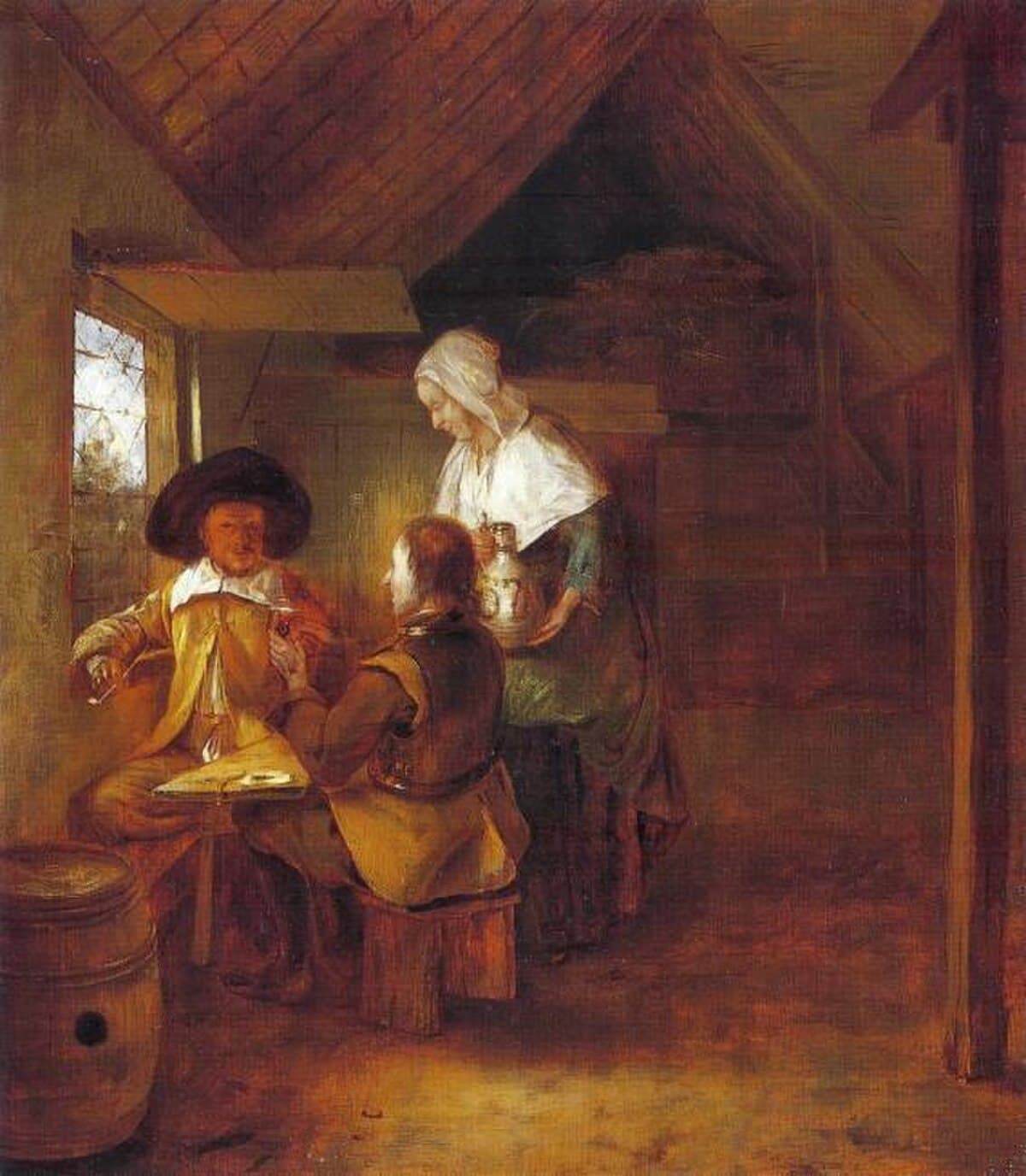
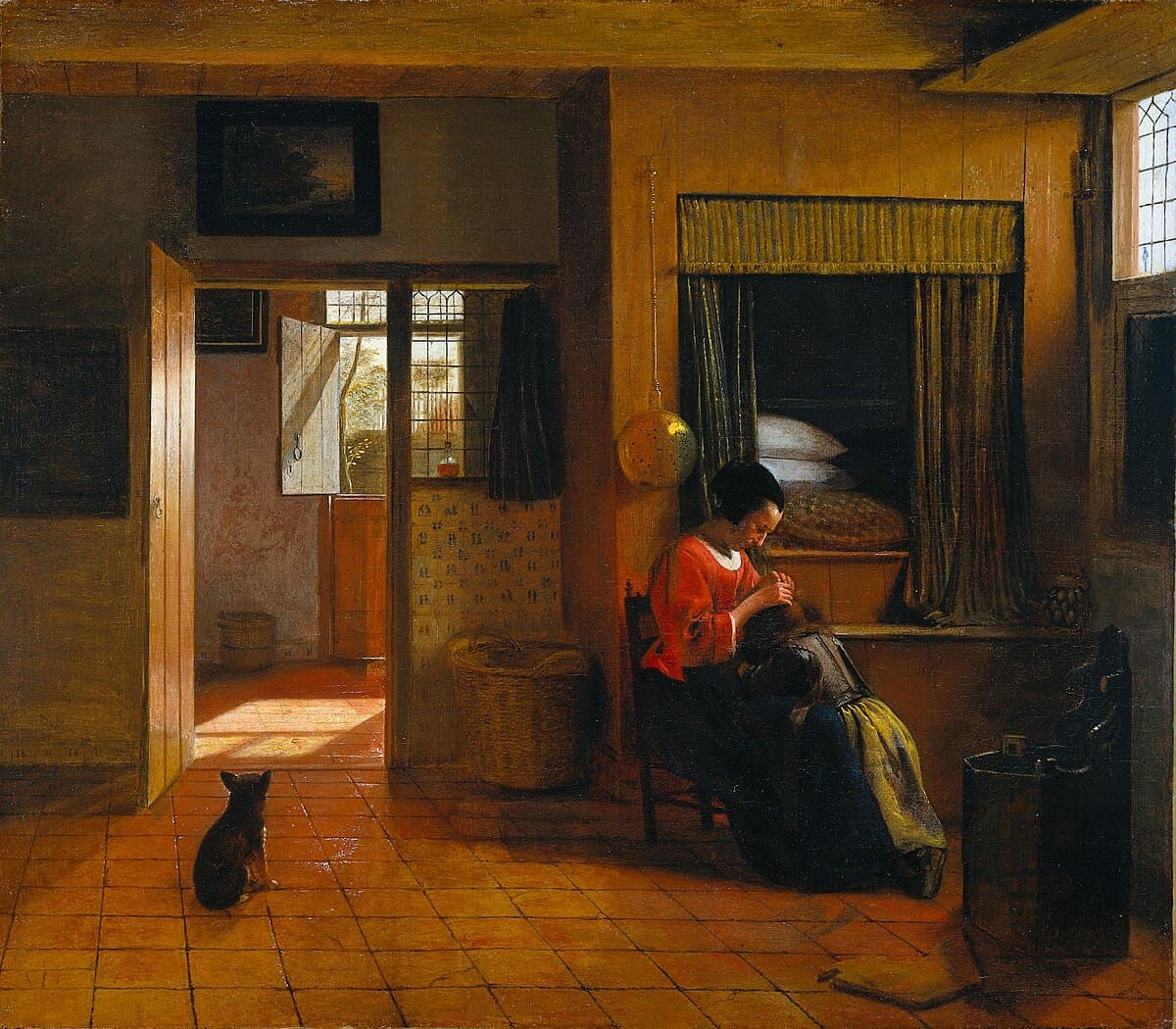
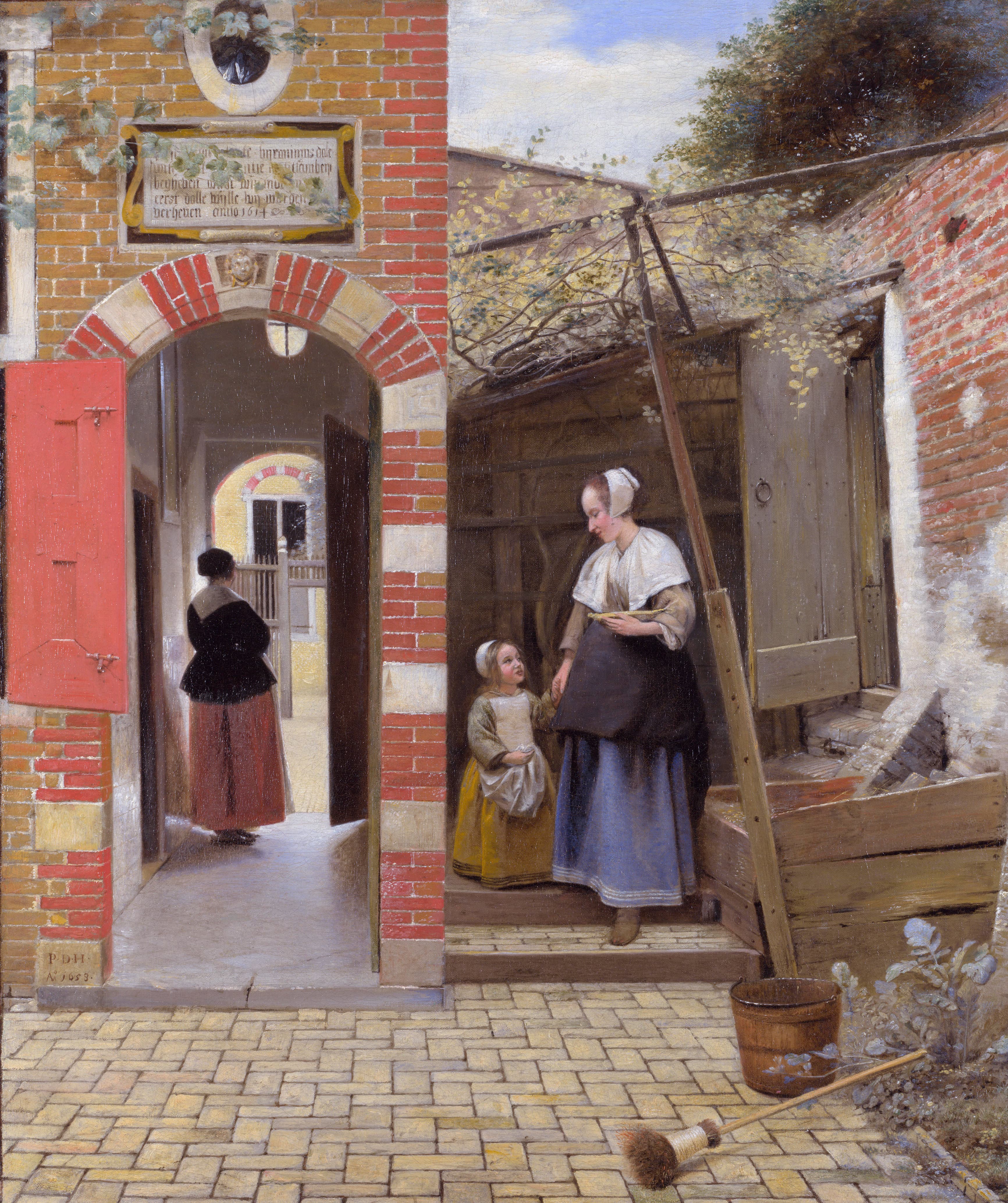
Pieter de Hooch painted the Interior of a Dutch House around 1680, during the later years of his career in Amsterdam. The work shows his characteristic fascination with the geometry of domestic spaces, featuring a carefully arranged interior with tiled floors, rectangular window panes, and doorways that create visual depth. Light enters from multiple sources, illuminating the quiet scene.
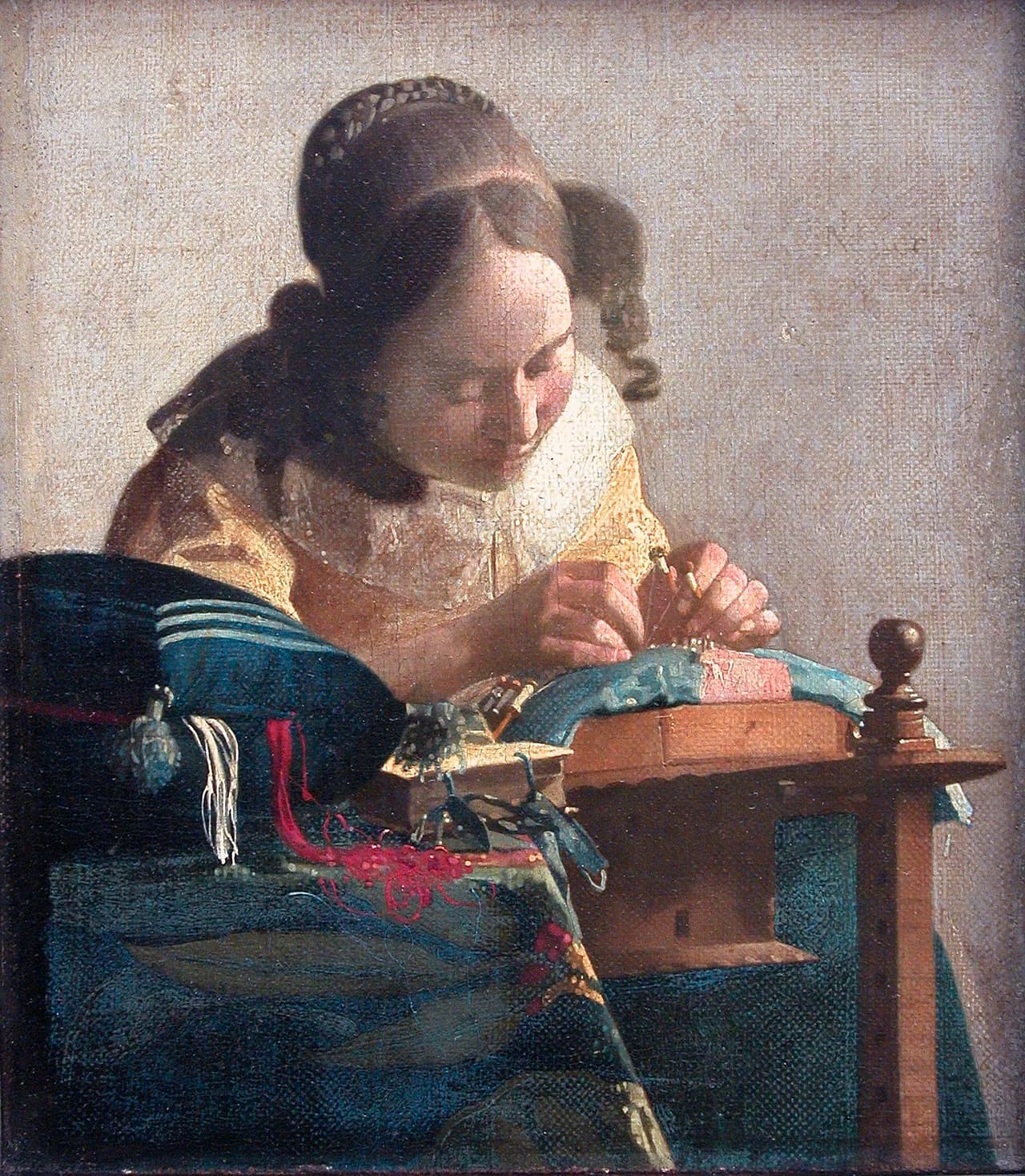
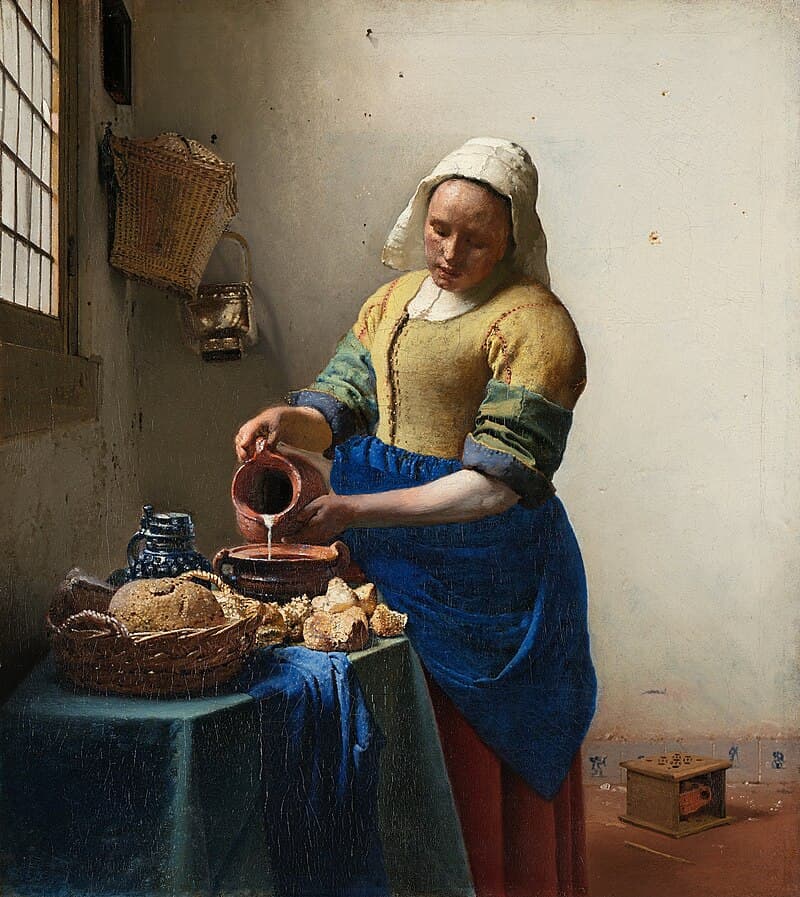
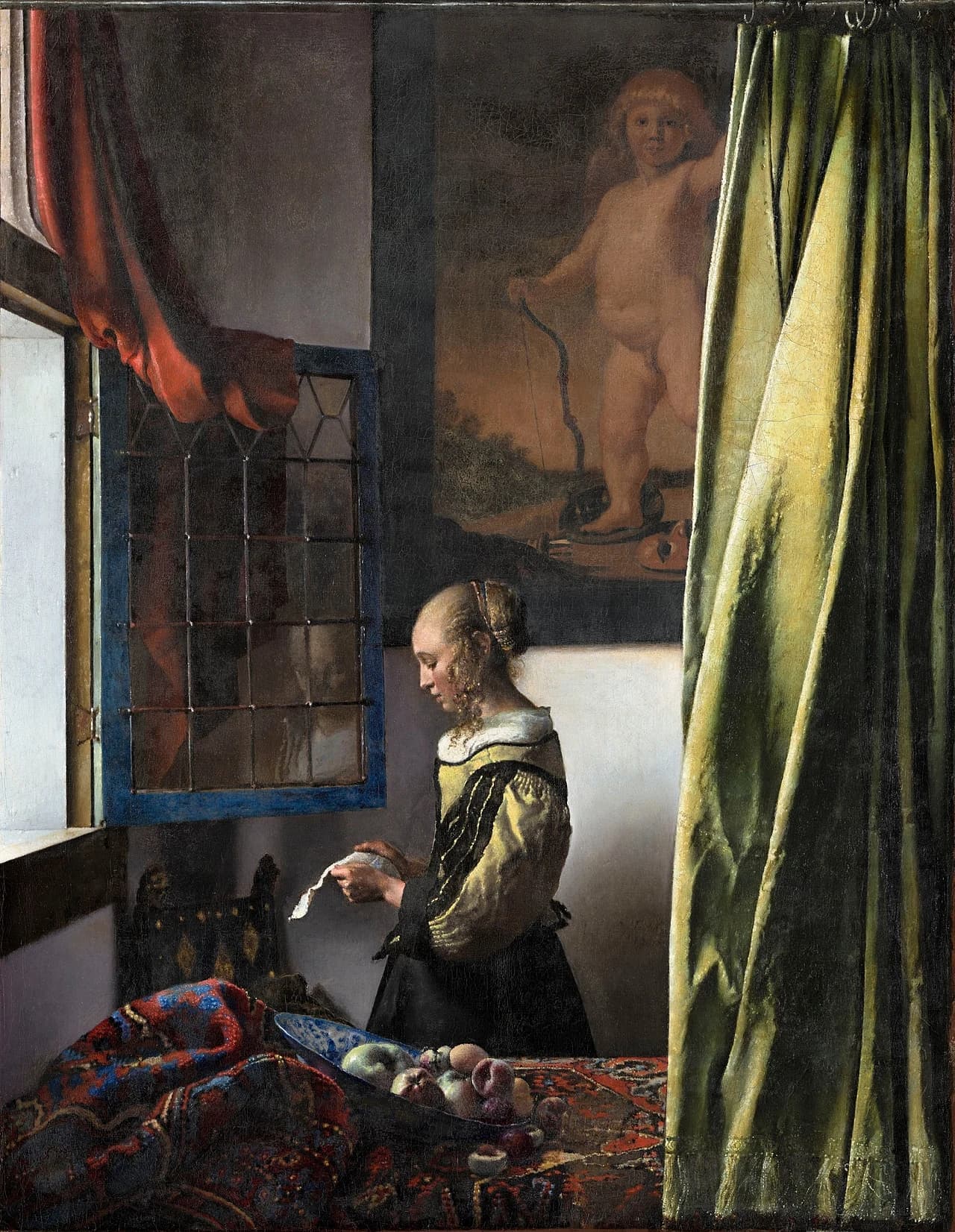
De Hooch was a contemporary of Vermeer in the Delft Guild of St. Luke, and the two artists share an interest in domestic subjects and the play of light through windows. After marrying Jannetje van der Burch in 1654, de Hooch fathered seven children and developed his signature style of intimate household scenes. He joined the painters' guild in 1655 and worked in Delft before moving to Amsterdam, where he spent his final decades.
The painting demonstrates de Hooch's skill at creating variety through composition and perspective. Squares and rectangles appear throughout, from floor tiles to window frames, establishing unity while subtle differences in scale and lighting add visual interest. His muted earth-toned palette creates the warm, tranquil atmosphere typical of Dutch Golden Age interiors. The work is held at the Louvre in Paris.