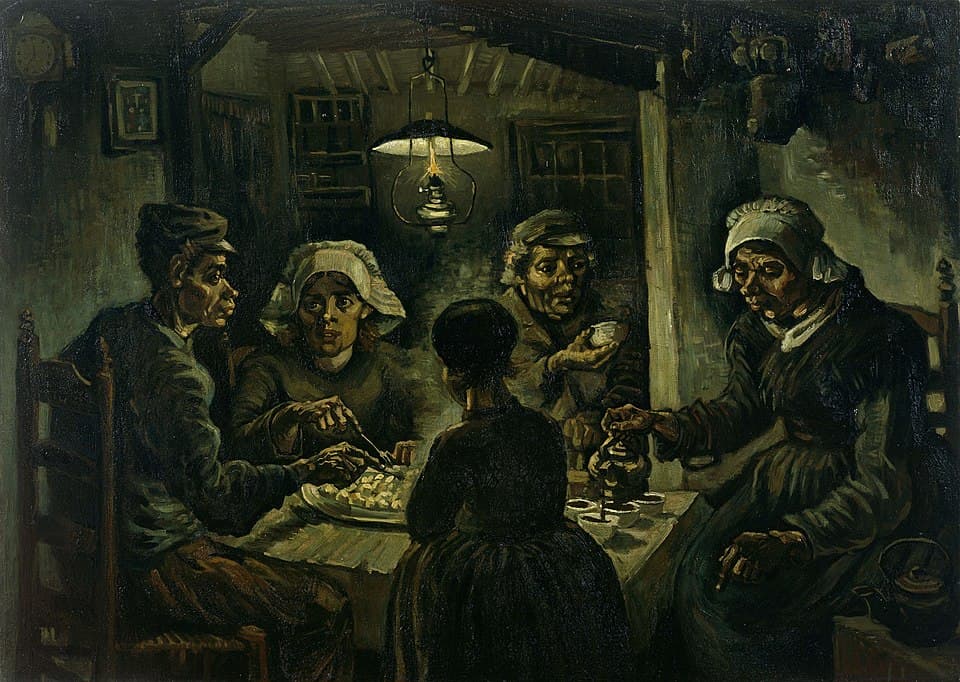
The Potato Eaters
by Vincent van Gogh, 1885
StylePost-Impressionism
Artwork Details
Details
- Year
- 1885
- Medium
- Oil on canvas
- Size
- 82 cm × 114 cm
Cite or Embed This Work
APA · MLA · Chicago1-click academic citation and embeddable “On View” museum badge for articles, syllabi, and research.
Vincent van Gogh painted The Potato Eaters in April 1885 in Nuenen, Netherlands, considering it his first major work. Five peasants share a meager meal of potatoes under a dim oil lamp. Their coarse features and gnarled hands reflect the hard labor that earned their simple food.
Van Gogh deliberately made the figures rough and unglamorous, writing to his brother Theo that he wanted to show peasants "in all their coarseness" rather than sentimentalized. The dark earth-toned palette reinforces the connection between these workers and the soil they till. He repainted the composition multiple times before finalizing this version.
Contemporary critics found the painting too dark and the figures too ugly. Van Gogh defended his vision, arguing that honest peasant life deserved honest depiction. The work marked his transition from drawing to serious painting. It hangs at the Van Gogh Museum in Amsterdam, representing his early Dutch period before he discovered color in Paris.