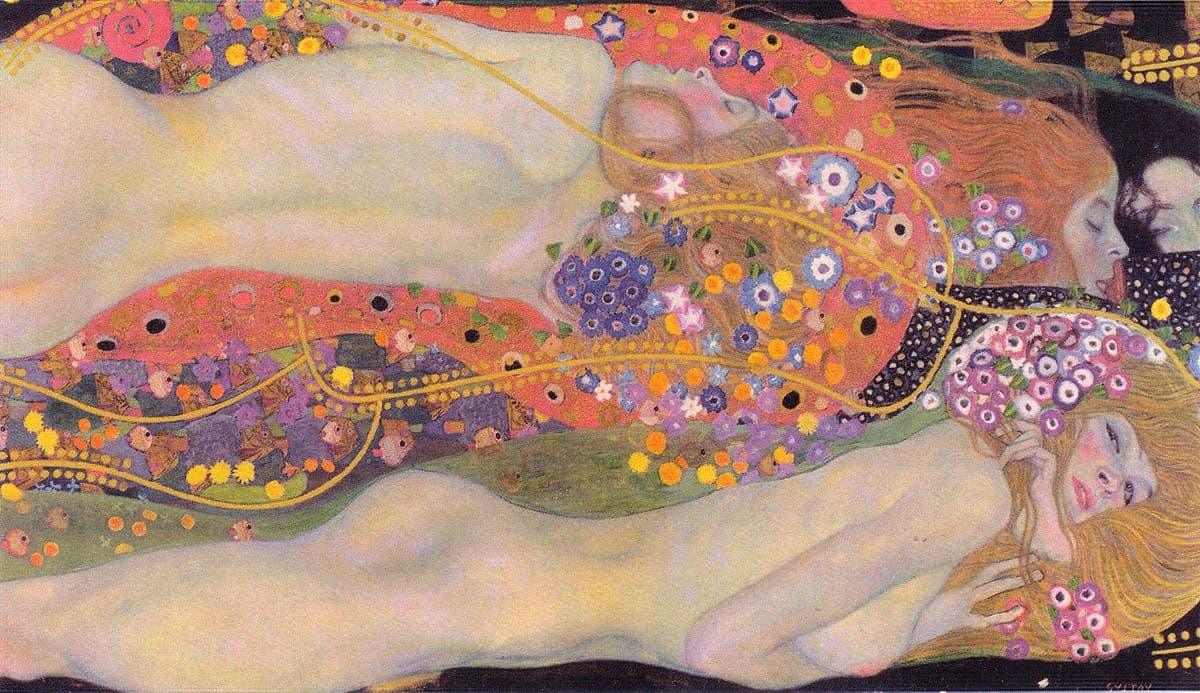
Gustav Klimt, Public domain, via Wikimedia Commons
Wasserschlangen II (Water Serpents II)
by Gustav Klimt, 1907
Artwork Details
Details
- Year
- 1907
- Medium
- Oil on canvas
Auction History
$183.8M
Private Sale / Geneva
January 1, 2013
Seller
Yves Bouvier
Buyer
Dmitry Rybolovlev
Gustav Klimt created this Wasserschlangen II (Water Serpents II) between 1904 and 1907, one of the defining works of his celebrated Golden Phase. The painting depicts two sensuous female figures intertwined in a dreamlike underwater sphere, their bodies merging with serpents amid flowing hair and ornate jewelry. Klimt combined oil paint with gold and silver leaf on canvas, creating a luminous surface that shimmers like precious metalwork.
The composition explores themes of transformation, sensuality, and the subconscious through mythological water-dwelling figures. Klimt's ability to address taboo subjects through allegorical treatment made him a central figure in the Vienna Secession, the movement that broke from academic tradition to embrace decorative arts and symbolism.
The painting belonged to Jewish collector Jenny Steiner until the Nazis confiscated it when she fled Vienna in 1938. After decades in various collections, Russian billionaire Dmitry Rybolovlev acquired it in 2013 for $183.8 million, making it the most expensive Klimt ever sold. The work stands as a landmark of Art Nouveau luxury and early modernist experimentation.