Wikimedia Commons • Public Domain
Isaac Newton
StyleRomanticism
Artwork Details
Cite or Embed This Work
APA · MLA · Chicago1-click academic citation and embeddable “On View” museum badge for articles, syllabi, and research.
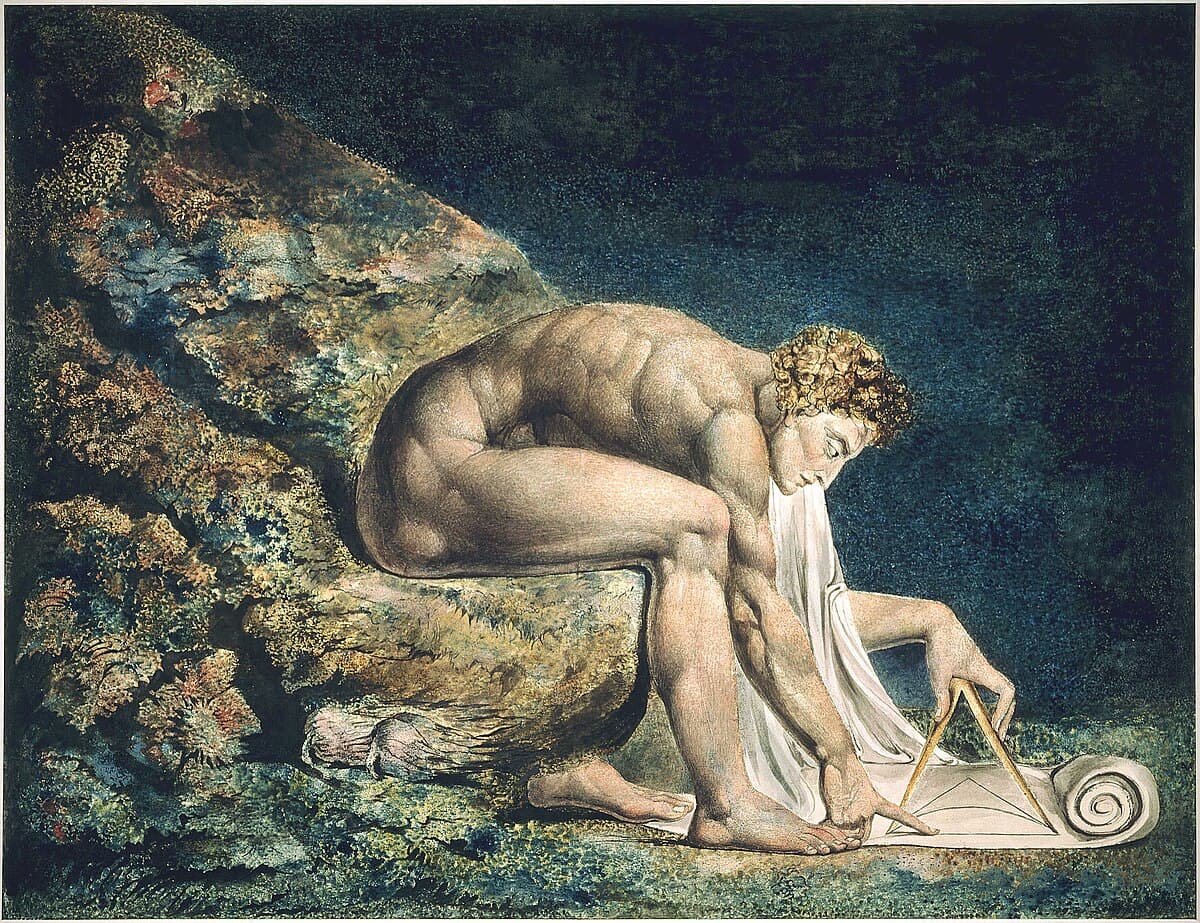
William Blake made this color print between 1795 and 1805, depicting Isaac Newton hunched naked on a rock, absorbed in geometric calculations with a pair of dividers. The work combines printing with hand-applied watercolor and ink, giving it a textured, almost spectral quality that sets it apart from conventional printmaking of the period.
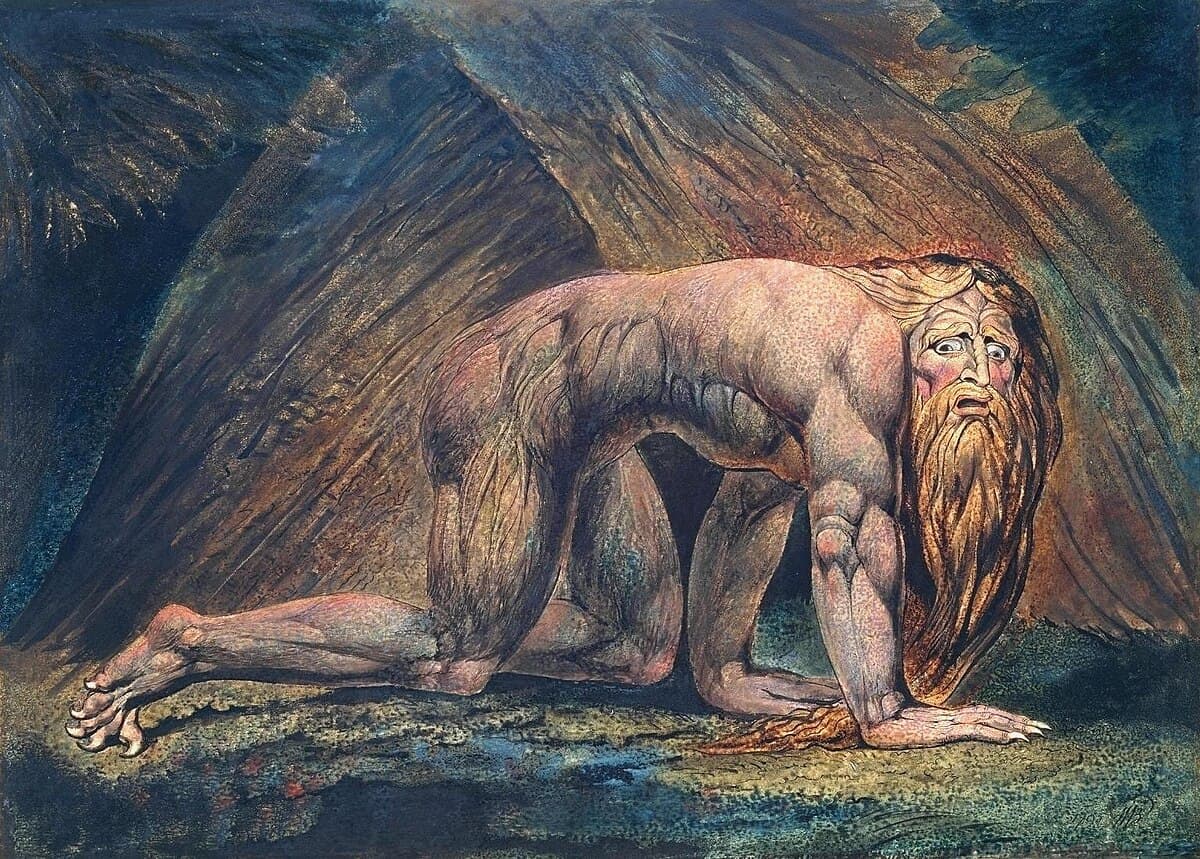
Blake intended the image as a critique, not a celebration. For him, Newton represented the dangers of scientific rationalism, a mind so fixated on measurement and mathematics that it remained blind to imagination, spirituality, and the natural world. The great physicist sits with his back to the colorful rock behind him, oblivious to everything beyond his diagrams. Blake grouped this work with companion prints depicting Nebuchadnezzar and other figures he saw as spiritually limited.
The image has since become one of the most recognized symbols of the tension between science and Romanticism. Eduardo Paolozzi's massive bronze sculpture outside the British Library in London draws directly from this composition. The original print now belongs to the Tate Britain collection, where it continues to provoke debate about the relationship between reason and imagination.