The Dog
by Francisco Goya, 1823
Artwork Details
Details
- Year
- 1823
- Medium
- Oil mural transferred to canvas
- Size
- 131.5 cm × 79.3 cm
Cite or Embed This Work
APA · MLA · Chicago1-click academic citation and embeddable “On View” museum badge for articles, syllabi, and research.
Francisco Goya completed this haunting image sometime between 1819 and 1823 directly onto the walls of his home, the Quinta del Sordo (House of the Deaf Man). A dog's head emerges from behind a sloping mass of ochre and brown, gazing upward into an empty expanse. Nothing else appears in the composition, just the animal and the void.
This painting belongs to Goya's Black Paintings, a series of dark works he created in private during his final years in Spain. Deaf, ill, and disillusioned with Spanish politics, he covered two rooms of his house with these disturbing images. The dog's expression has been interpreted as hope, fear, or simply animal awareness. The slope it peers over might represent a hillside, a grave, or something more abstract.
The murals were transferred to canvas in the 1870s and moved to the Museo del Prado in Madrid, where they remain today. This piece, often called simply "The Dog," continues to fascinate viewers with its minimalist power.
More by Francisco Goya
View all →
Also at Museo del Prado, Madrid
View all →

Related Works
Works that share an artist, movement, museum, genre, palette or theme with The Dog.
- Same artist
- Same movement
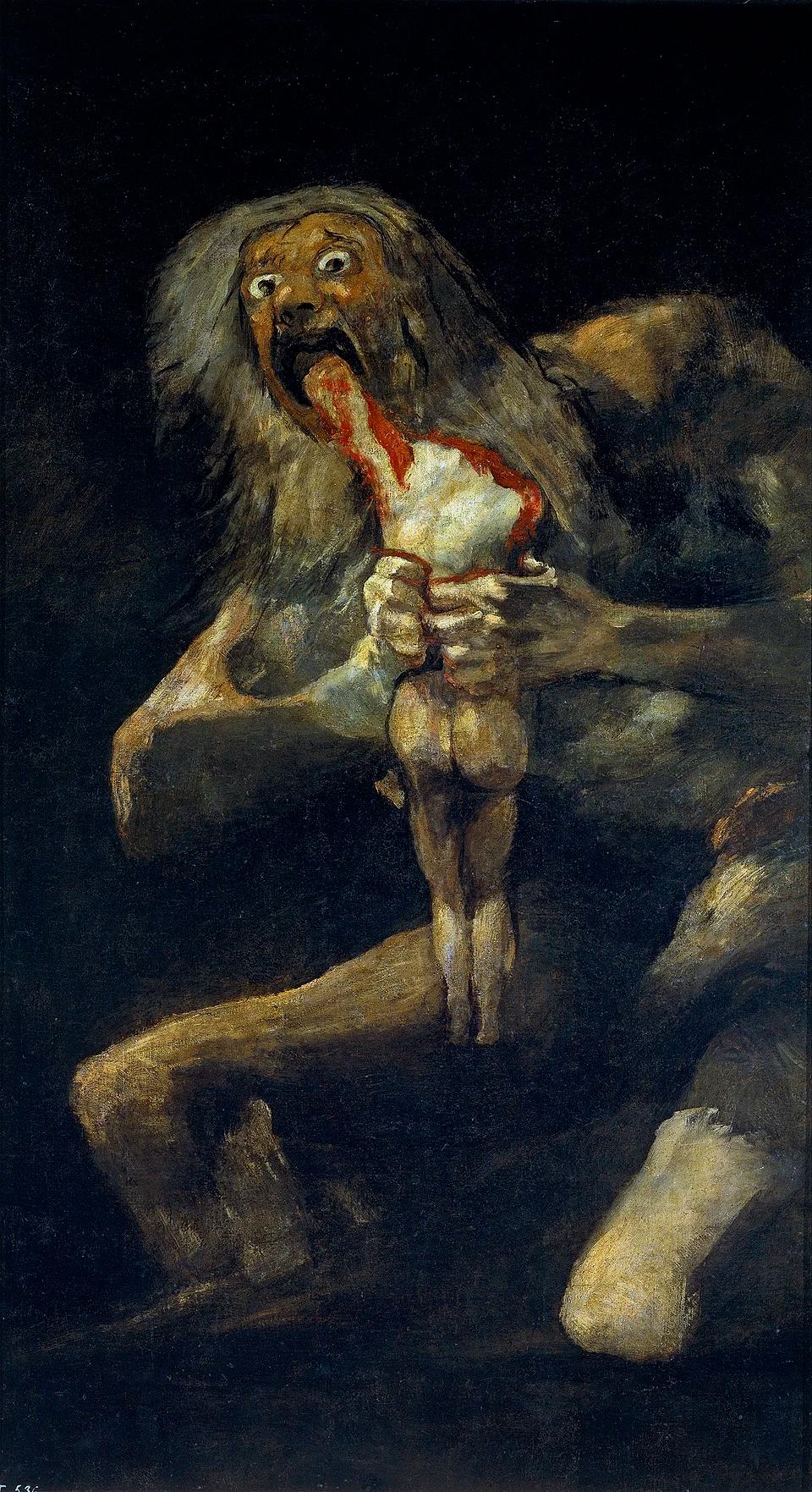
Saturn Devouring His Son
Francisco Goya, 1823
- Same artist
- Same movement
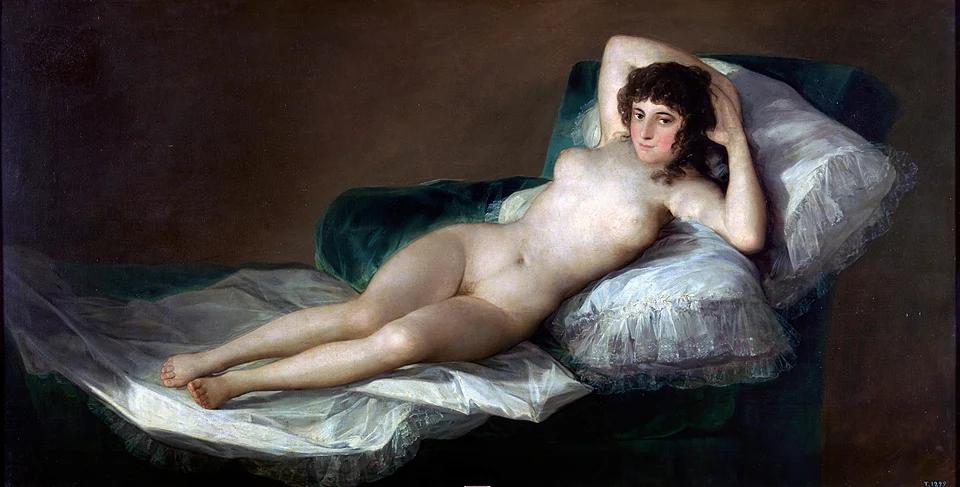
The Nude Maja
Francisco Goya, 1800
- Same artist
- Same movement
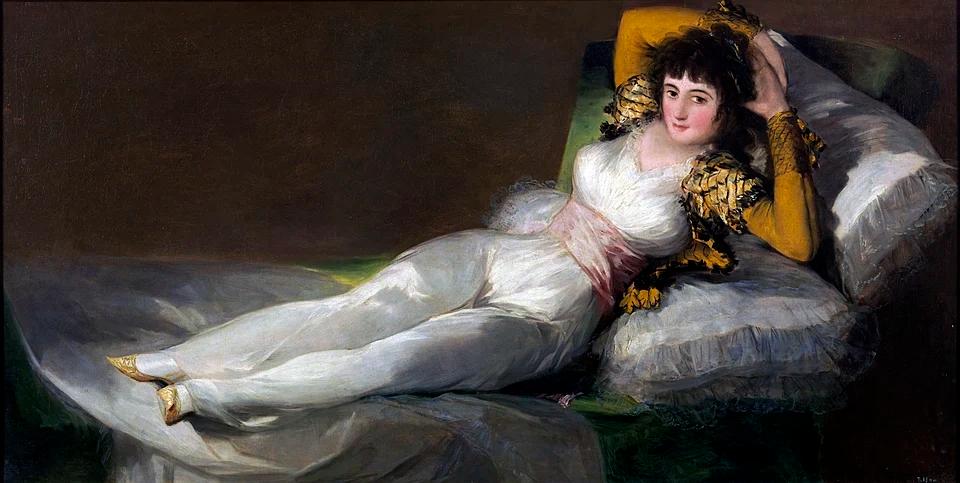
The Clothed Maja
Francisco Goya, 1800
- Same movement
- Same genre
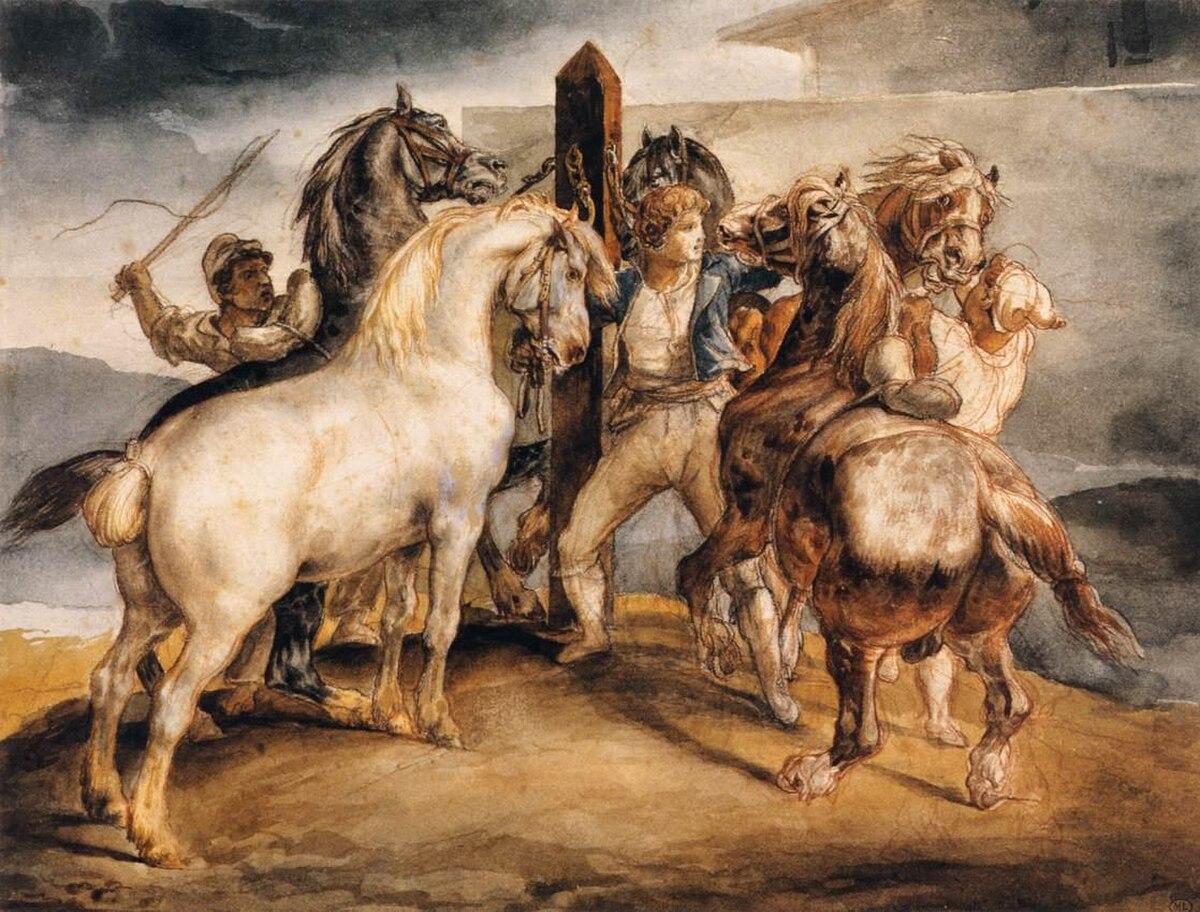
The Horse Market: Five Horses at the Stake
Théodore Géricault
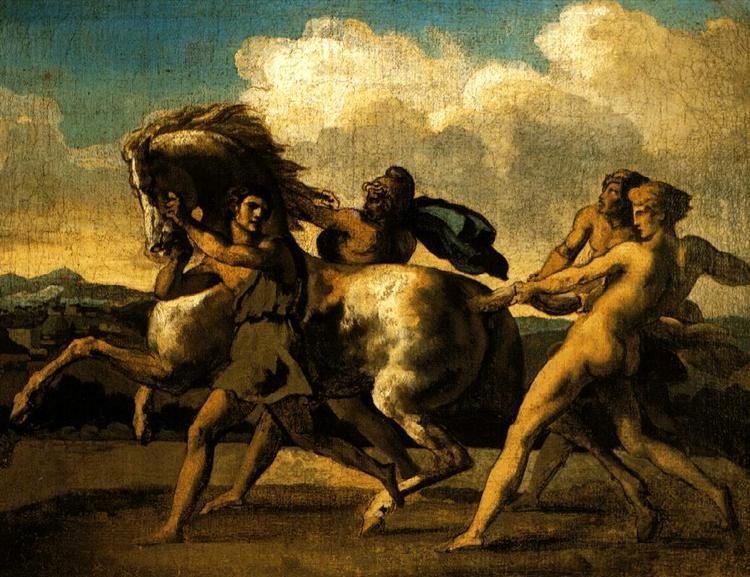
- Same movement
- Same genre
Slaves stopping a horse, study for The Race of the Barbarian Horses
Théodore Géricault
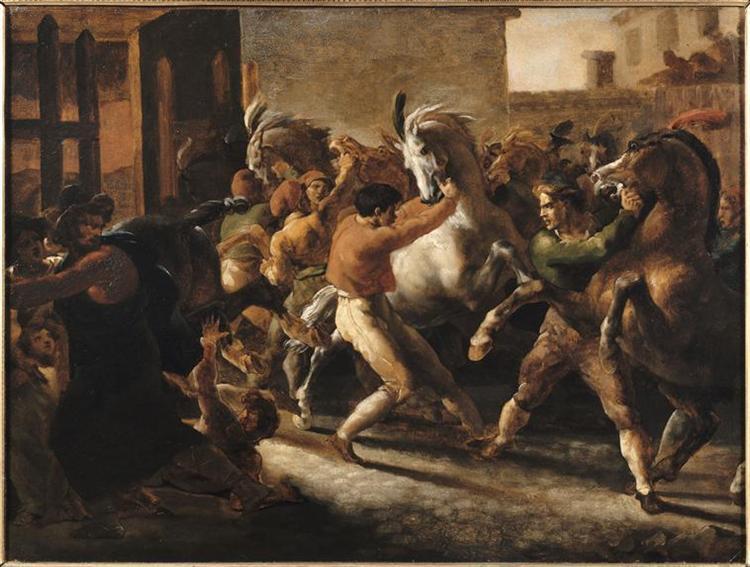
- Same movement
- Same genre
Study for the Race of the Barbarian Horses
Théodore Géricault
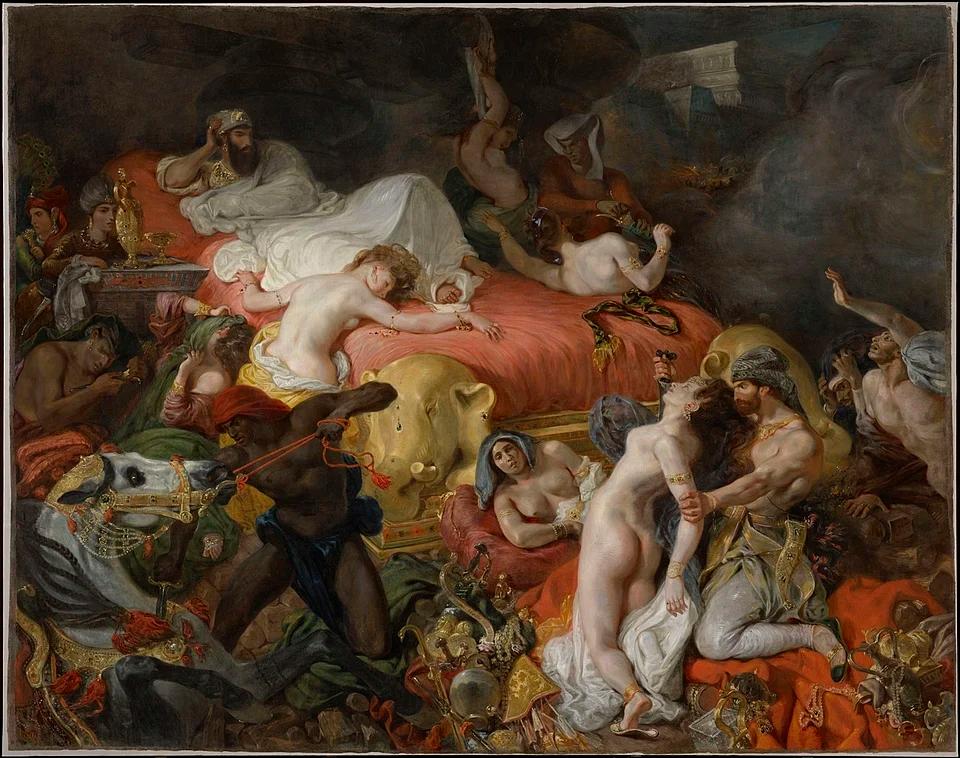
- Same movement
- Similar palette
The Death of Sardanapalus
Eugène Delacroix, 1827
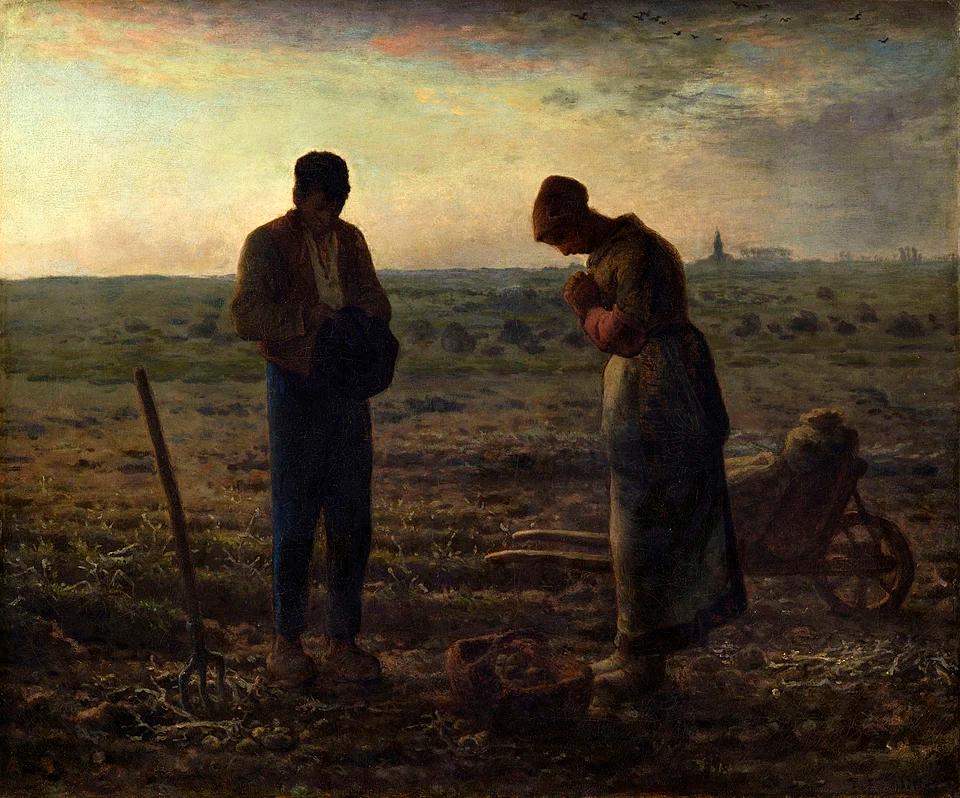
- Same movement
- Similar palette
The Angelus
Jean-François Millet, 1859
- Same movement
- Similar palette
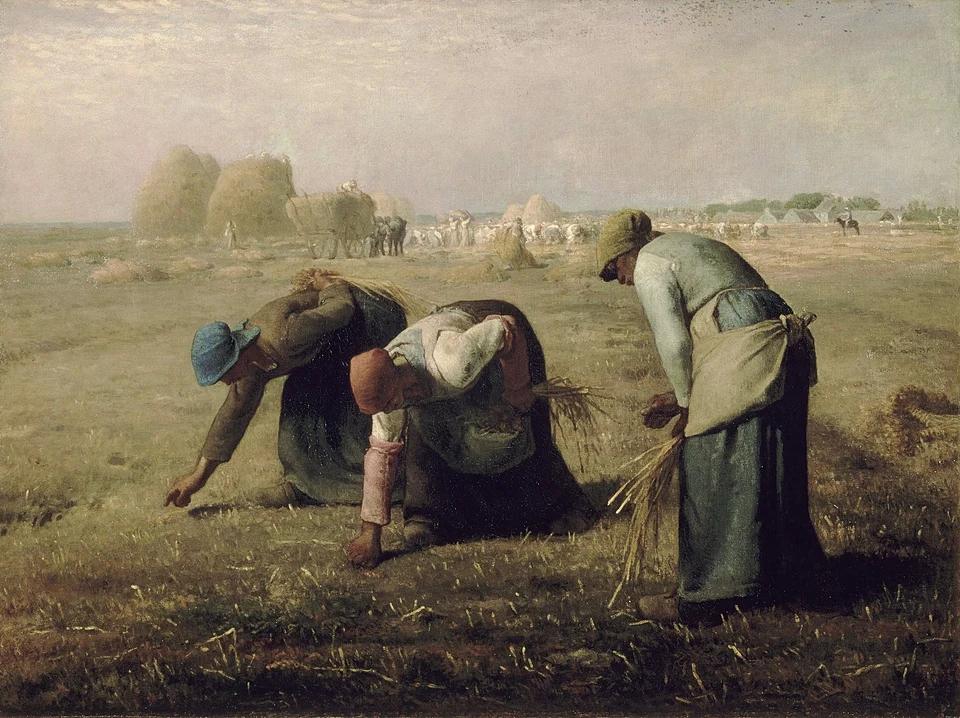
The Gleaners
Jean-François Millet, 1857
- Same movement
- Similar palette
Women of Algiers
Eugène Delacroix, 1834

- Same movement
- Similar palette
The Hay Wain
John Constable, 1821
- Same movement
- Similar palette
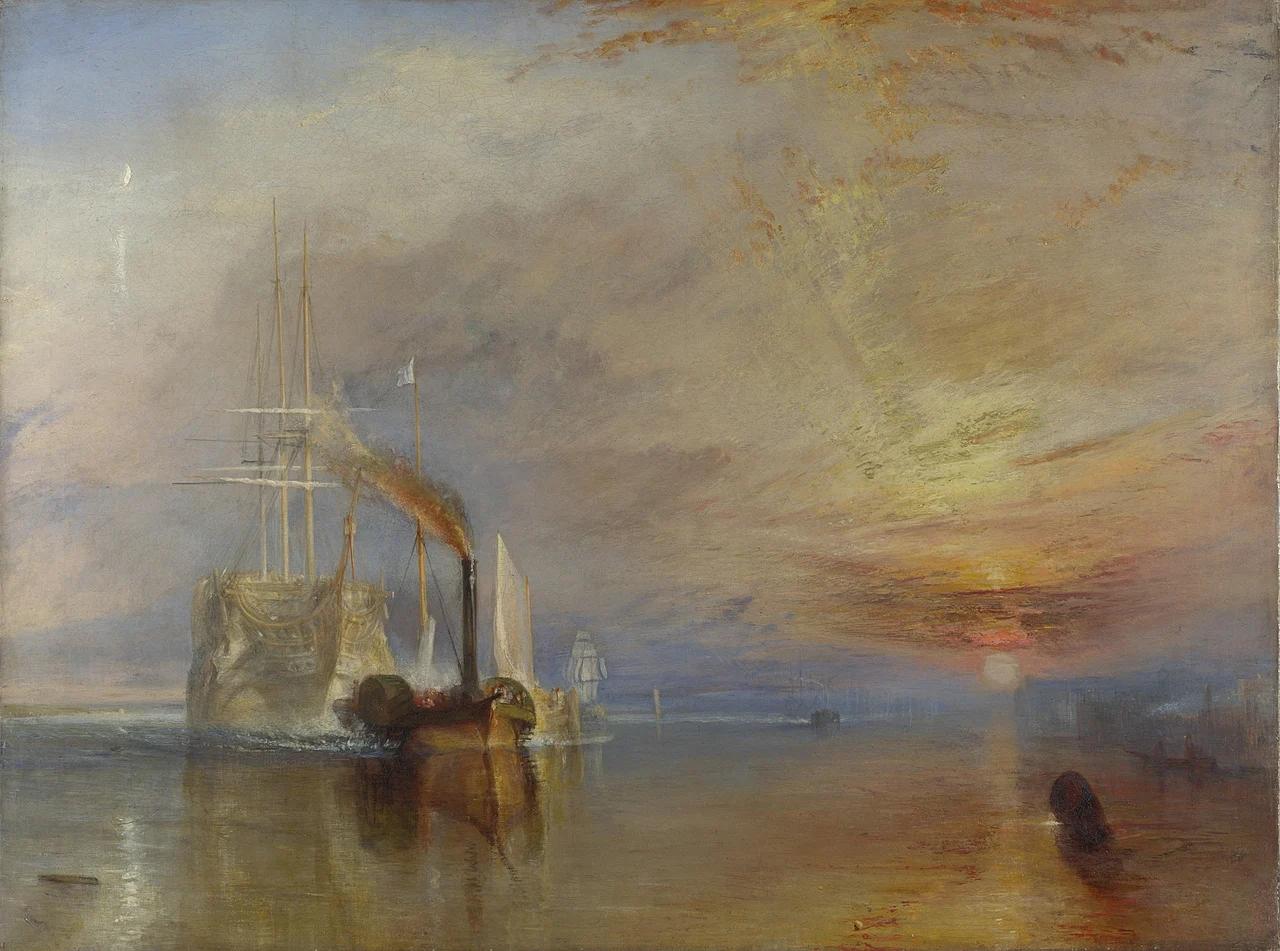
The Fighting Temeraire
J.M.W. Turner, 1839
About The Dog
It's at the Museo del Prado in Madrid. Goya painted it between 1819 and 1823 directly on the walls of his home. It's one of his 14 'Black Paintings,' the most mysterious of the group.
A small dog's head peers up from the bottom of an otherwise nearly empty canvas. The rest is a vast, yellowish-brown void. Whether the dog is sinking in sand, looking over a hill, or drowning is unclear. Goya left no explanation. The radical emptiness is what makes it so haunting.
It's been called the first truly modern painting by some critics. The nearly abstract composition, with a tiny figure against a vast empty space, anticipates Rothko's color field paintings by 130 years. No narrative, no detail, just existential isolation expressed through negative space.
It measures 131.5 cm × 79.3 cm (51.8 × 31.2 inches). Originally a wall mural in Goya's dining room, it was transferred to canvas in the 1870s. The transfer process may have altered or removed details, and some scholars debate how much of the current image reflects Goya's original.
When he painted this, Goya was in his mid-70s, deaf, and politically disillusioned. He'd survived two serious illnesses, witnessed the Napoleonic wars, and lived through Spain's political upheavals. The Black Paintings were never meant to be seen publicly. They were painted for himself alone.
Own Art Like This
Luxury wall art with the same mood and energy. Gallery-quality canvas, no museum crowds.
Browse Collection