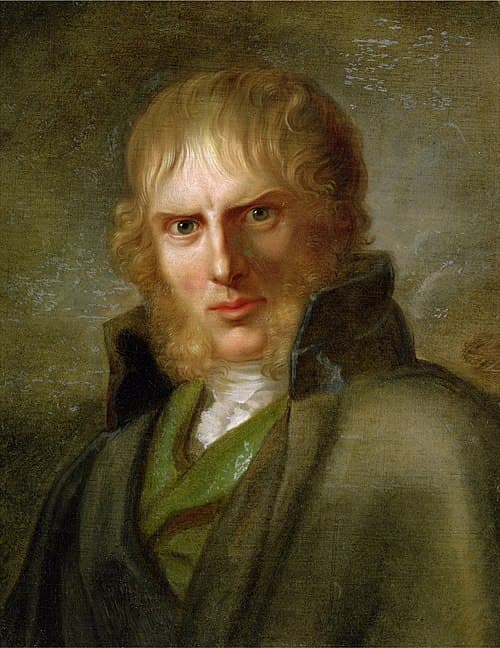
Samuel Palmer
British·1805–1881
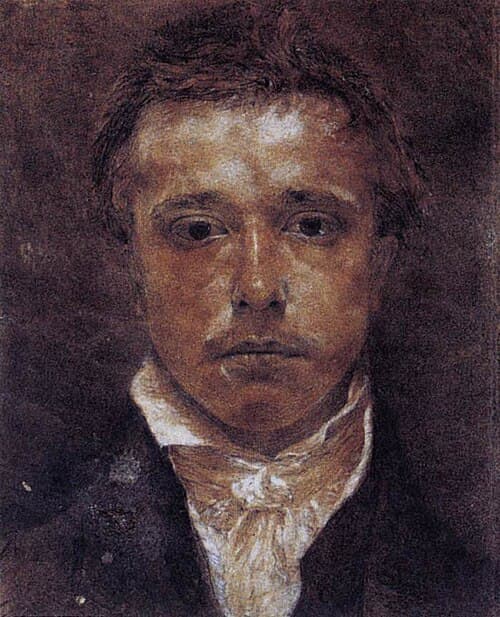
Samuel Palmer (1805–1881) created some of the most intensely visionary landscapes in British art. Born in London to a bookseller, he was a delicate child who began exhibiting at the Royal Academy at fourteen. In 1824, John Linnell introduced him to William Blake, an encounter that transformed his art.
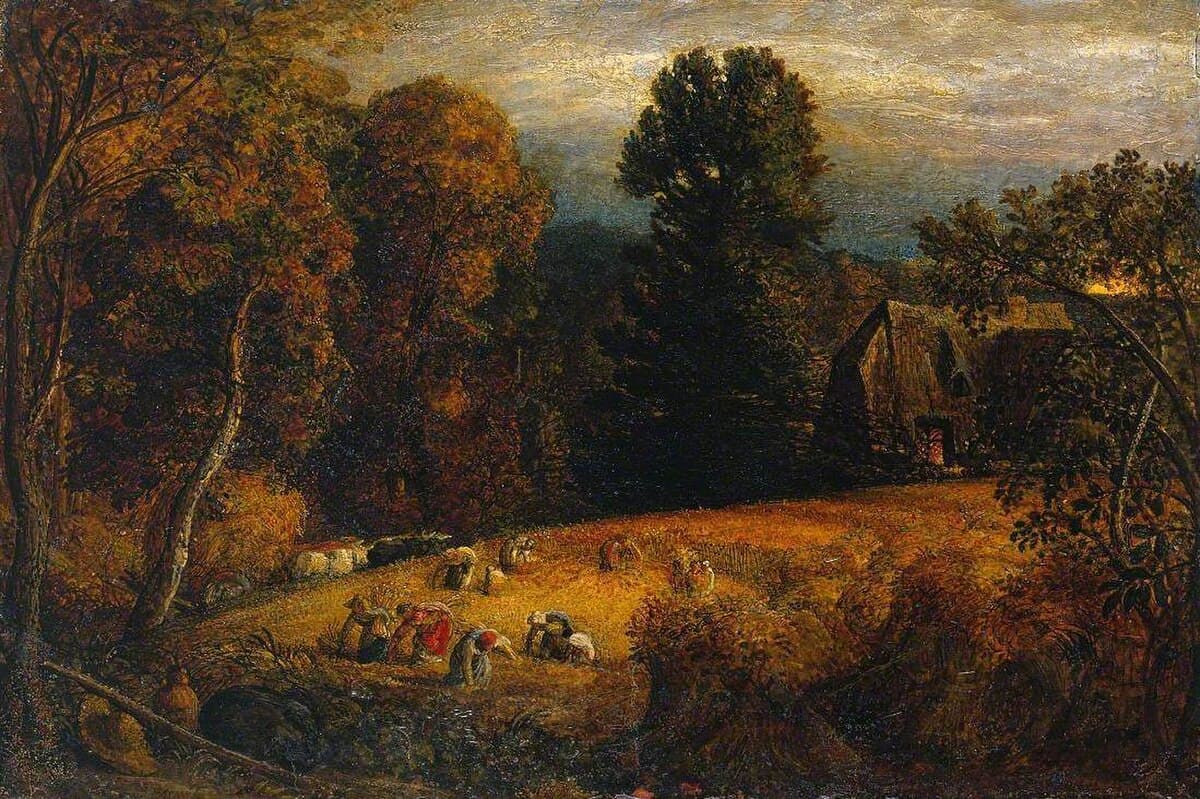
Blake's influence ignited Palmer's "Shoreham period" (1826–1835), when he lived in a run-down cottage nicknamed "Rat Abbey" in the Kent village. There he painted the surrounding countryside as a demi-paradise: harvest moons rising over ripe corn, shepherds watching flocks beneath ancient trees, churches nestled in valleys. These small paintings glow with religious intensity, often rendered in rich sepias and golds. He associated with the "Ancients," a group of Blake-influenced artists including George Richmond and Edward Calvert.
Palmer left Shoreham in 1834, married John Linnell's daughter in 1837, and spent two years honeymooning in Italy. The visionary intensity gradually faded from his work. He became a full member of the Water Colour Society in 1854 and took up etching in 1850, becoming one of Britain's most innovative printmakers. His late watercolors illustrating Milton show renewed power. The death of his elder son in 1861 devastated him. Palmer himself was virtually forgotten until the 1920s, when his Shoreham paintings influenced modern Romantic artists like Paul Nash and Graham Sutherland. Kenneth Clark called him "the English Van Gogh." His work is held at the Tate and the Metropolitan Museum of Art.
Notable Works by Samuel Palmer
2 paintings catalogued with museum locations
Museums with Samuel Palmer's Work
1 museum displays Palmer's works. Click any museum to see visiting info and the specific works they hold.
Related Artists
Other Romanticism artists you might like
About Samuel Palmer
Palmer was a British Romantic painter whose visionary landscapes anticipated aspects of Symbolism. He belonged to "the Ancients," a circle of young artists inspired by William Blake. His work combines intense spirituality with pastoral subjects, treating the English countryside as paradise glimpsed.
Major collections are at Tate Britain, the Metropolitan Museum of Art, and the Ashmolean Museum in Oxford. The Fitzwilliam Museum in Cambridge and the Yale Center for British Art also hold significant works. His Shoreham period pieces are particularly sought after.
Between 1826 and 1835, Palmer lived in Shoreham, Kent, in a cottage he called "Rat Abbey." There he produced his most intensely visionary landscapes: glowing harvest moons, pastoral scenes, and visions of rural paradise. These works, "brilliant in hue" and "intimate in mood," are now considered his greatest achievements.
William Blake was the defining influence. Palmer met him in 1824 through artist John Linnell, and Blake's mystical vision transformed Palmer's approach to landscape painting. Blake's emphasis on imagination over observation gave Palmer permission to paint paradise rather than mere scenery.
Art historian Kenneth Clark gave him this title for his intense emotional vision of nature and his rediscovery by modern artists after decades of obscurity. Like Van Gogh, Palmer was barely recognized in his lifetime but later inspired generations, including Graham Sutherland, John and Paul Nash, and Eric Ravilious.
Love Samuel Palmer's Style?
Explore art inspired by Romanticism.
Browse Collection