A
© Copyrighted Artwork
This artwork is protected by copyright. We cannot display images of works by artists who passed away after 1954.
See the original at Peggy Guggenheim Collection in Venice
Alchemy
by Jackson Pollock, 1947
Artwork Details
Details
- Year
- 1947
- Medium
- Oil, aluminum, alkyd enamel paint with sand, pebbles, fibers on canvas
- Size
- 114.6 cm × 221.3 cm
Cite or Embed This Work
APA · MLA · Chicago1-click academic citation and embeddable “On View” museum badge for articles, syllabi, and research.
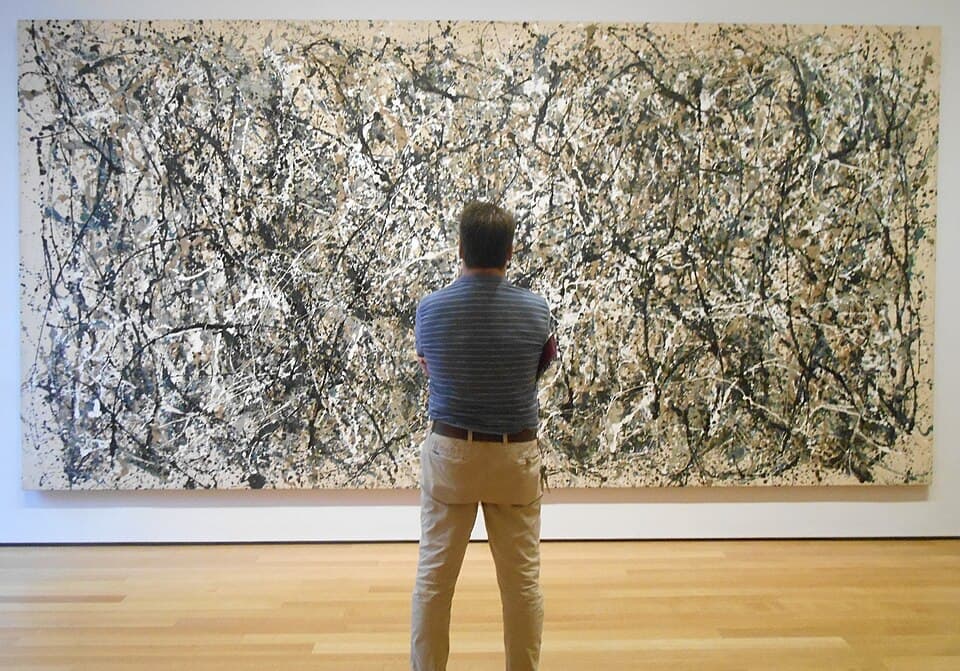
Alchemy (1947) by Jackson Pollock is one of the artist's earliest poured paintings and represents a turning point in twentieth-century art. This large work measures 114.6 x 221.3 cm and hangs in the Peggy Guggenheim Collection in Venice.
The painting consists of oil, aluminum, and alkyd enamel paint layered with sand, pebbles, fibers, and broken wooden sticks on commercially printed fabric. Pollock created it using his mother's quilting frame, which he borrowed to stretch the canvas flat on his studio floor. By pouring streams of commercial paint from a can with the aid of a stick, Pollock made traditional easel painting obsolete.
When the work underwent conservation at the Opificio delle Pietre Dure in Florence in 2013, researchers discovered that Pollock used 4.6 kg of paint. They also found traces of a white grid structure beneath the surface, revealing that Pollock used compositional planning rather than pure spontaneity. The title was assigned posthumously by neighbors Ralph Manheim and his wife, not by Pollock himself.