One: Number 31, 1950
by Jackson Pollock, 1950
Artwork Details
Details
- Year
- 1950
- Medium
- Oil and enamel paint on canvas
- Size
- 269.5 cm × 530.8 cm (106.1 × 209 in)
Cite or Embed This Work
APA · MLA · Chicago1-click academic citation and embeddable “On View” museum badge for articles, syllabi, and research.
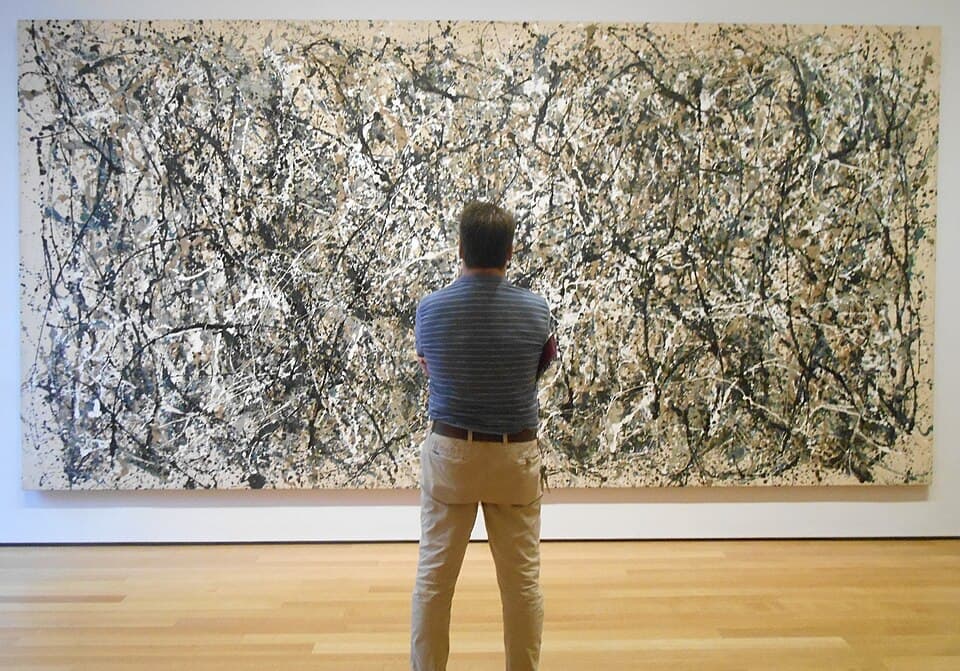
Jackson Pollock made this One: Number 31, 1950 using his radical drip technique. The massive canvas (nearly 9 by 18 feet) lay on the floor while Pollock moved around it, dripping, pouring, and flicking enamel paint from sticks and hardened brushes.
The result is a dense web of black, white, and tan lines with no focal point or composition in the traditional sense. Pollock called it "energy and motion made visible." The painting marked the peak of Abstract Expressionism and established New York as the new center of the art world. It hangs in MoMA.