Wikimedia Commons • Public Domain
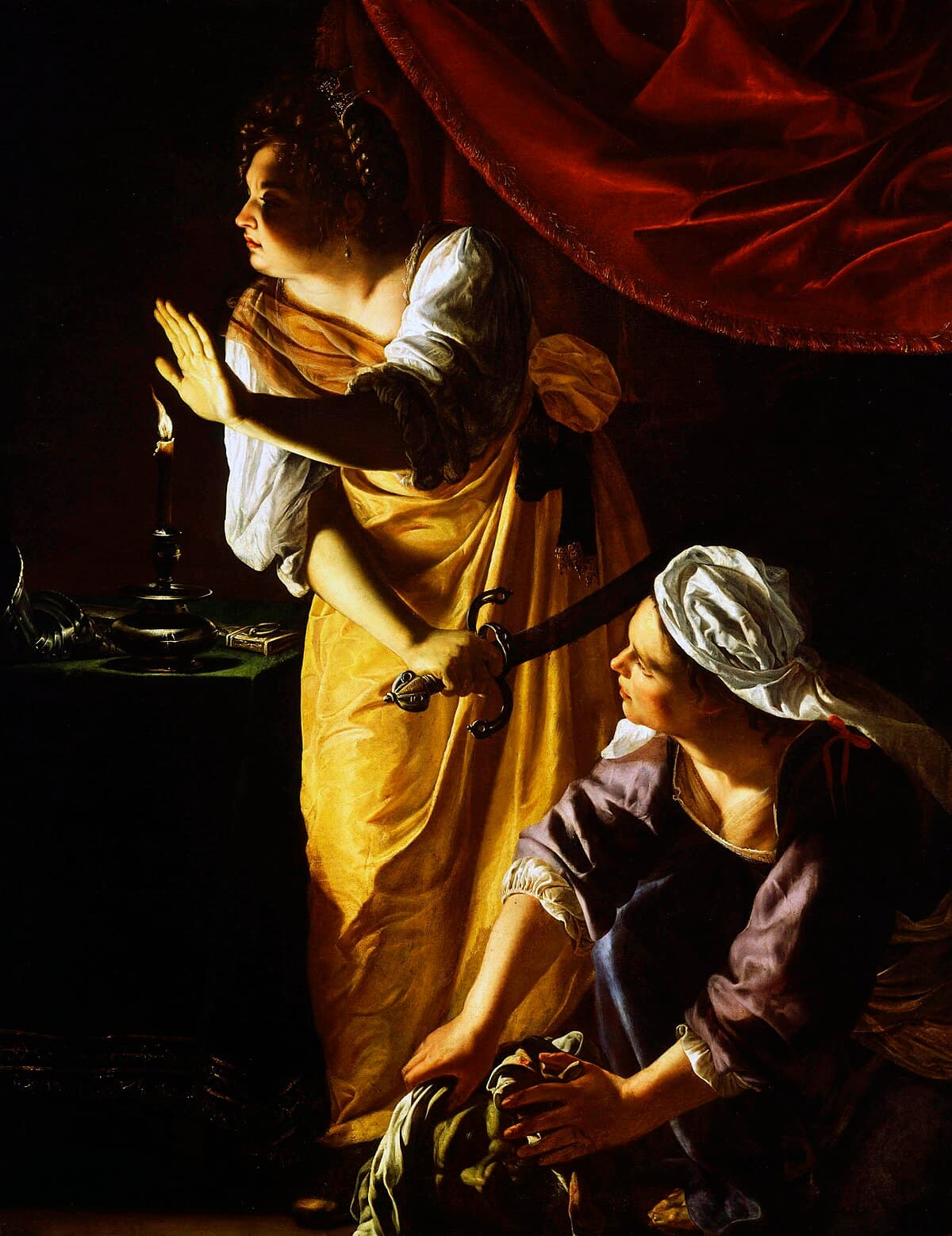
Judith and her Maidservant
Artwork Details
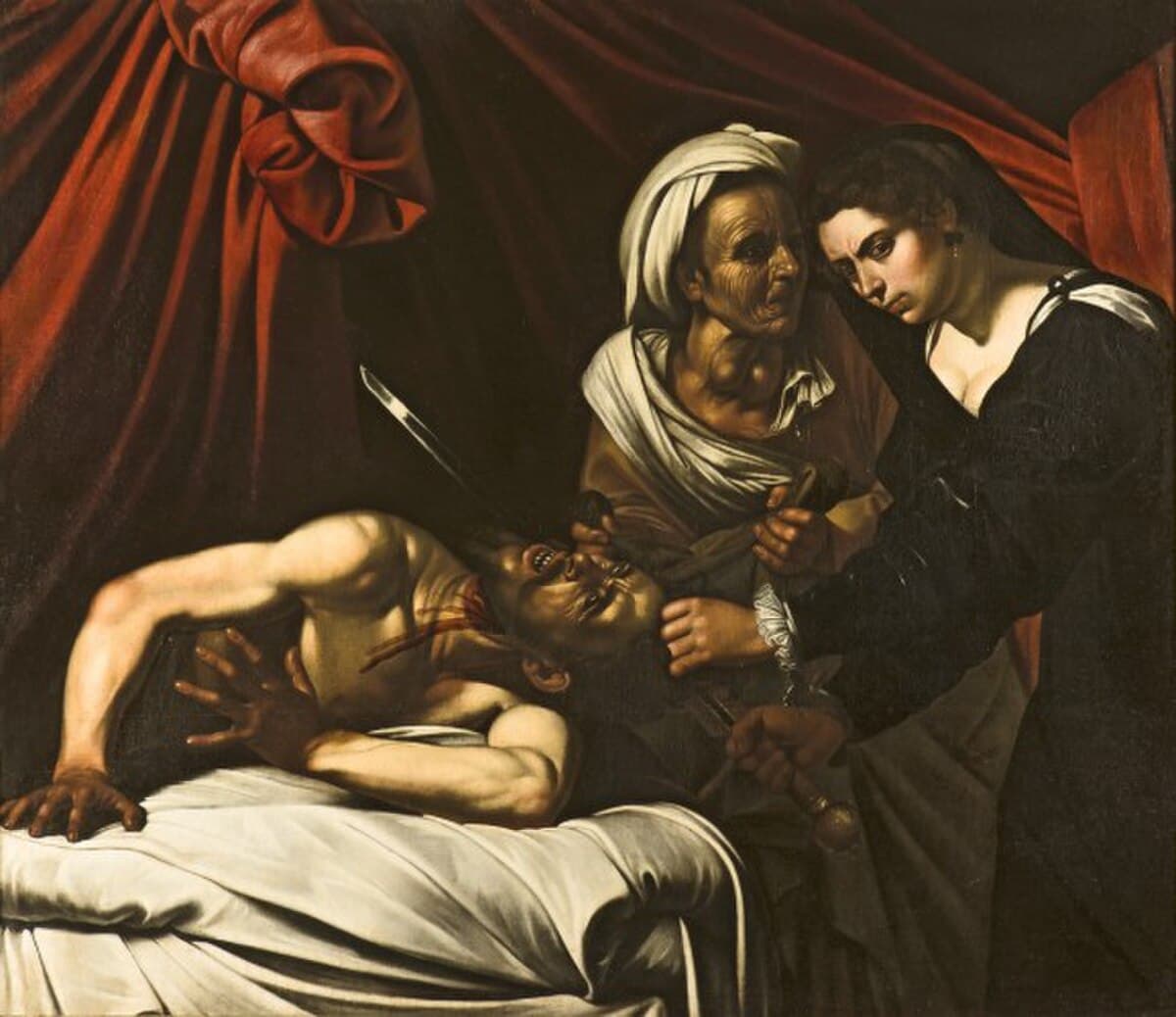
Artemisia Gentileschi executed this tense scene around 1615, showing Judith and her maidservant Abra in the moments after assassinating the general Holofernes. The two women stand alert in the darkness of his tent, seemingly startled by a sound. Judith's hand rests protectively on Abra's shoulder, emphasizing their partnership and shared purpose. The severed head is visible in the basket Abra carries.
The dark setting is illuminated by rich red and gold tones in the fabrics, colors Gentileschi used frequently during her time in Florence. The screaming head on the sword's pommel, possibly Medusa, reminds viewers of the violence just committed. Unlike most artists who depicted Abra as elderly, Gentileschi shows her as young, closer to Judith's age, emphasizing female solidarity.
This painting hangs at Palazzo Pitti in Florence and was first documented in the collection of Grand Duchess Maria Maddalena of Austria in 1638. Gentileschi returned to Judith's story in eight surviving works, making it her most frequent subject.