Wikimedia Commons • Public Domain
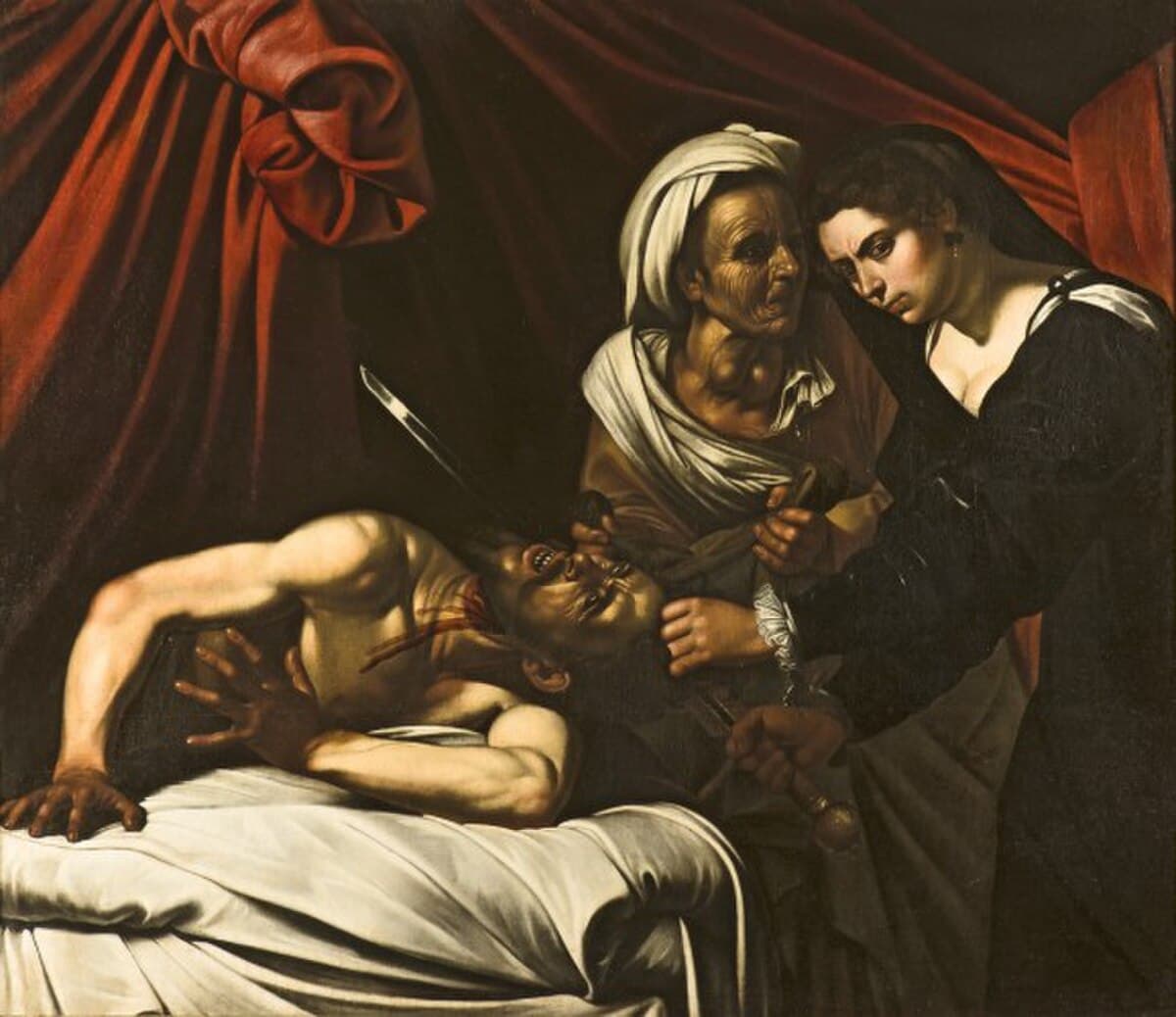
Judith Beheading Holofernes
Artwork Details
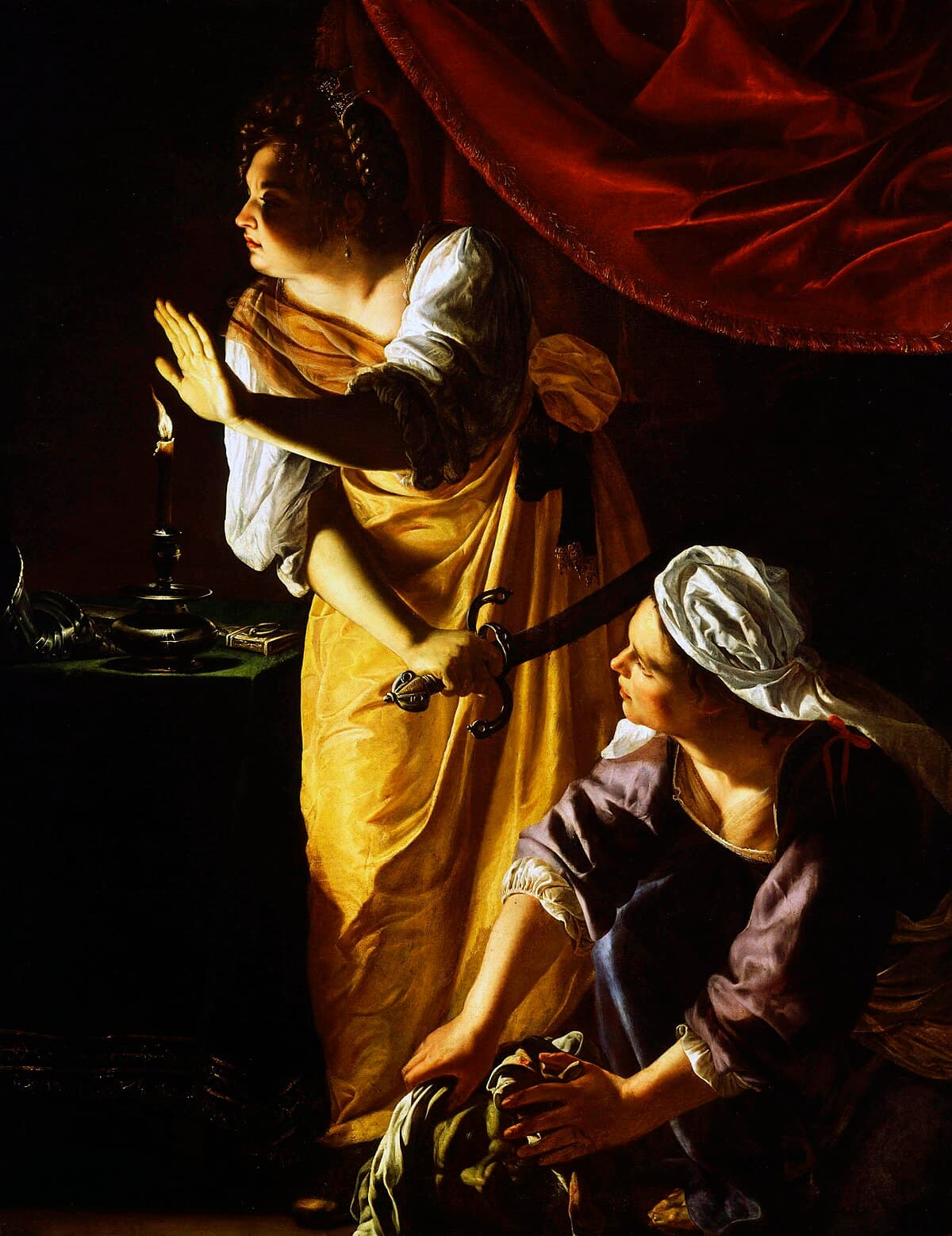
Artemisia Gentileschi made this visceral work around 1620 for Grand Duke Cosimo II de' Medici. The painting shows Judith and her maidservant Abra in the act of beheading Holofernes, working together with sleeves rolled up and grips firm. An arc of blood spatters from the general's neck as Judith presses down his head with one hand and pulls the sword through with the other.
The work surpasses Caravaggio's version in its unflinching realism. While Caravaggio paired a delicate Judith with a haggard attendant who merely watches, Gentileschi depicts two strong young women working in unison. The creases at Judith's wrists show the physical strength required. The painting was so violent that it was denied prominent display and later moved to an isolated part of the gallery when a Grand Duchess objected to it.
Today it hangs in the Caravaggio and Artemisia halls at the Uffizi Gallery in Florence. Gentileschi was the first woman to enter the Academy of Art and Design in Florence, and this painting has become a touchstone of feminist art history.