Wikimedia Commons • Public Domain
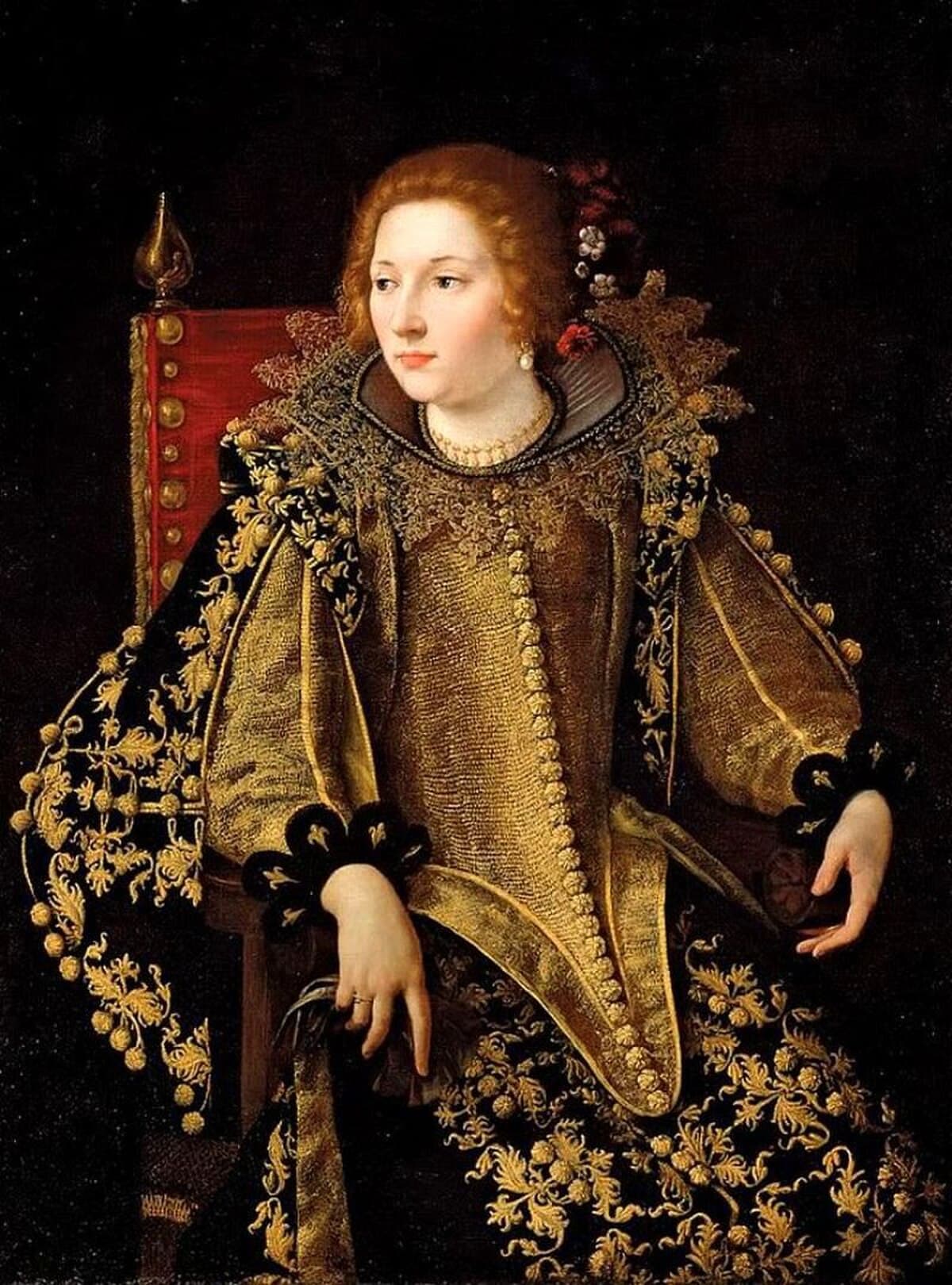
Self-portrait as a Female Martyr
Artwork Details
Italian artist Artemisia Gentileschi painted this self-portrait around 1615, depicting herself as Saint Catherine of Alexandria. She was twenty-two, recently relocated to Florence after the trauma of a public rape trial in Rome. The painting shows her holding a palm frond, the traditional emblem of martyrdom, dressed in a red garment symbolizing passion and sacrifice. Her gaze is direct, unbroken, utterly composed.
The choice of Saint Catherine was deliberate. Catherine was an early Christian martyr whose theological skills allegedly defeated fifty of the Roman emperor's philosophers in debate. She was tortured on a spiked wheel and beheaded when the wheel miraculously shattered. Gentileschi had endured her own ordeal: at seventeen, her father's colleague Agostino Tassi raped her, then her truthfulness was tested through torture during the seven-month trial. Tassi was convicted but never served his sentence. She fled Rome with a hastily arranged marriage.
This self-portrait as martyr wasn't a statement of victimhood. Catherine and Gentileschi both survived their tormentors, their identities intact. The painting predates by centuries the kind of role-playing self-imagery later artists like Cindy Sherman would explore. It remains in a private collection, a fierce declaration of strength from a woman who refused to let her story be defined by men.