Wikimedia Commons • Public Domain
Sacrifice of Isaac
by Caravaggio
Artwork Details
Where to See It
Barbara Piasecka-Johnson Collection (Princeton Univercity), Princeton, NJPrinceton, United States
Permanently housed
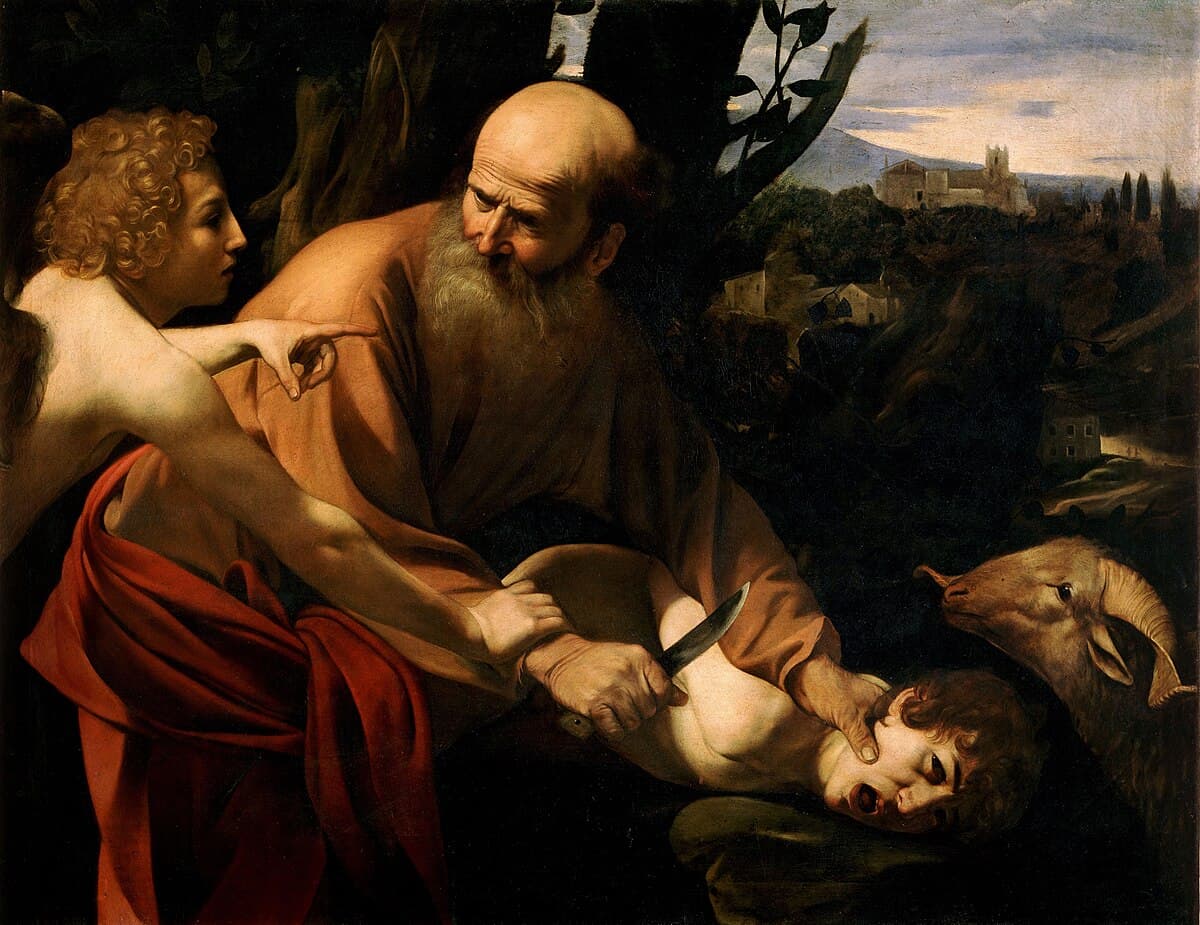
Caravaggio completed this dramatic scene between 1601 and 1603 for Cardinal Maffeo Barberini, who would later become Pope Urban VIII. The composition captures the climactic moment from Genesis when Abraham, commanded by God to sacrifice his only son Isaac, raises his knife only to be stopped by an angel. The divine messenger grips Abraham's wrist firmly and points toward a ram that will serve as substitute offering.
Isaac's face is unforgettable. His mouth opens in a scream of pure terror, his eyes wide, his shoulder straining against his father's grip. Caravaggio's studio assistant Cecco Boneri modeled for both Isaac and the angel, giving the figures an unsettling similarity. The chiaroscuro lighting falls like a spotlight on key elements: the angel's back and shoulders, Abraham's bald head and wrinkled brow, Isaac's anguished expression. Even the ram receives a soft glow, its placid look contrasting sharply with the human panic beside it.
This is the only Caravaggio painting with a true landscape in the background, showing what may be the Alban hills surrounding Rome. The work was donated to the Uffizi Gallery in 1917 by John Fairfax Murray, where it remains one of the museum's most visited Baroque paintings.