Wikimedia Commons • Public Domain
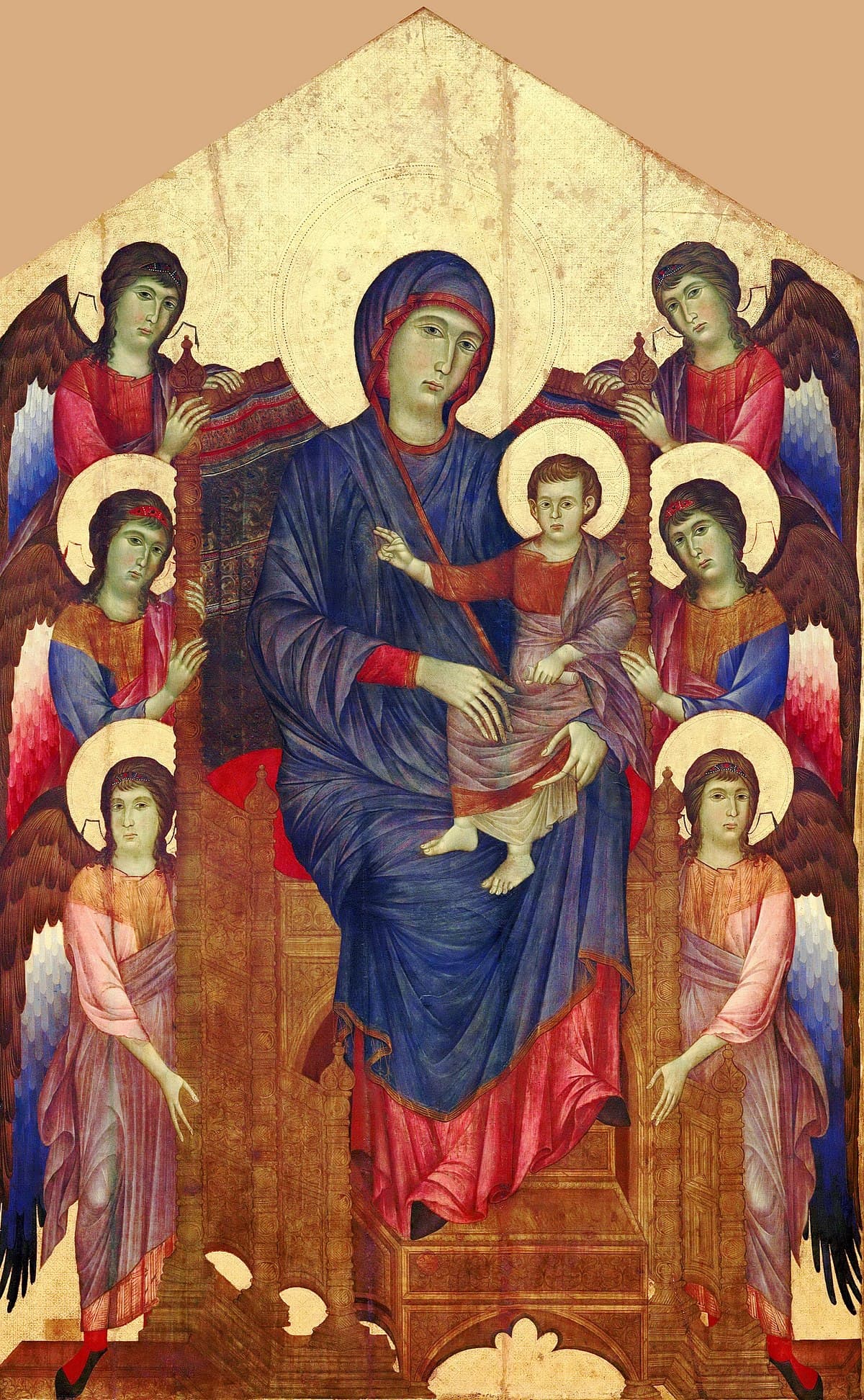
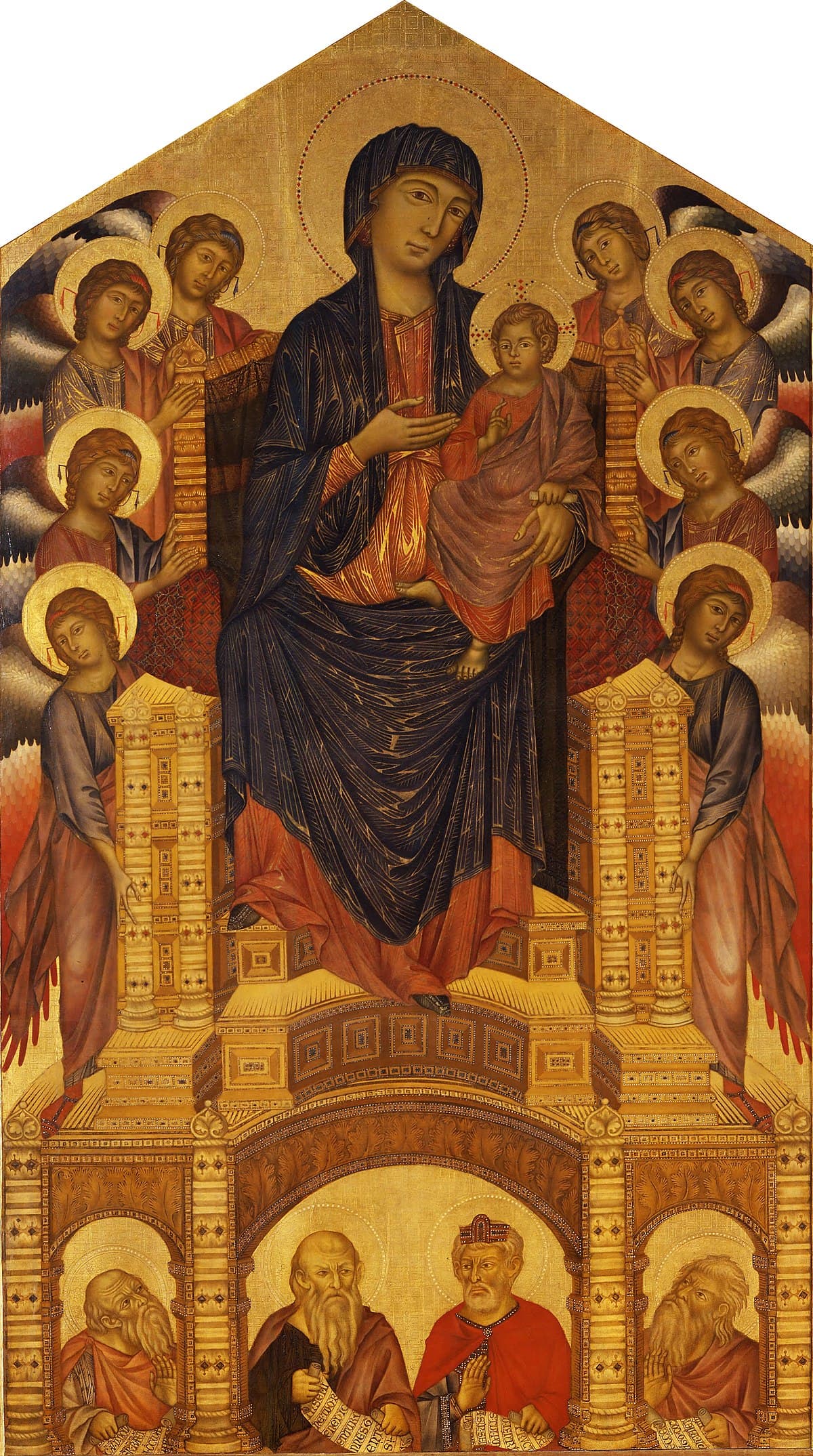
Madonna and Child Enthroned (Maesta)
by Cimabue
Artwork Details
Cimabue painted the monumental altarpiece around 1280-1290 for the church of Santa Trinita in Florence. Standing over twelve feet tall, the work shows the Virgin Mary enthroned with the Christ child on her lap, surrounded by eight angels arranged symmetrically on either side. Beneath the elaborate throne, four prophets peer upward from arched openings, creating a sense of sacred architecture within the painting itself.
The Santa Trinita Maestà represents a crucial moment in Western art history. While Cimabue worked within the Byzantine tradition of gold backgrounds and formal poses, he began pushing toward something new. The Virgin's face shows subtle modeling, and the throne creates an illusion of three-dimensional space that earlier Byzantine icons never attempted. These innovations would influence Cimabue's student Giotto, who would carry the revolution much further.
The painting remained in Santa Trinita until 1919, when it was moved to the Uffizi Gallery for preservation. Today it hangs in the same room as similar monumental Madonnas by Duccio and Giotto, allowing visitors to witness the transformation of Italian religious art across three crucial decades.