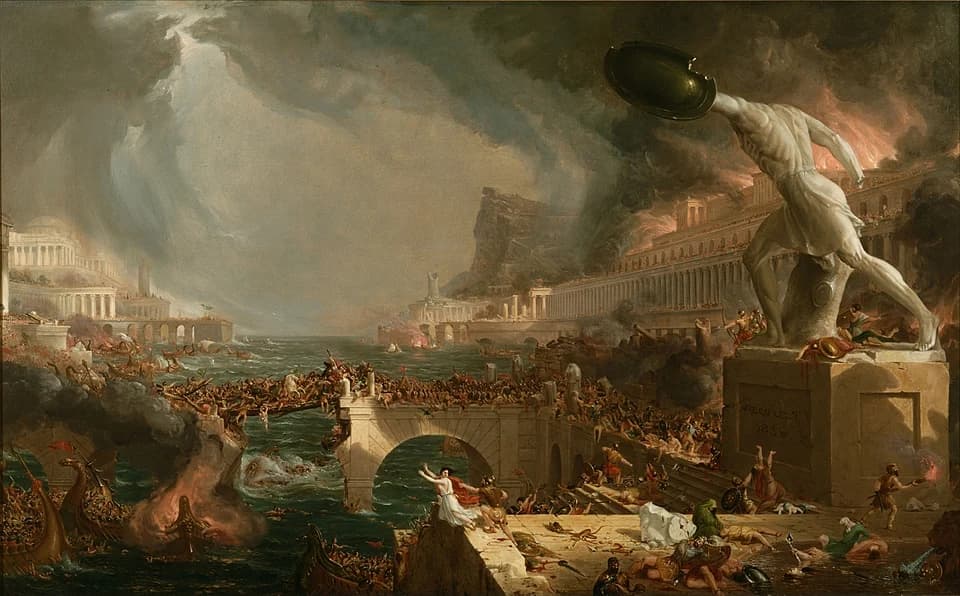
The Course of Empire: Destruction
by Thomas Cole, 1836
Artwork Details
Details
- Year
- 1836
- Medium
- Oil on canvas
- Size
- 100.3 cm × 161.3 cm
Thomas Cole painted The Course of Empire: Destruction in 1836, the fourth canvas in a five-painting cycle. A classical city collapses under invasion. Flames consume temples as soldiers swarm across a broken bridge. Bodies fall into churning water below a colossal statue toppling from its pedestal.
The series traces civilization from wilderness through pastoral growth, imperial grandeur, and this violent collapse, ending in desolation. Cole founded the Hudson River School and shaped American landscape painting. This allegorical work warned against imperial overreach, commissioned by New York merchant Luman Reed.
New-York Historical Society holds all five paintings in the cycle. Viewing them in sequence amplifies their message about civilizations rising and falling. The destruction scene burns brightest in collective memory.