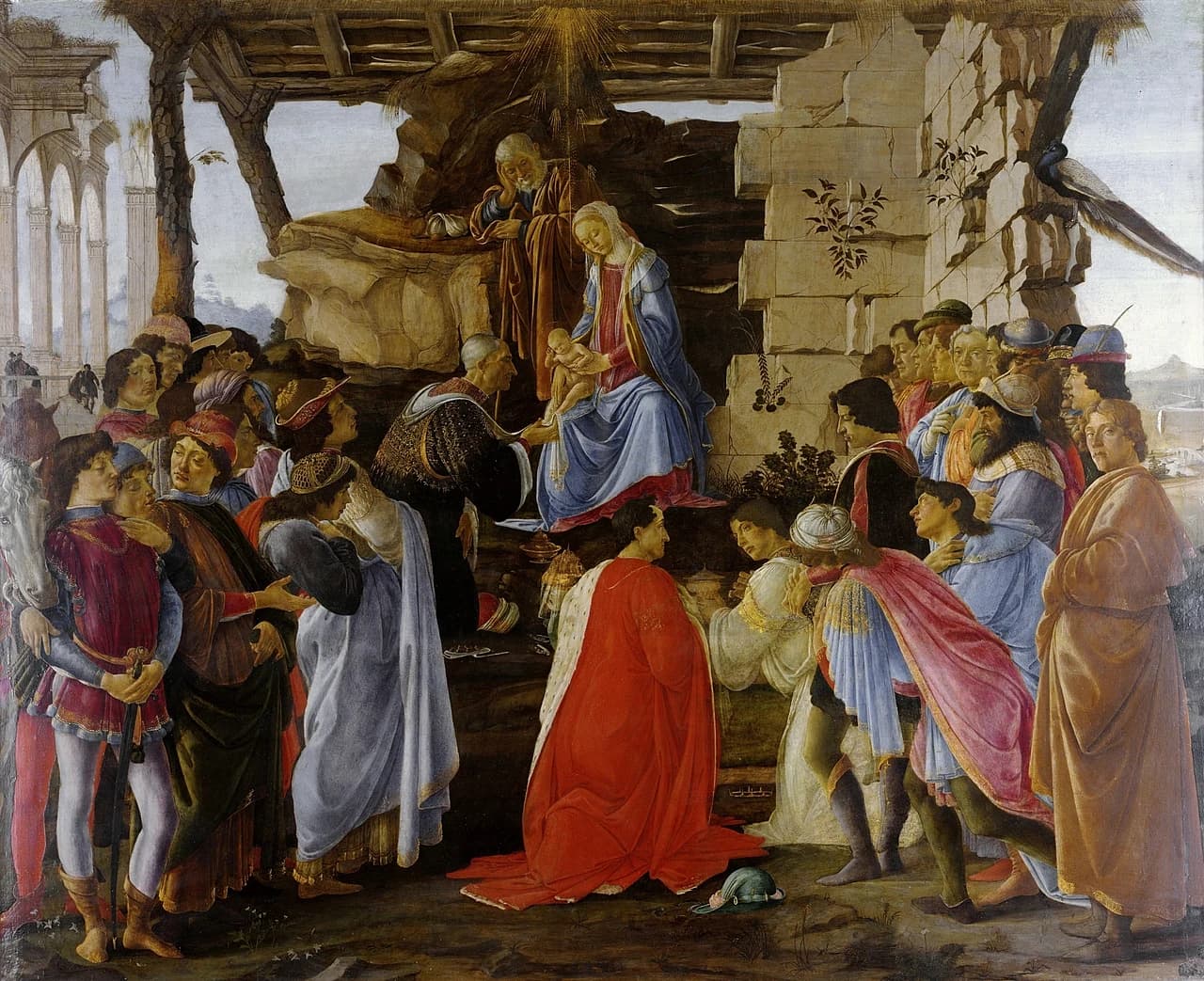
Masaccio, Public domain, via Wikimedia Commons.
Crucifixion
by Masaccio, 1426
Artwork Details
Details
- Year
- 1426
- Medium
- Tempera on panel
- Size
- 83 cm × 63 cm
Cite or Embed This Work
APA · MLA · Chicago1-click academic citation and embeddable “On View” museum badge for articles, syllabi, and research.
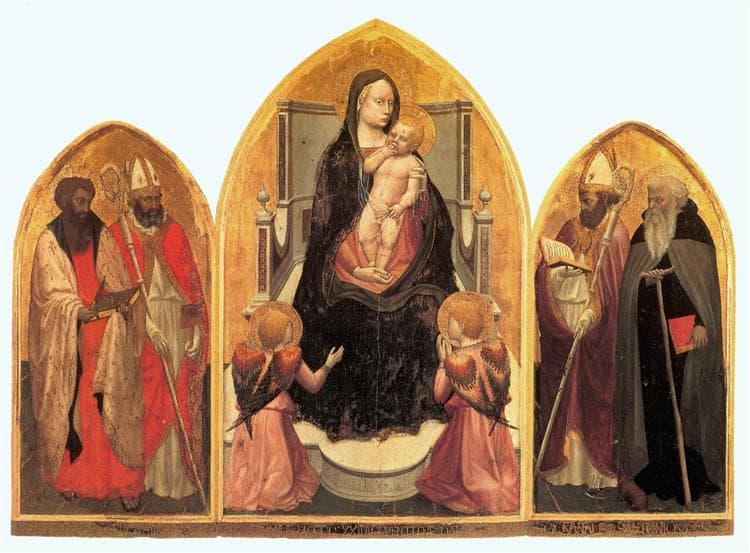
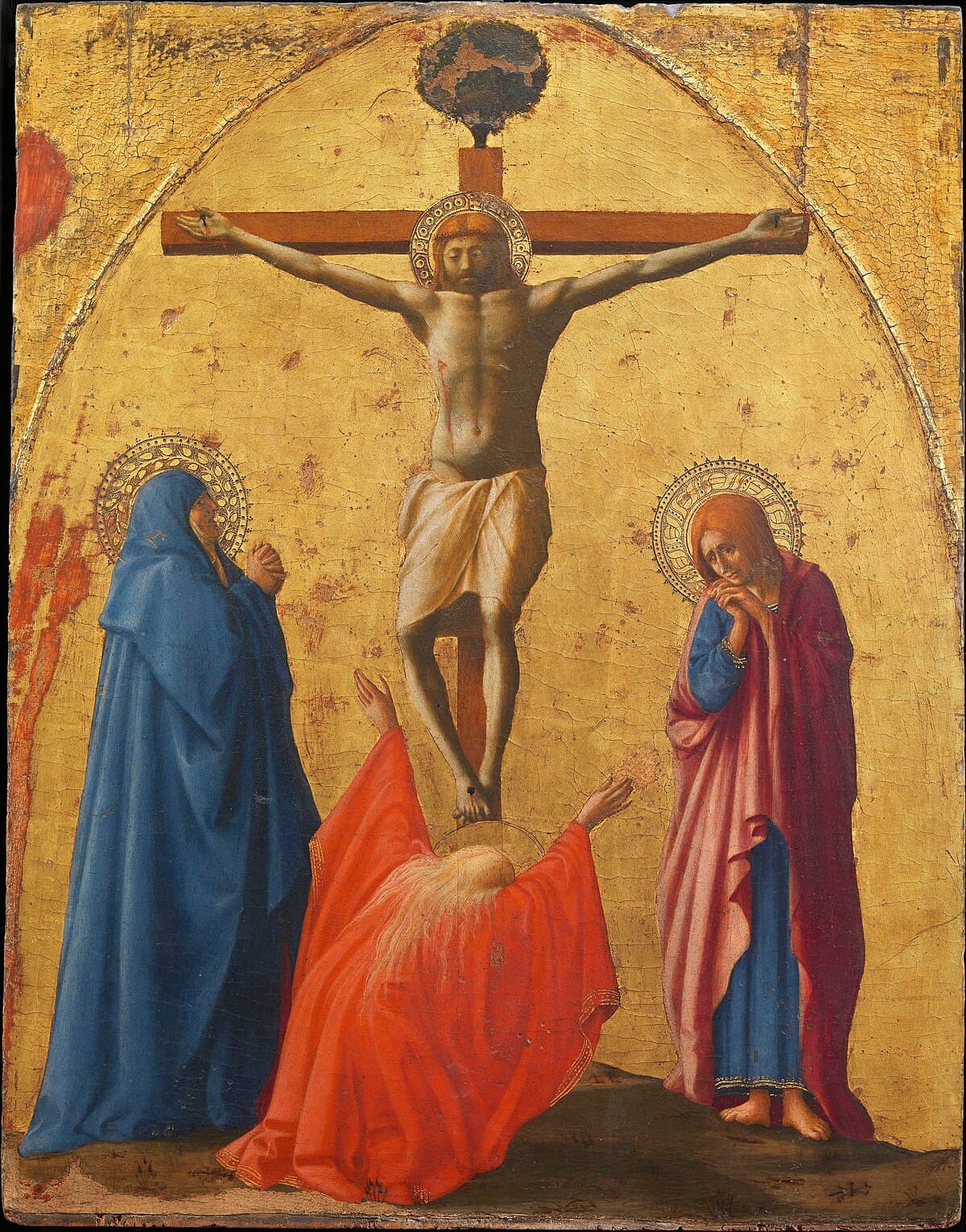
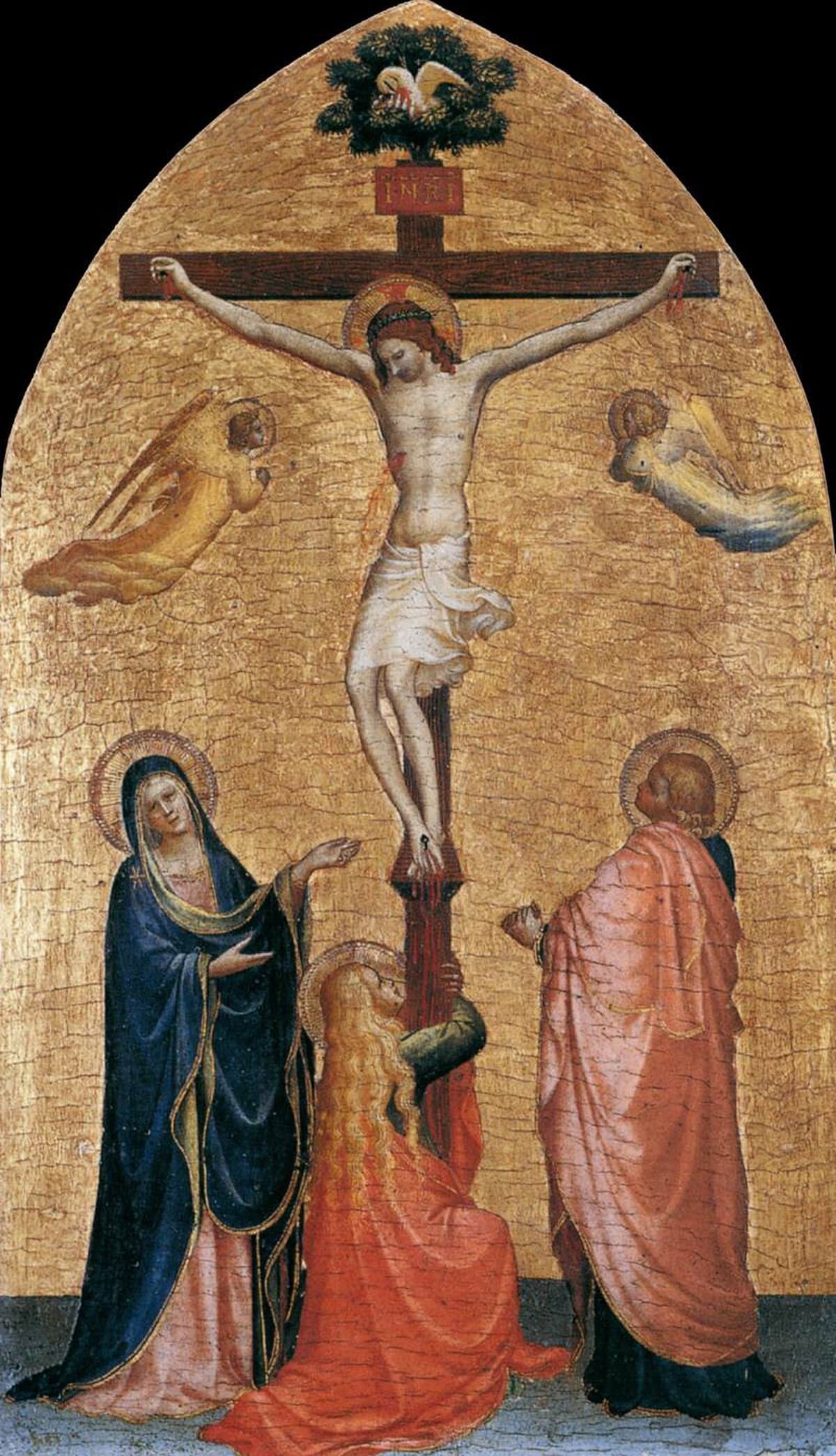
Masaccio painted this Crucifixion panel in 1426 as the crowning element of the Pisa Altarpiece. The commission came from Ser Giuliano di Colino degli Scarsi for his chapel in Santa Maria del Carmine in Pisa. The entire altarpiece cost 80 florins. Today only fragments survive, scattered across museums worldwide. This Crucifixion panel found its way to the Museo di Capodimonte.
The panel originally sat above the central Madonna and Child, emphasizing the Eucharistic sacrifice at the altar below. Against a traditional gold background, Masaccio introduced a striking innovation: he painted the scene from below, as if the viewer stood at the foot of the cross looking up. Christ's body foreshortens dramatically, his head slumped forward.
Mary Magdalene kneels at the base of the cross with arms flung wide in grief, her red cloak spreading across the ground. The Virgin and Saint John stand on either side. The emotional intensity and spatial realism broke from medieval conventions, pointing toward the Renaissance to come. Capodimonte acquired the panel in 1901, initially cataloging it as the work of an anonymous Florentine before scholars recognized Masaccio's hand.