The Death of the Virgin
by Caravaggio, 1606
Artwork Details
Details
- Year
- 1606
- Medium
- Oil on canvas
- Size
- 369 cm × 245 cm (145.3 × 96.5 in)
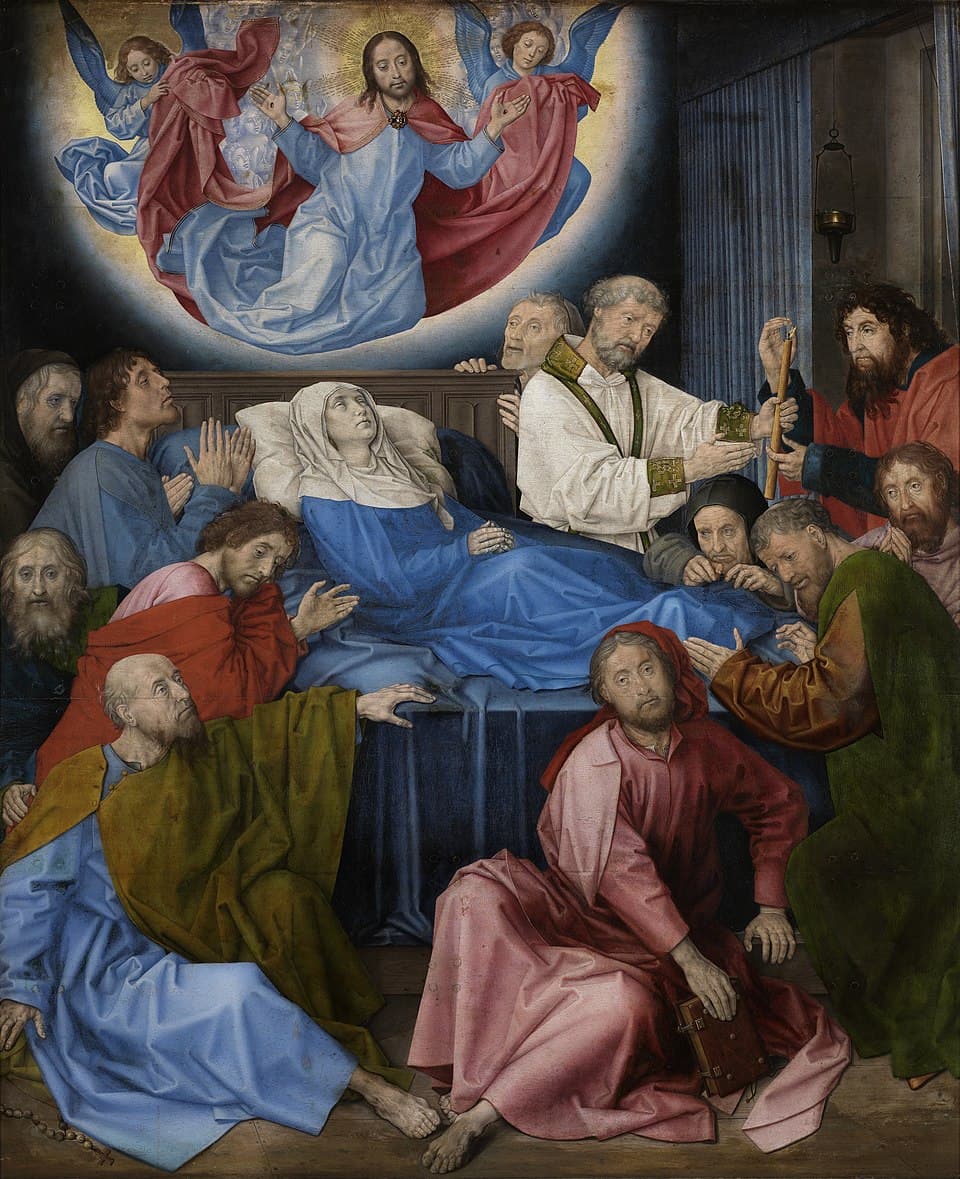
Caravaggio painted The Death of the Virgin around 1604-1606 for the Carmelite church of Santa Maria della Scala in Rome. The painting was rejected as scandalous. The Virgin Mary lies dead, her body bloated, feet bare and dirty, surrounded by grieving apostles. A vast red curtain sweeps across the upper canvas.
Rumors spread that Caravaggio used a drowned prostitute from the Tiber as his model for the Virgin. True or not, the unflinching realism violated every convention of religious art. The barefoot apostles, the corpse-like pallor, the complete absence of heavenly glory: all offended the commissioning monks.
The Duke of Mantua purchased the rejected painting on Peter Paul Rubens' advice. It passed through English and French royal collections before reaching the Louvre. What the monks found sacrilegious, later generations recognized as radical.