The Demon Seated
by Mikhail Vrubel, 1890
Artwork Details
Details
- Year
- 1890
- Medium
- Oil on canvas
- Size
- 114 cm × 211 cm
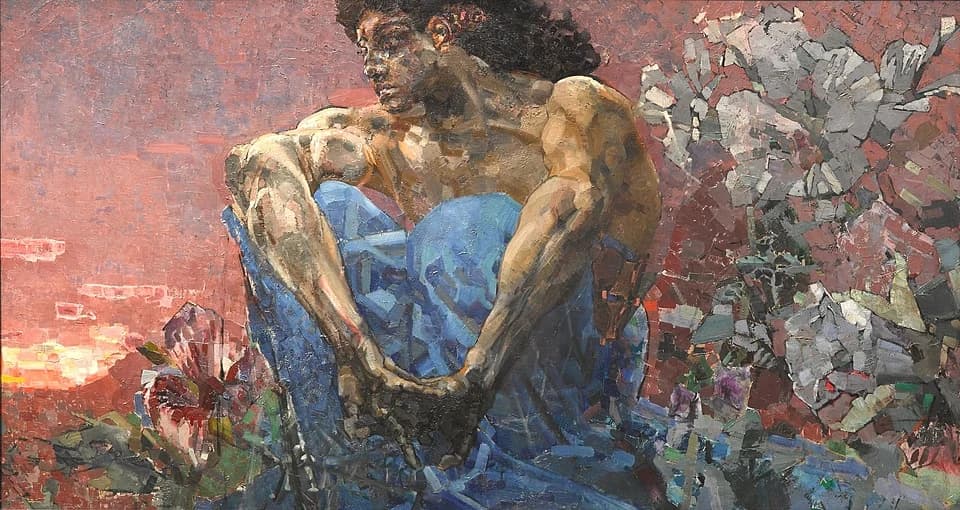
Mikhail Vrubel painted The Demon Seated in 1890, creating what would become his most famous and influential work. The painting shows a muscular, melancholy figure sitting alone at twilight, his massive arms wrapped around his knees, his face turned away in brooding contemplation. Giant flowers bloom around him while mountains fade into the evening sky behind.
Vrubel drew inspiration from Mikhail Lermontov's Romantic poem "The Demon," which tells of a fallen angel who wanders the earth in eternal loneliness. But Vrubel's demon isn't evil or menacing. He's tragic and isolated, a being caught between heaven and earth, belonging to neither. The artist's radical technique fragments the surface into faceted planes that shimmer like mosaics, breaking completely from the smooth academic painting of his contemporaries.
This mosaic-like brushwork made Vrubel a pioneer of Russian Symbolism and influenced generations of artists who followed. The painting now occupies a central place at the Tretyakov Gallery in Moscow. Vrubel would return to the demon subject repeatedly throughout his career, but this seated figure, with its strange beauty and cosmic loneliness, remains the most spiritually powerful version.