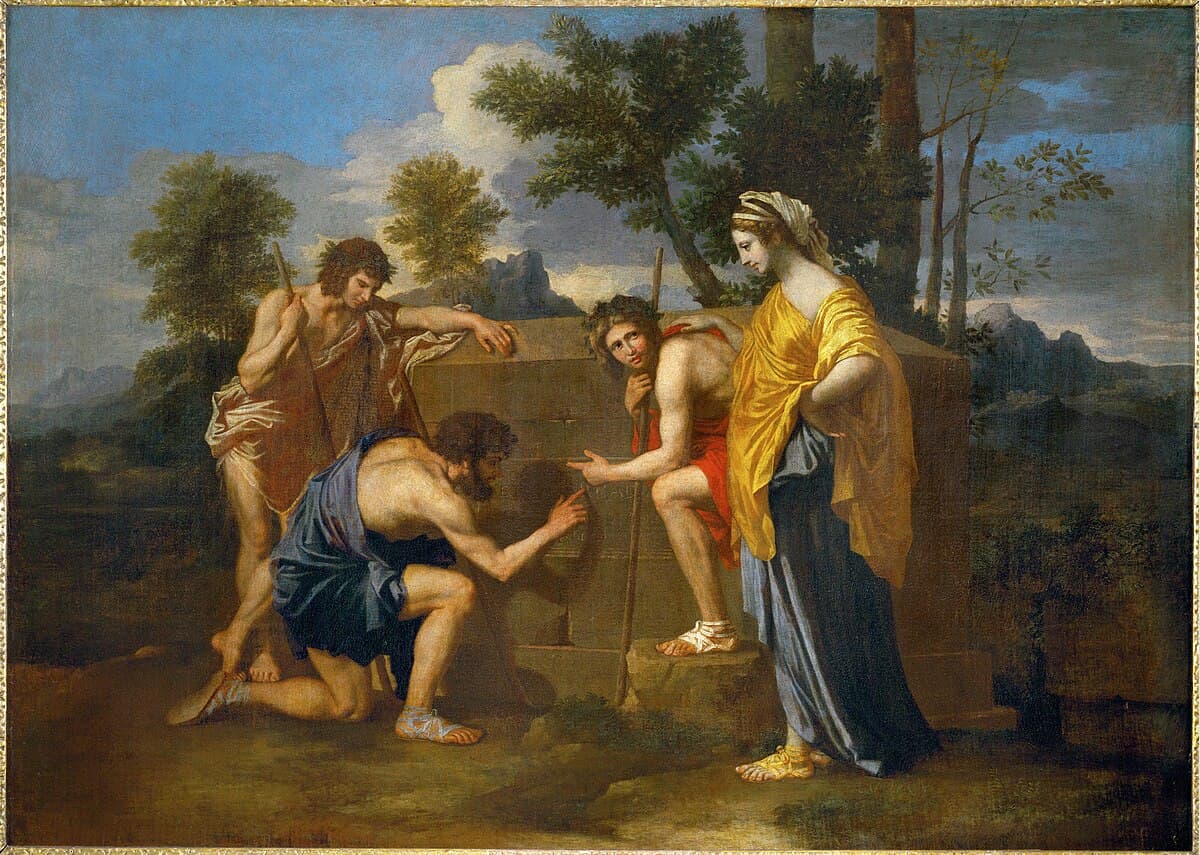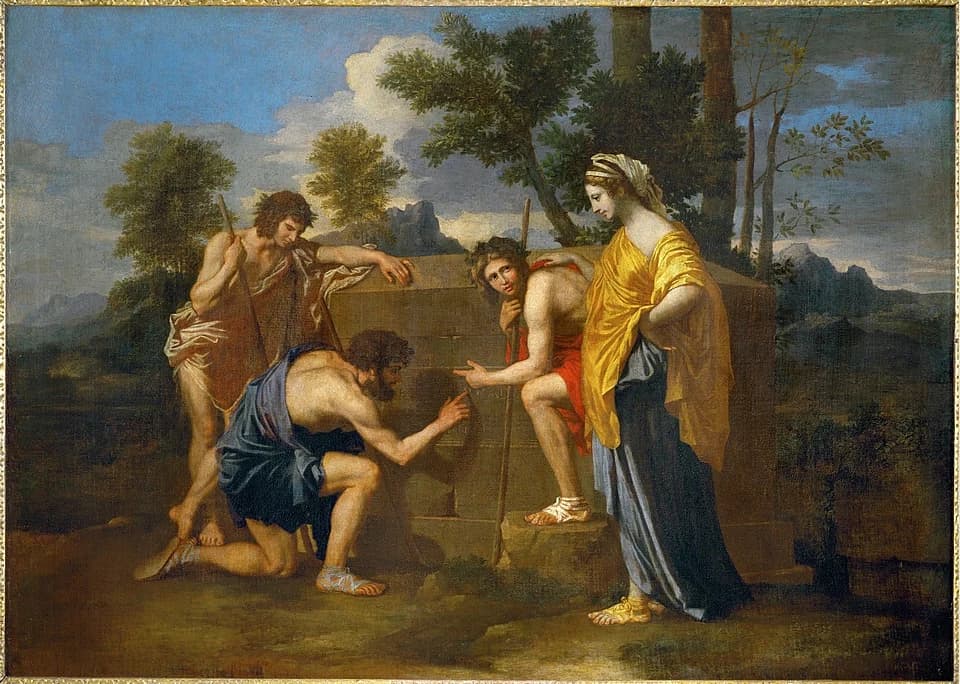
Et in Arcadia Ego
by Nicolas Poussin, 1638
Artwork Details
Details
- Year
- 1638
- Medium
- Oil on canvas
- Size
- 85 cm × 121 cm
Cite or Embed This Work
APA · MLA · Chicago1-click academic citation and embeddable “On View” museum badge for articles, syllabi, and research.
Nicolas Poussin painted this philosophical meditation between 1637 and 1638. Four shepherds gather around an austere tomb in an idealized pastoral landscape, tracing an inscription: "Et in Arcadia Ego." The Latin translates roughly to "Even in Arcadia, I exist," with the "I" traditionally understood as Death itself.
Poussin made an earlier version in 1627, now at Chatsworth House, showing the shepherds in dramatic confrontation with mortality. This later Louvre version is quieter, more contemplative. The figures meditate solemnly rather than react with shock. A skull from the earlier version has been removed, and one shepherd traces his companion's shadow on the stone, a gesture linked to the ancient origin of painting described by Pliny.
Arcadia was the mythical land of perfect happiness. Poussin, the leading painter of classical French Baroque, transforms the memento mori into something gentler: not a warning about death's presence, but a meditation on a beautiful past. German poets later reinterpreted the phrase as "I too was born in Arcadia," shifting focus from death to nostalgia.