Wikimedia Commons • Public Domain
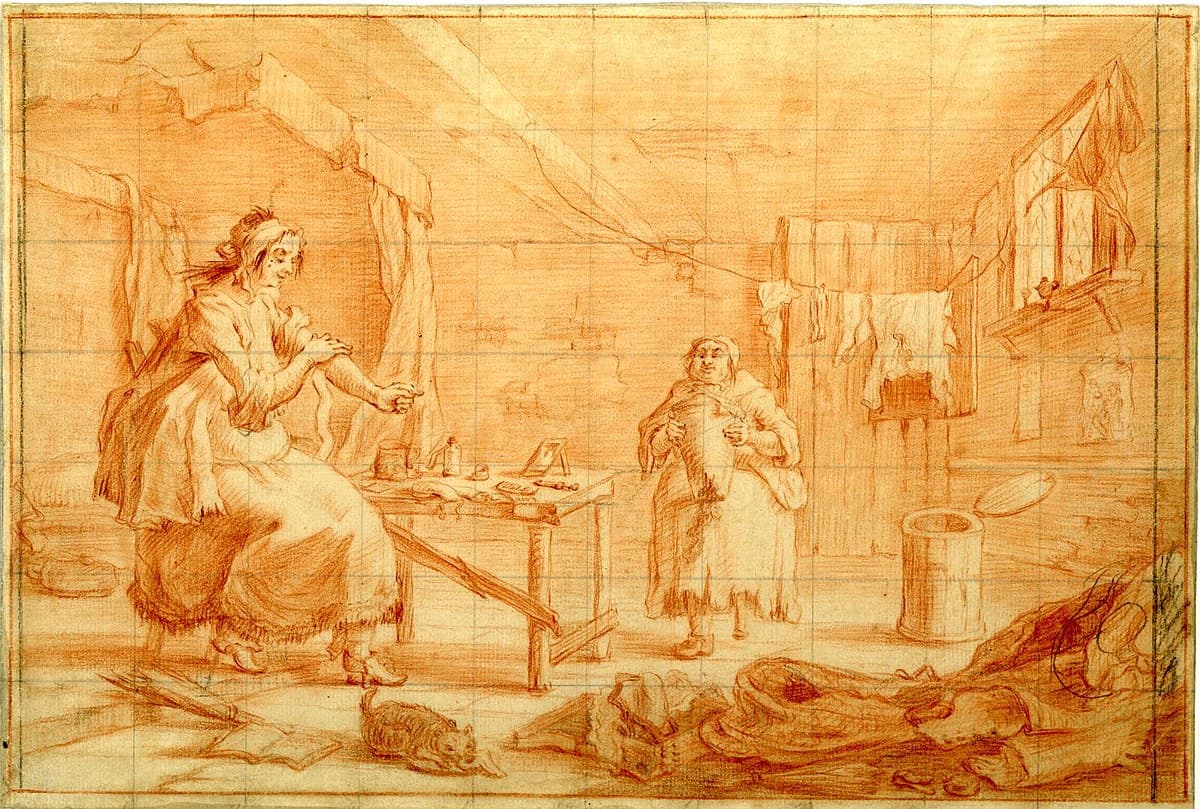
Painted composition design to medicine
by Gustav Klimt
Artwork Details
Austrian painter Gustav Klimt created this composition study for "Medicine," one of three monumental ceiling paintings commissioned for the University of Vienna's Great Hall in 1894. The final version, completed in 1907, sparked one of the greatest art scandals in Austrian history. When Klimt unveiled Medicine at the 1901 Secession Exhibition, critics attacked it for "pornography" and "perverted excess."
The painting showed a column of semi-nude figures representing the river of life. A young nude woman floated in space with a newborn at her feet, while a skeleton symbolized death. At the bottom stood Hygieia, goddess of health, with the Aesculapian snake around her arm and the cup of Lethe in her hand. She turned her back on mankind. Rather than celebrating Vienna's medical achievements, Klimt exposed the limits of healing and the inevitability of death.
Eighty-seven faculty members protested. The scandal reached the Austrian Parliament, the first time a cultural debate had been raised there. In 1943, the finished painting was moved to Schloss Immendorf castle for safekeeping during the war. On May 7, 1945, retreating SS forces set fire to the castle, destroying all three faculty paintings. Only sketches and black-and-white photographs survive, with one color detail showing Hygieia in red and gold.