Wikimedia Commons • Public Domain
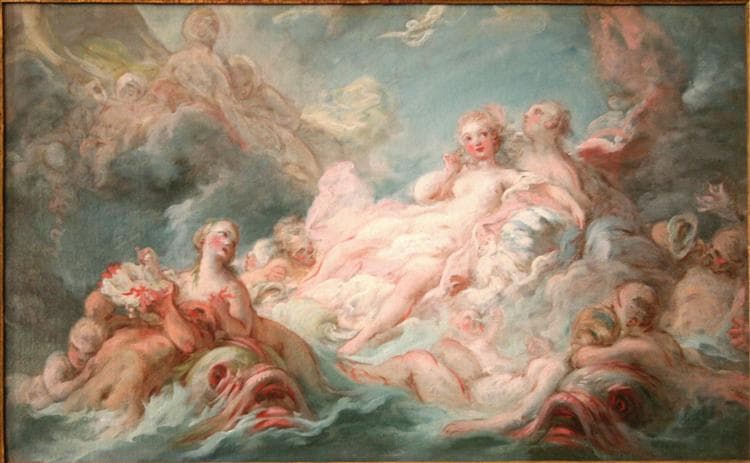
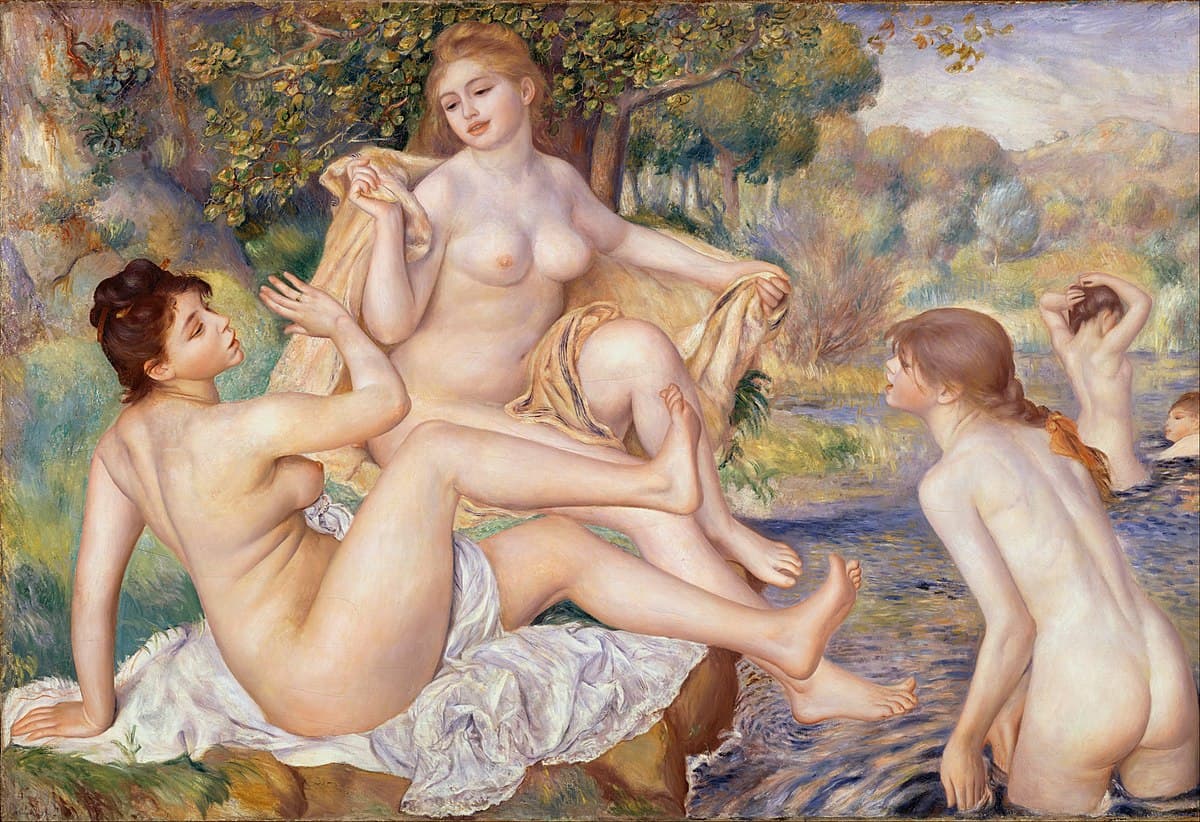
The Bathers
StyleRococo
Artwork Details
Cite or Embed This Work
APA · MLA · Chicago1-click academic citation and embeddable “On View” museum badge for articles, syllabi, and research.
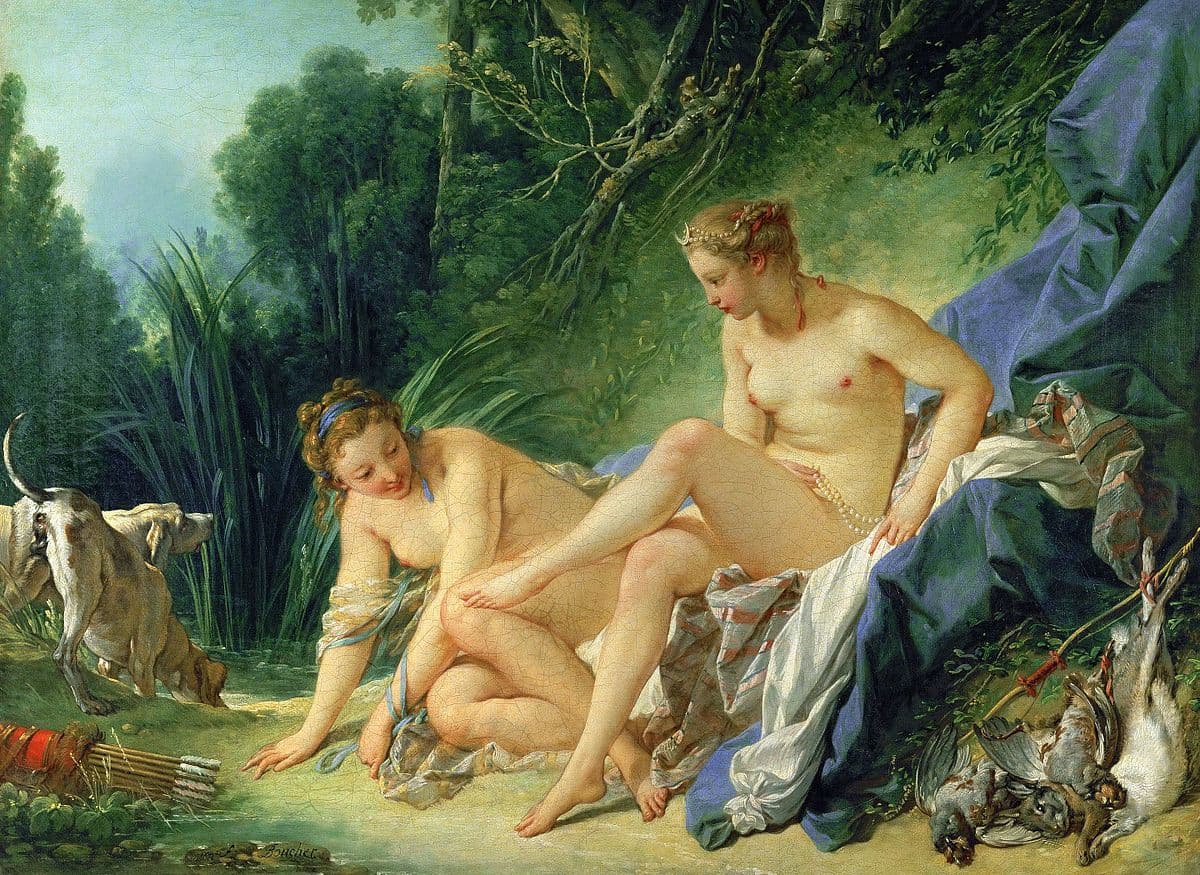
Jean-Honoré Fragonard painted The Bathers around 1765, creating a rare nude subject in a career more often devoted to clothed figures in garden settings. A tumble of voluptuous women splash and recline in a verdant landscape, their flesh tones glowing against the lush greens of the surrounding foliage. The influence of his teacher François Boucher shows in the subject matter, while the loose, energetic brushwork recalls Rubens.
The painting captures the hedonistic spirit of Rococo at its most exuberant. Bodies twist and overlap in a dynamic composition that suggests motion and pleasure. Fragonard applies paint with visible freedom, building forms through bold strokes rather than careful blending. This technical bravura gives the scene its sense of vitality and spontaneity, as if the moment might dissolve at any second.
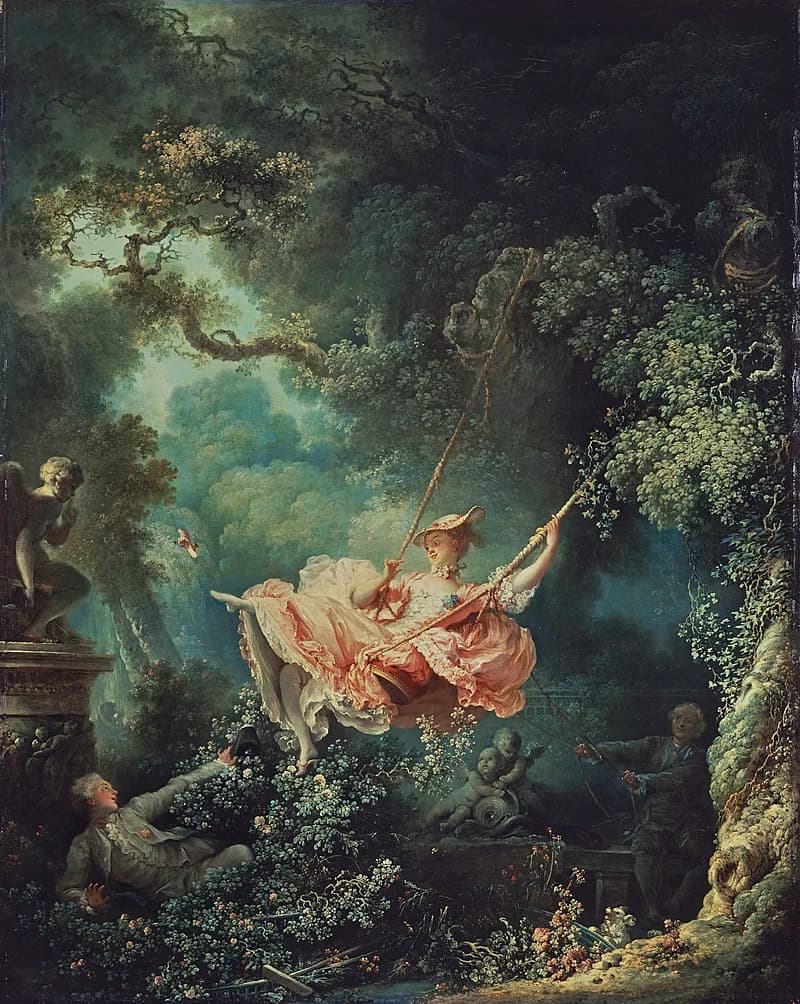
While Fragonard is best known for works like The Swing, The Bathers reveals his ability to handle the classical nude tradition with distinctly French sensibility. The painting now hangs at the Louvre in Paris, representing the playful sensuality that defined aristocratic French taste before the Revolution swept that world away.