Wikimedia Commons • Public Domain
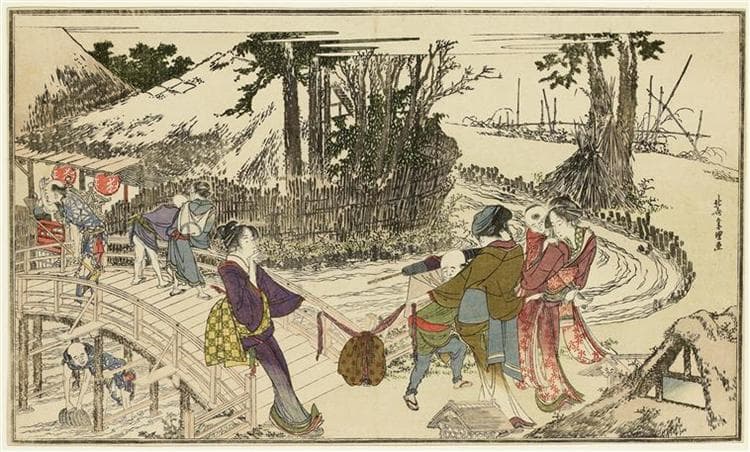
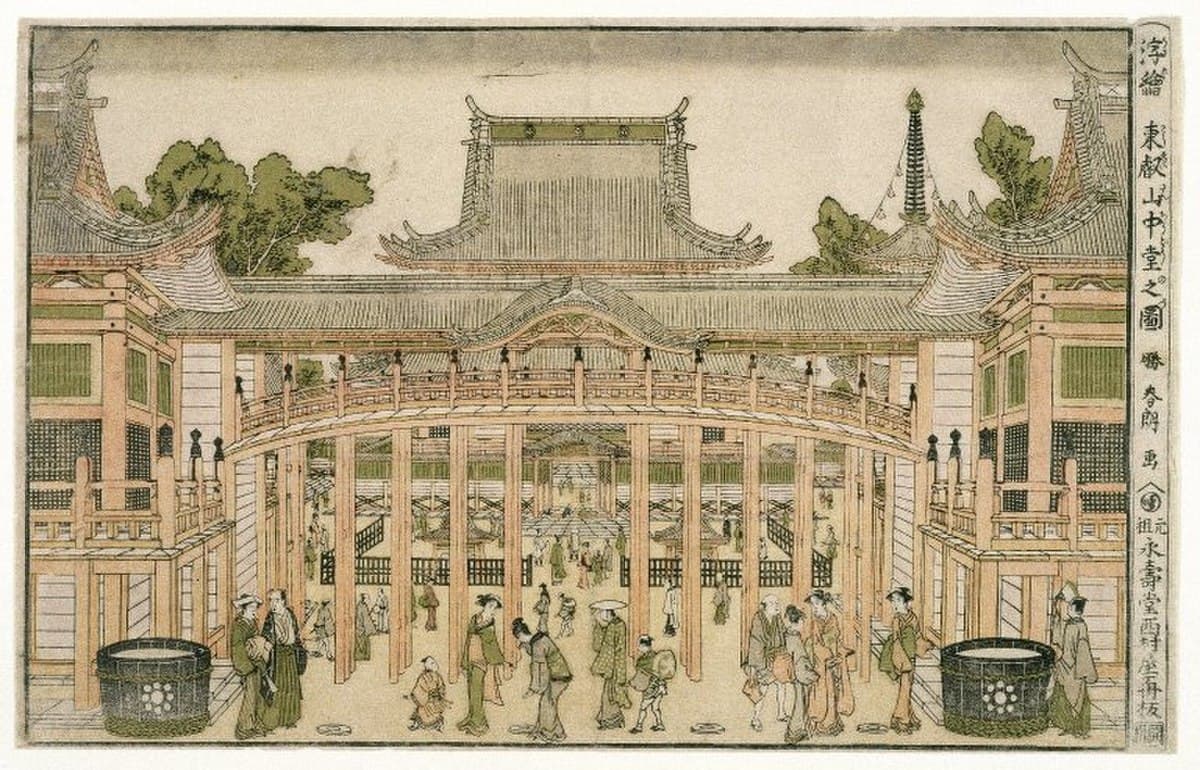
Inside the Courtyard of the Toeizan Temple at Ueno
StyleUkiyo-e
Artwork Details
Cite or Embed This Work
APA · MLA · Chicago1-click academic citation and embeddable “On View” museum badge for articles, syllabi, and research.
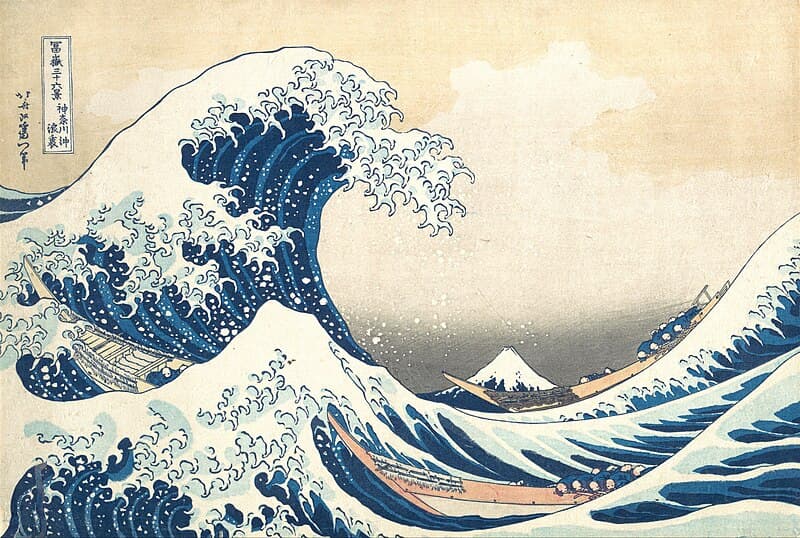
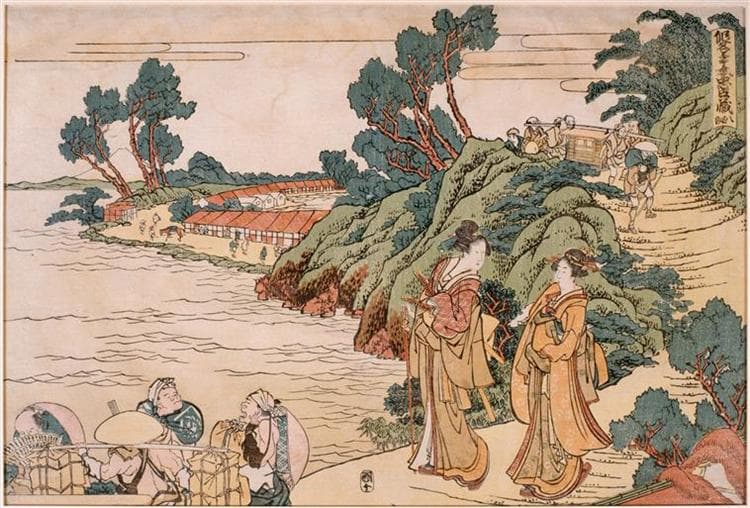
Japanese artist Katsushika Hokusai created this woodblock print in 1786, depicting the courtyard of Toeizan Temple at Ueno in Edo (modern-day Tokyo). The print belongs to the Ukiyo-e tradition, the "pictures of the floating world" that captured everyday life and famous places throughout Japan. Hokusai was 26 when he made this work, decades before his iconic Great Wave would make him internationally famous.
Toeizan Temple (Kan'ei-ji) was one of Edo's most important Buddhist temples, serving as the family temple of the Tokugawa shoguns. The grounds at Ueno were known for their cherry blossoms and remained a popular destination for residents of the city. Hokusai's print captures the architecture and atmosphere of this sacred space during a quieter moment.
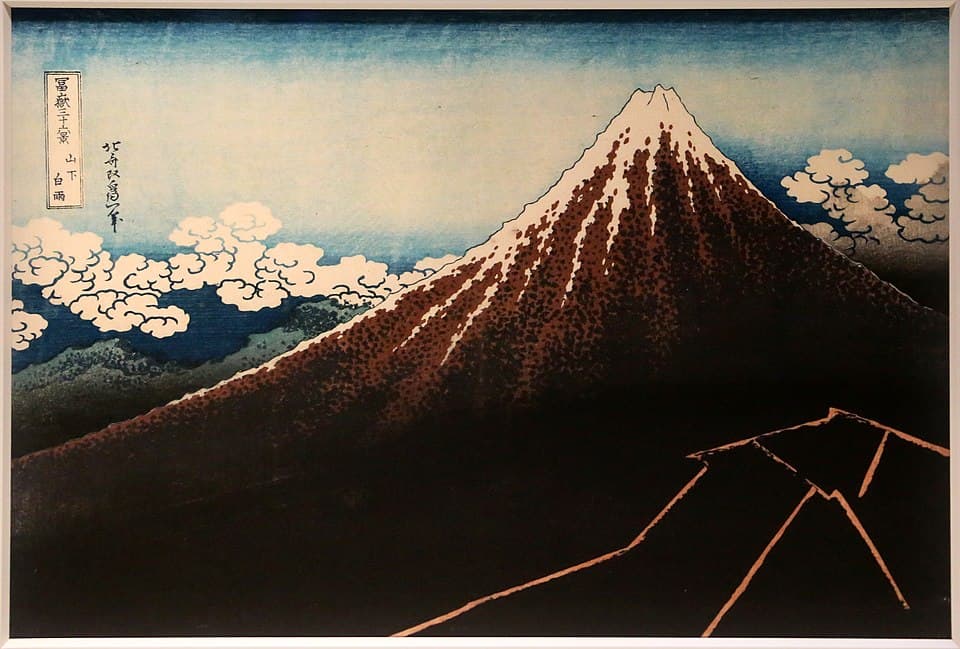
The print measures 24.1 x 37.5 cm, a typical size for landscape subjects. Hokusai would go on to create thousands of prints and paintings over his nearly 90 years, constantly reinventing his style. This early work shows his developing skill at perspective and architectural detail. Today, the print is part of the collection at the Brooklyn Museum in New York, where it demonstrates Hokusai's range beyond the wave and mountain imagery most associated with his name.