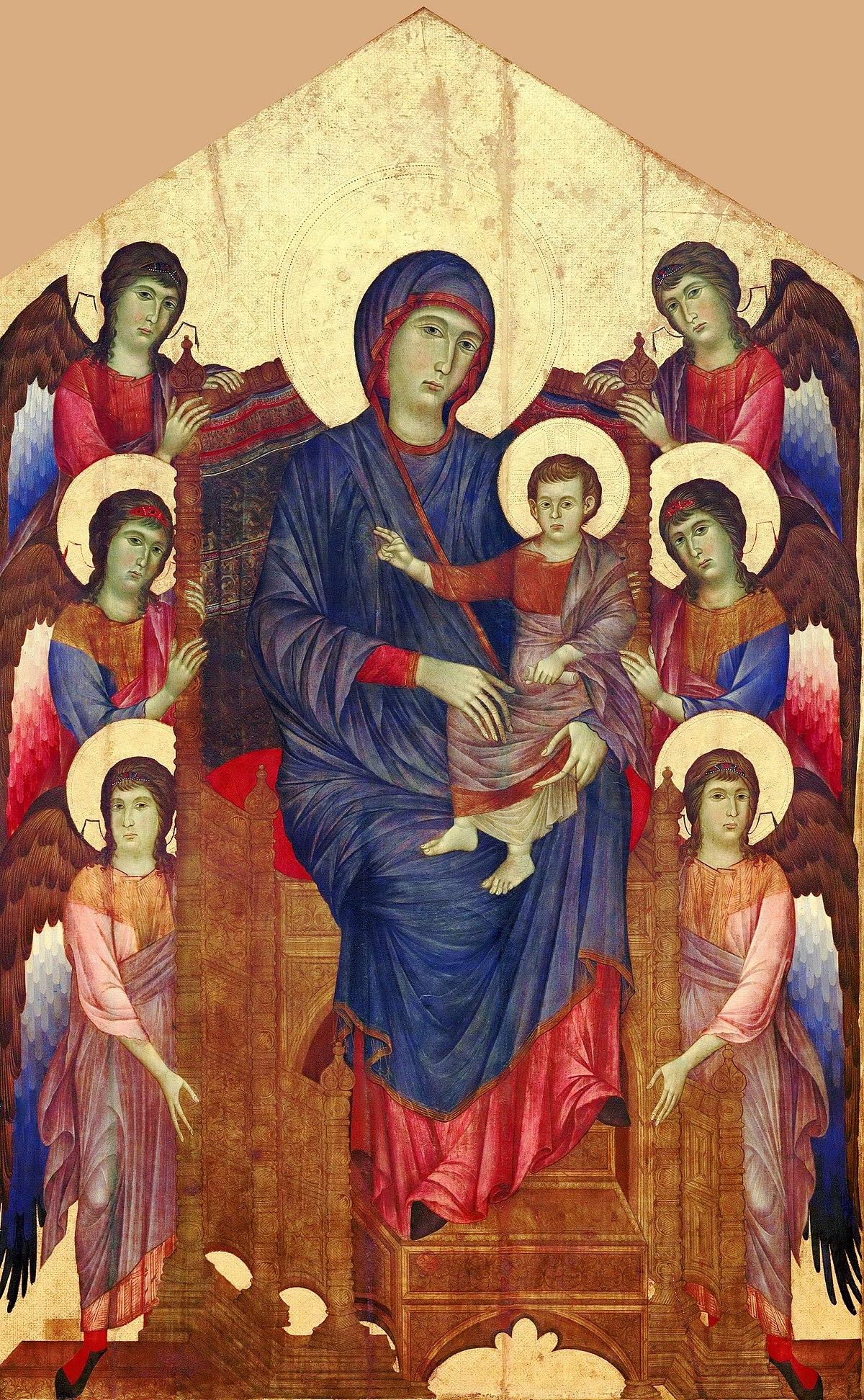
Maestà of Santa Trinita
by Cimabue, 1290
StyleRenaissance
Artwork Details
Details
- Year
- 1290
- Medium
- Tempera on panel
- Size
- 385 cm × 223 cm
Cite or Embed This Work
APA · MLA · Chicago1-click academic citation and embeddable “On View” museum badge for articles, syllabi, and research.
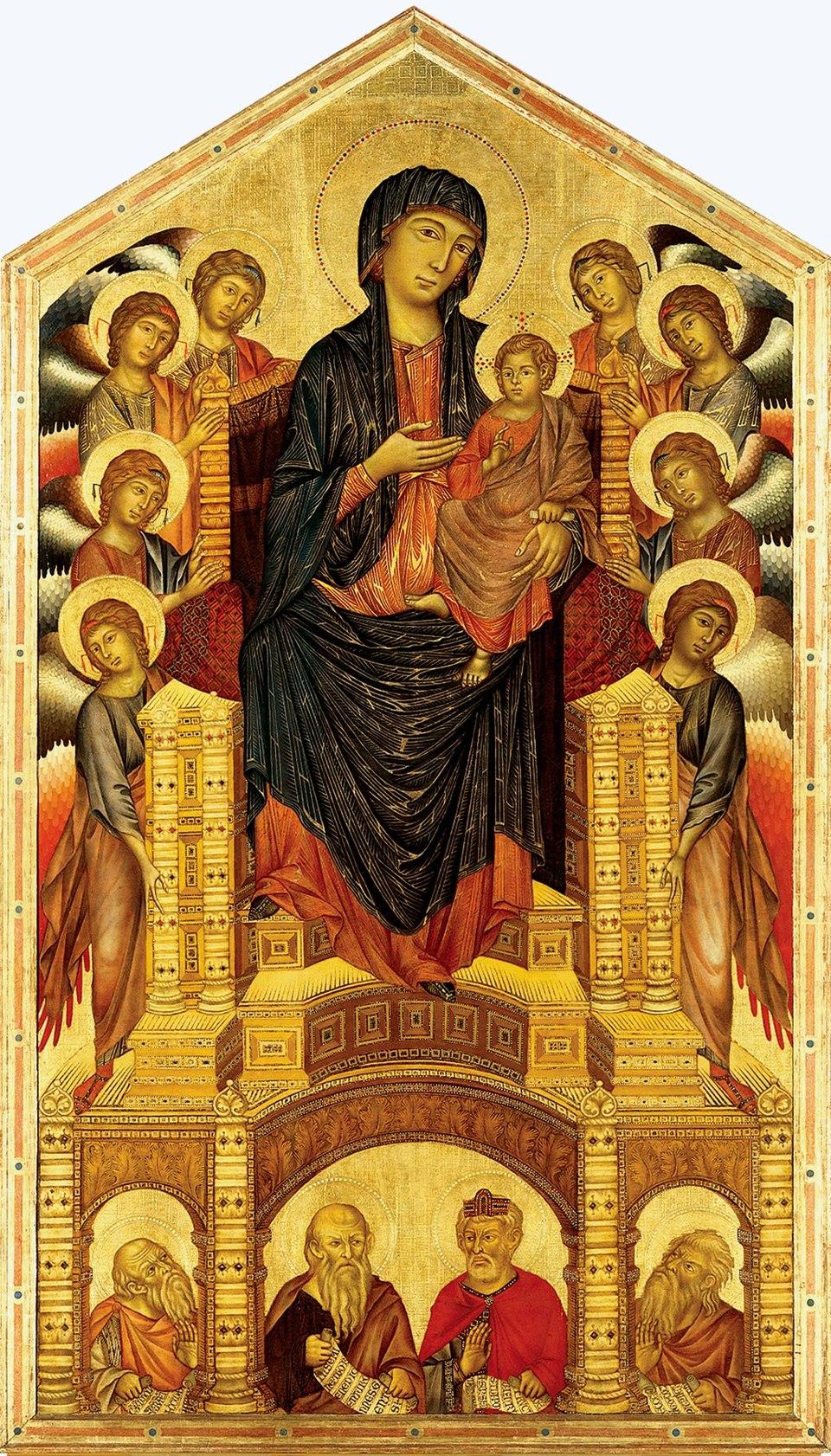
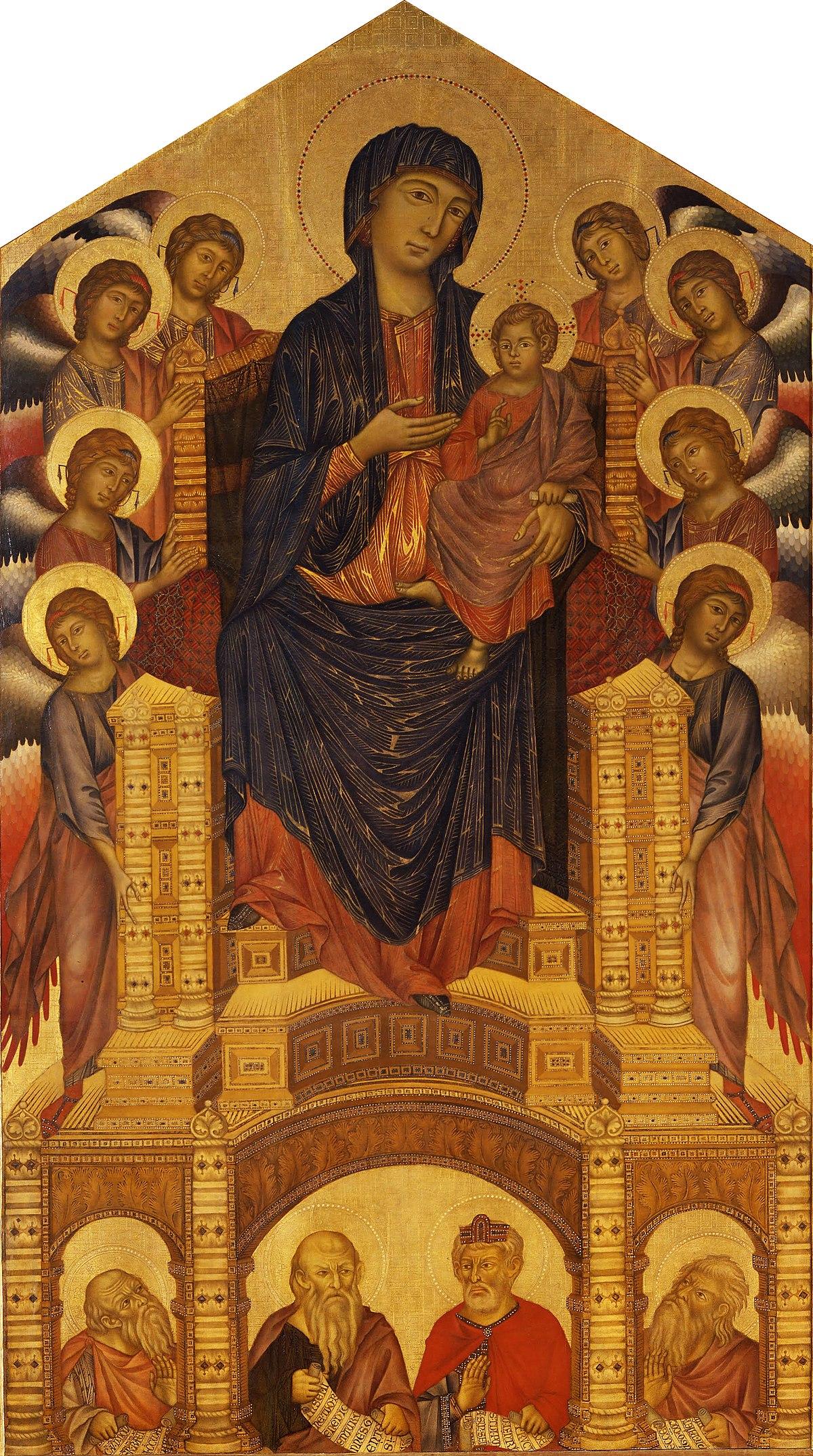
Cimabue painted this large panel around 1280-1290 for the main altar of the Vallombrosan Church of Santa Trinita in Florence. The Virgin Mary sits enthroned with the Christ Child, surrounded by eight angels. Four prophets appear in half-length portraits at the base, holding scrolls that allude to the Incarnation and Mary's virginity.
The throne is depicted from an innovative frontal view with a sense of three-dimensional depth unusual for the time. Though Cimabue worked within Byzantine traditions, the throne's architectural mass and the gentle expressions on the Virgin and angels hint at the naturalism that would define younger artists like Giotto, his own pupil.
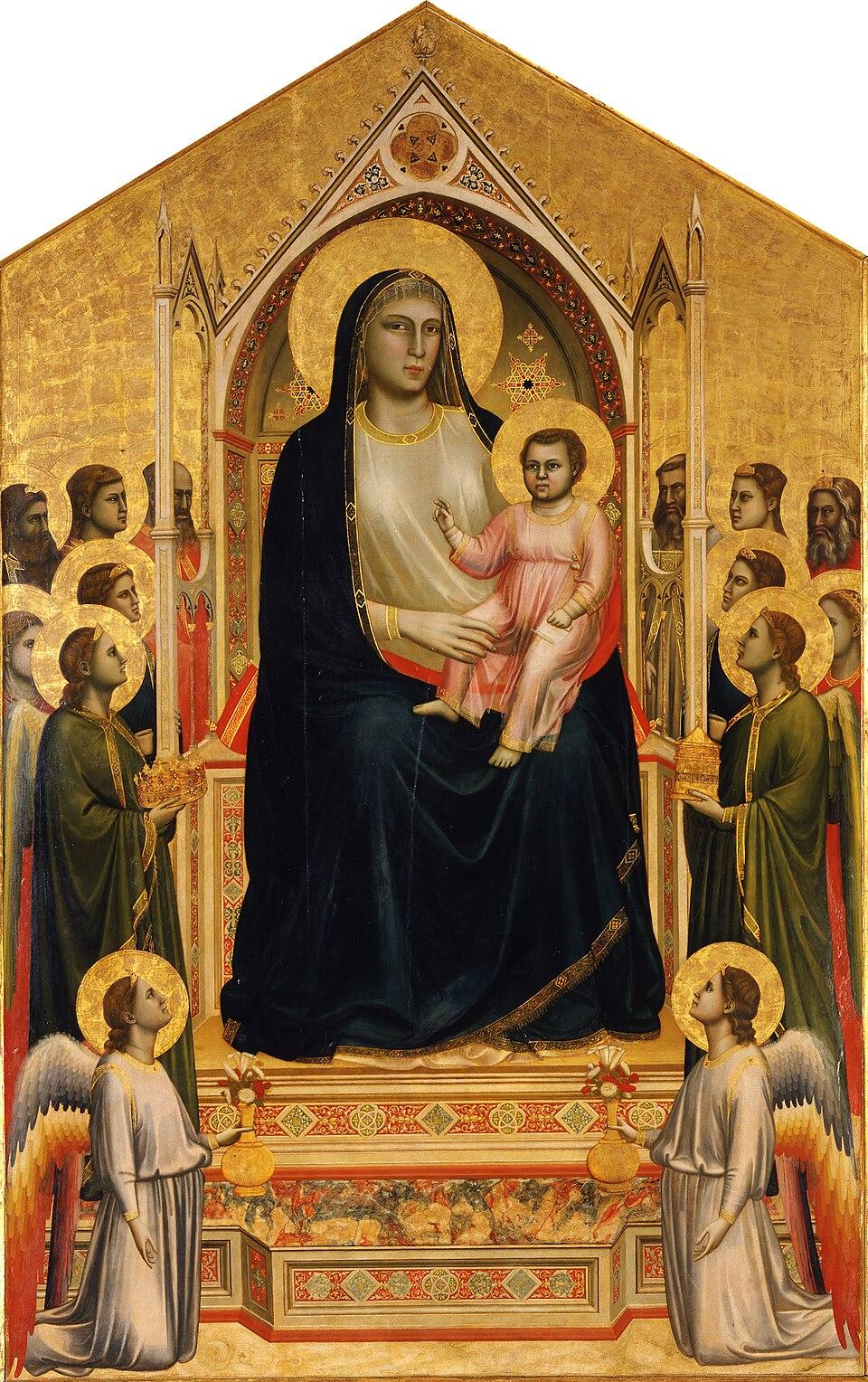
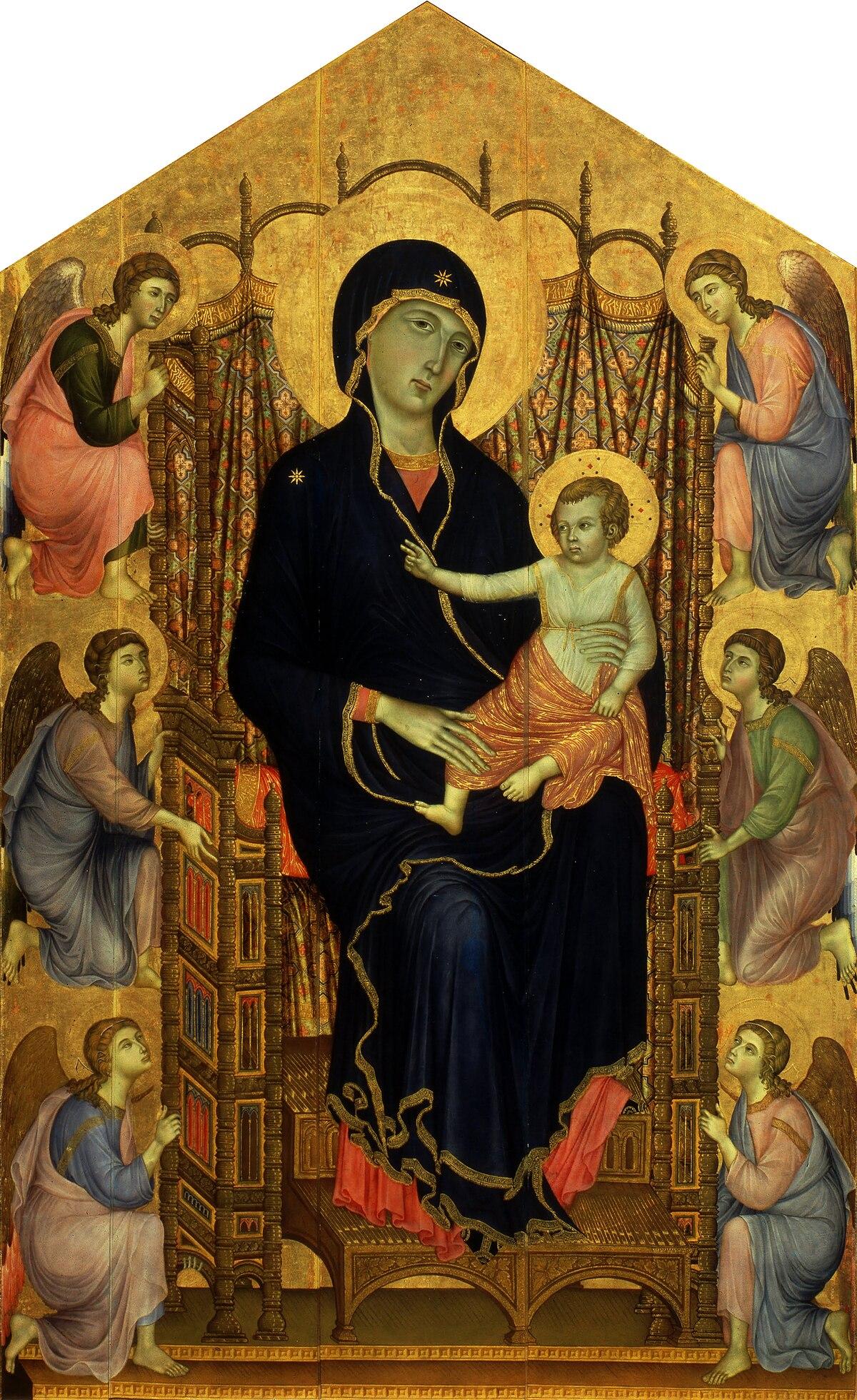
The painting lost favor as styles changed, eventually being removed from Santa Trinita and passed between locations. It reached the Galleria dell'Accademia in the early 19th century and transferred to the Uffizi in 1919. Today it hangs in a room with two other monumental Maestà paintings by Duccio and Giotto, allowing direct comparison of three masters who shaped Italian art.
More by Cimabue
View all →
Also at Uffizi Gallery, Florence
View all →L
Landscape drawing for Santa Maria della Neve
Leonardo da Vinci
Uffizi Gallery, Florence, Florence
P
Primavera
Sandro Botticelli, 1482
Uffizi Gallery, Florence, Florence
T
The Discovery of the Body of Holofernes
Sandro Botticelli
Uffizi Gallery, Florence, Florence
T
Thebaid
Fra Angelico
Uffizi Gallery, Florence, Florence
Related Works
Works that share an artist, movement, museum, genre, palette or theme with Maestà of Santa Trinita.
- Same artist
- Same movement
Santa Trinita Maestà
Cimabue, 1290
- Same artist
- Same movement
Madonna and Child Enthroned (Maesta)
Cimabue
- Same artist
- Same movement
Madonna Enthroned with the Child, St. Francis, St. Domenico and two Angels
Cimabue
- Same movement
- Same museum
Ognissanti Madonna
Giotto di Bondone, 1310
- Same movement
- Same museum
Madonna Rucellai
Duccio di Buoninsegna
- Same movement
- Same museum
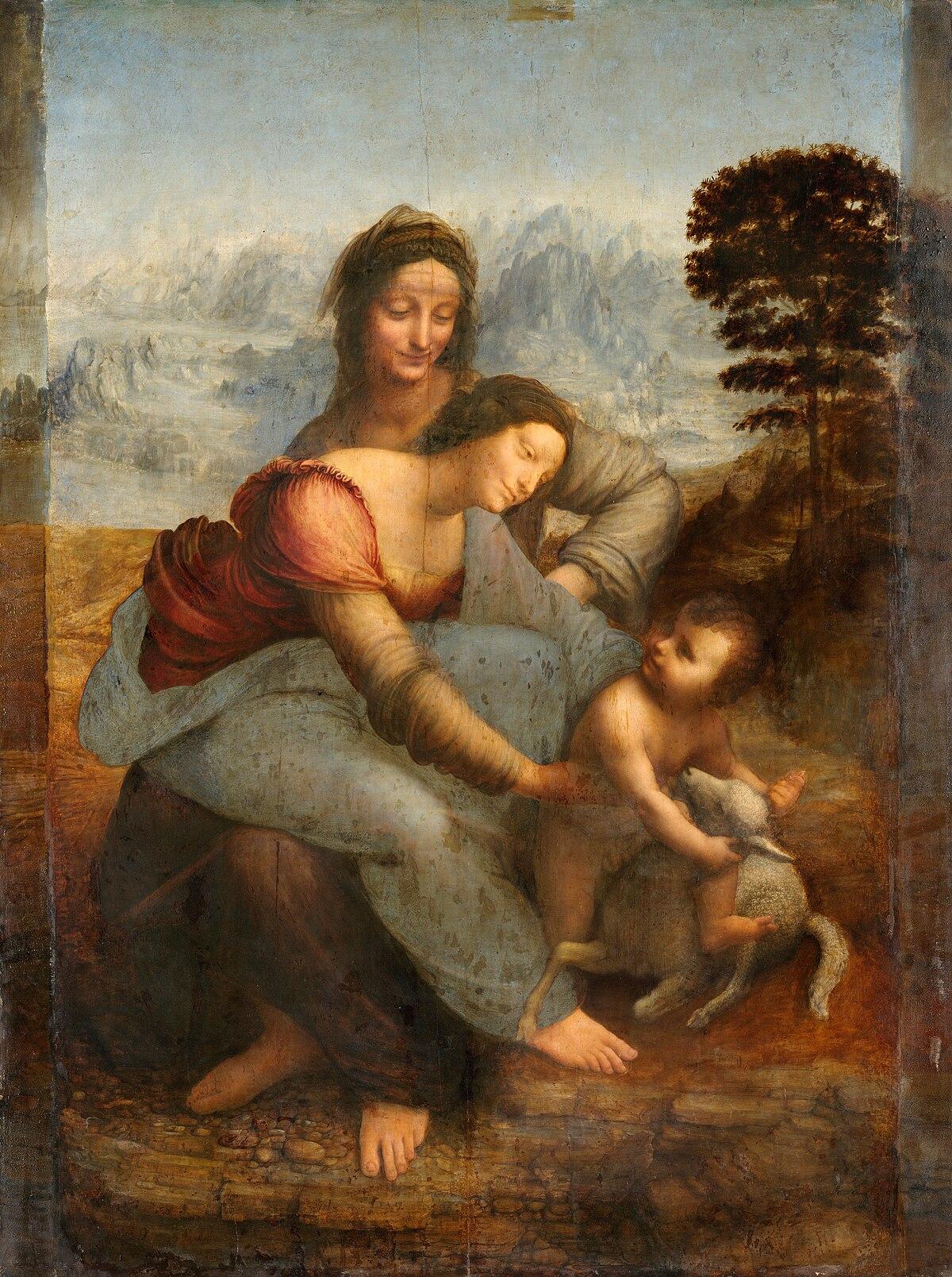
The Madonna and Child with st.Anna.
Masaccio
- Same movement
- Same museum
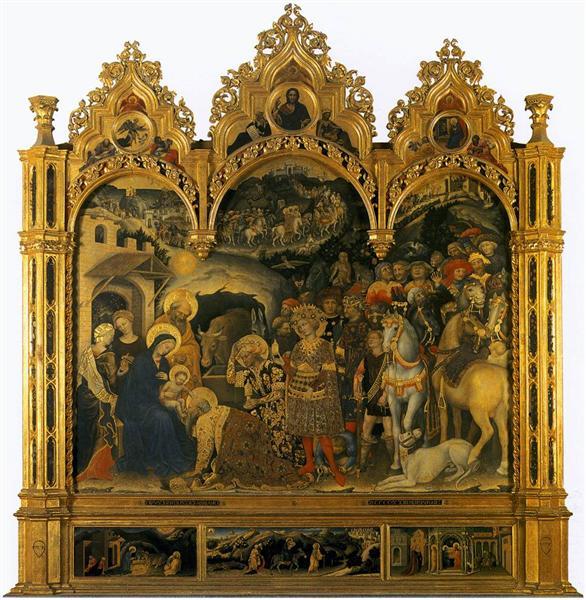
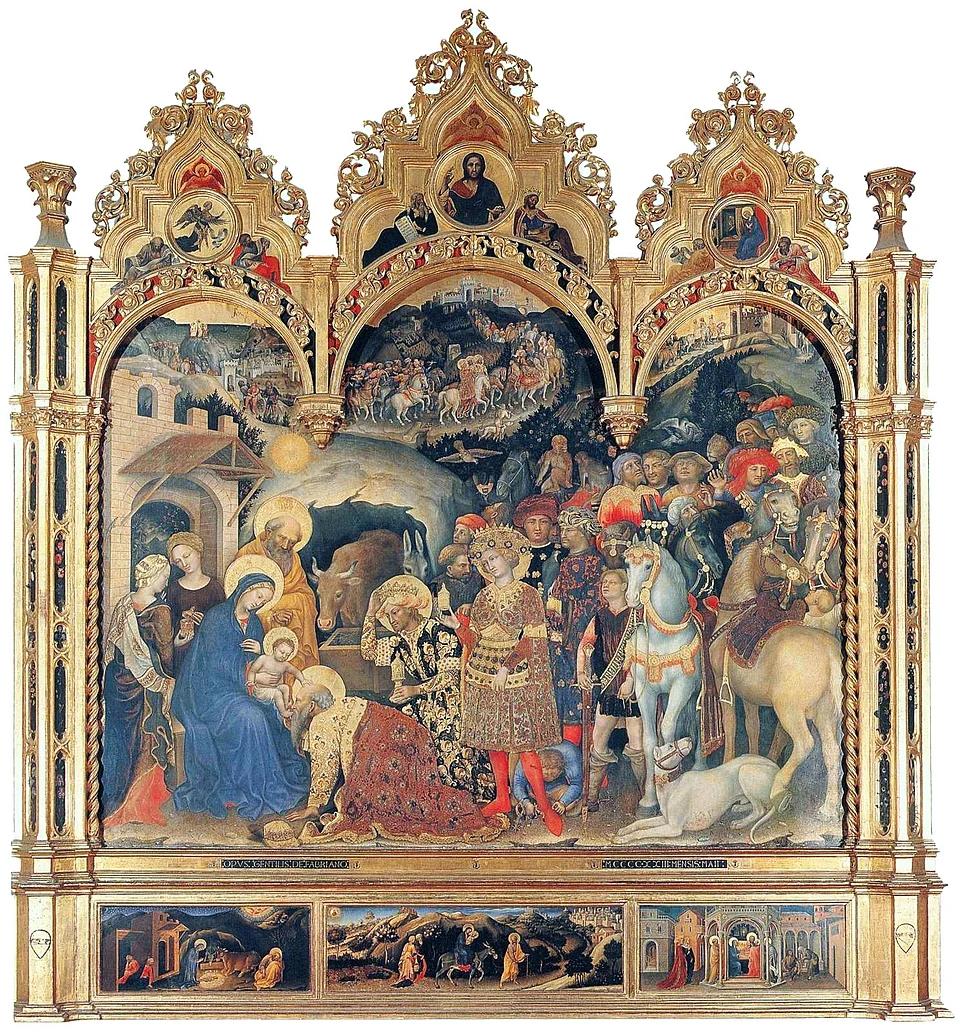
Adoration of the Magi, from the Strozzi Chapel in Santa Trinita, Florence
Gentile da Fabriano
- Same movement
- Same museum
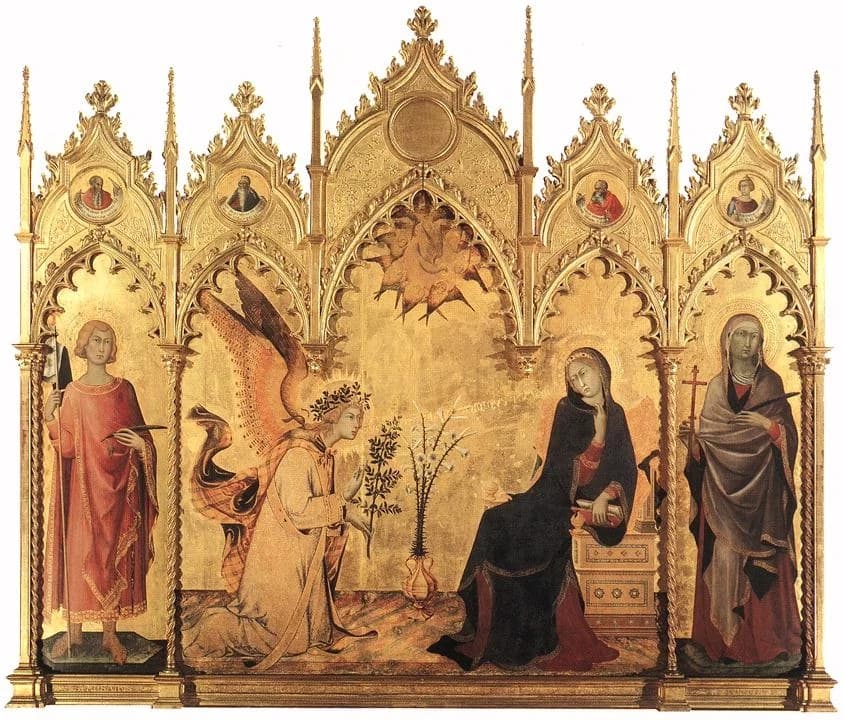
Adoration of the Magi
Gentile da Fabriano, 1423
- Same movement
- Same museum
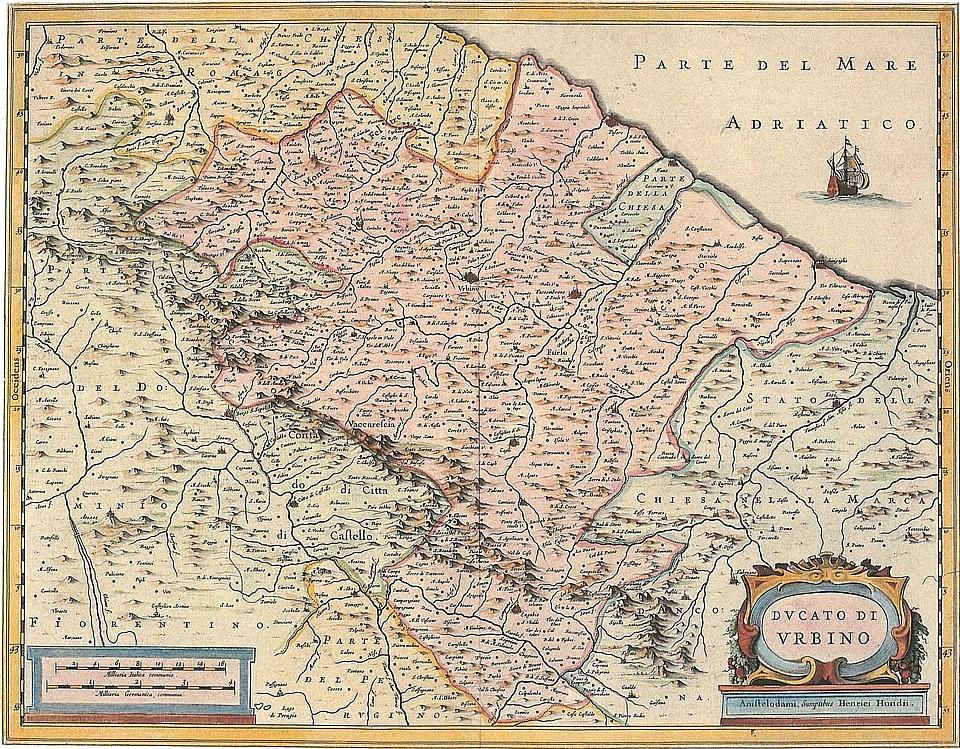
Annunciation with St. Margaret and St. Ansanus
Simone Martini, 1333
- Same movement
- Same museum
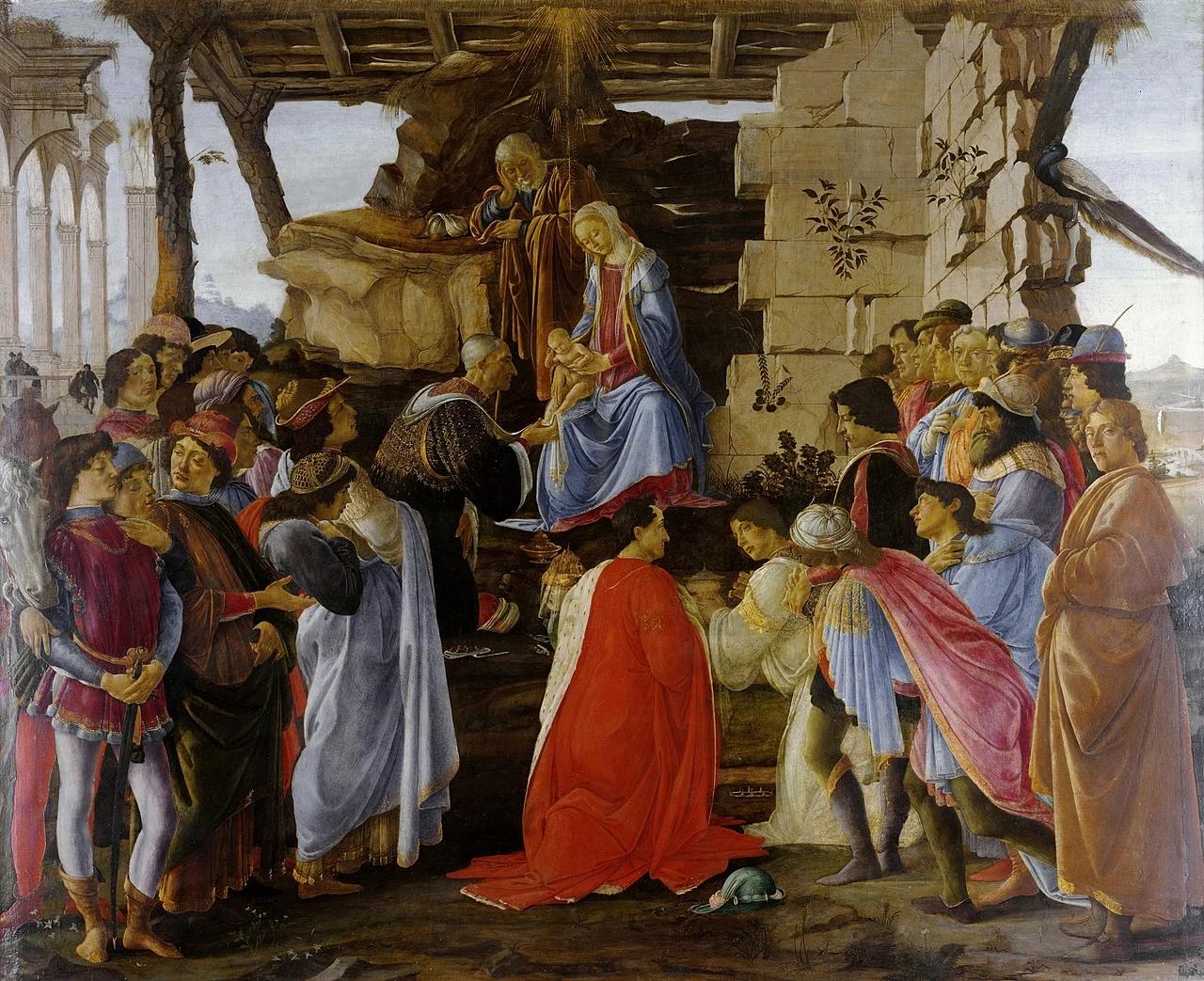
The Duke and Duchess of Urbino
Piero della Francesca, 1472
- Same movement
- Same museum
The Adoration of the Magi
Sandro Botticelli, 1476
- Same movement
- Same museum
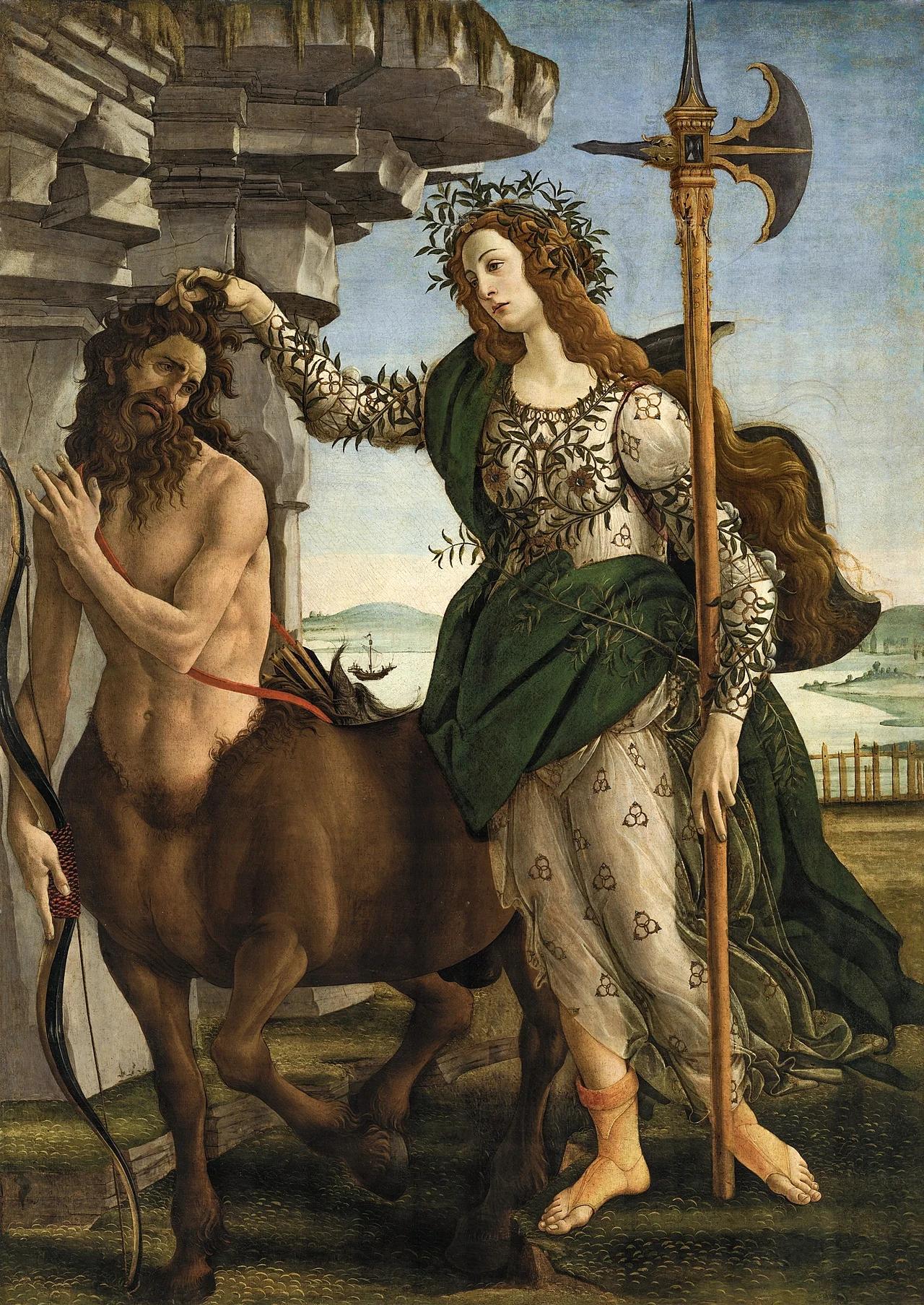
Pallas and the Centaur
Sandro Botticelli, 1482
About Maestà of Santa Trinita
The painting hangs at the Uffizi Gallery in Florence, in a room alongside Maestà paintings by Duccio and Giotto.
Cimabue bridged Byzantine tradition and the emerging Renaissance. His three-dimensional throne and gentle expressions influenced his pupil Giotto and later Florentine painters.
The panel measures 385 x 223 cm (151 x 88 inches). It was painted for the main altar of Santa Trinita church in Florence around 1280-1290.
Four Old Testament prophets: Jeremiah, Abraham, David, and Isaiah. Their scrolls allude to the mysteries of Christ's incarnation and Mary's virginity, connecting Old Testament prophecy to the New Testament scene above.
Own Art Like This
Luxury wall art with the same mood and energy. Gallery-quality canvas, no museum crowds.
Browse Collection