Public Domain
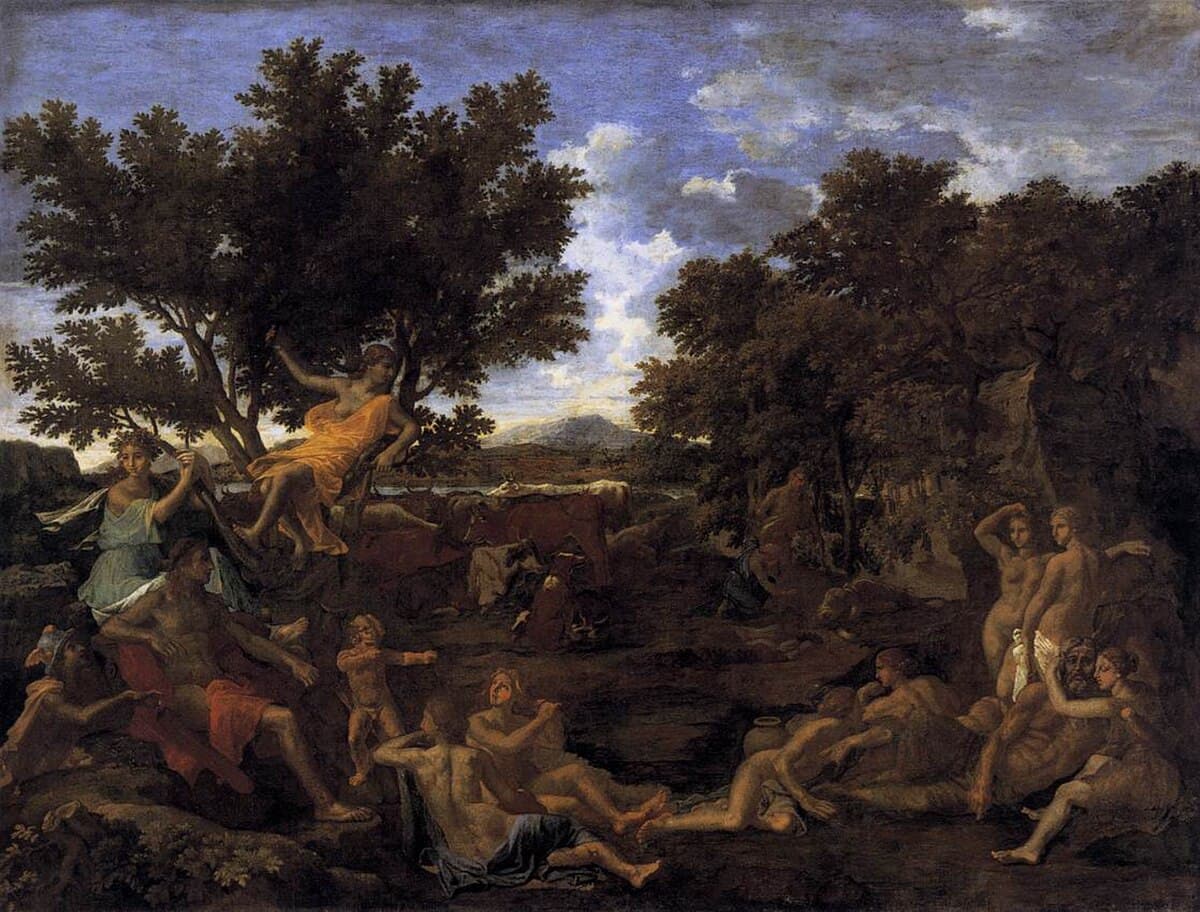
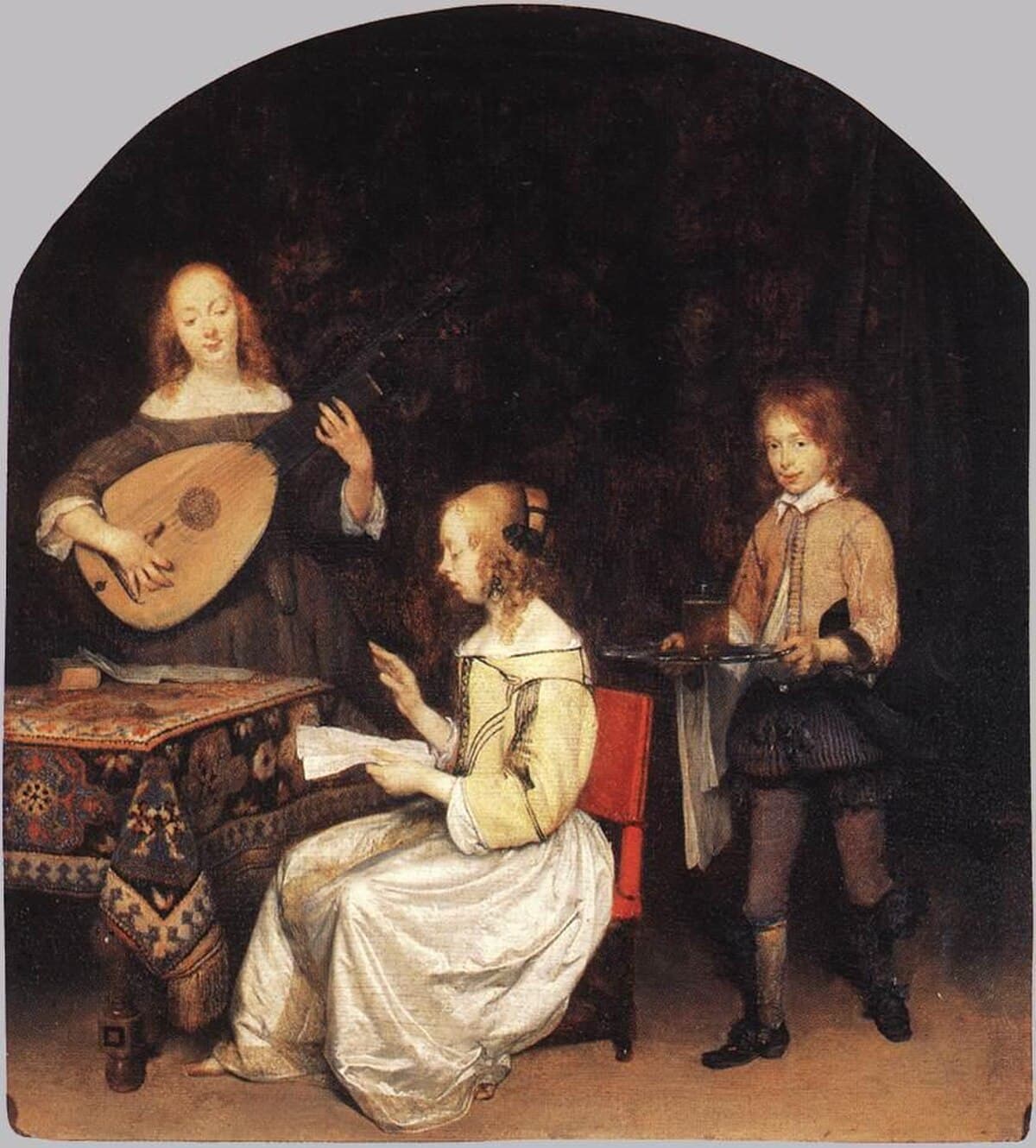
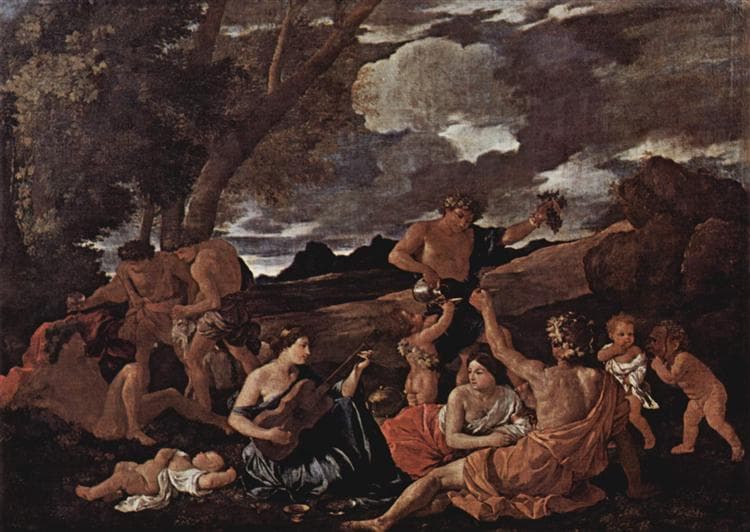
Andrians or The Great Bacchanal with Woman Playing a Lute
StyleBaroque
Artwork Details
Cite or Embed This Work
APA · MLA · Chicago1-click academic citation and embeddable “On View” museum badge for articles, syllabi, and research.
Nicolas Poussin executed this Bacchanalia between 1628 and 1630, inspired by Titian's famous Bacchanal paintings that Poussin studied in Rome. The scene depicts followers of Bacchus in festive revelry, with a woman playing a lute at the center. The composition draws from Philostratus's Imagines, an ancient text describing paintings that also inspired Titian.
Poussin was captivated by Titian's golden light, intense color, and active brushwork. During the late 1620s and 1630s, he experimented with these Venetian influences while developing his own classical style. The work represents a key moment in his artistic evolution.
The painting measures 121 by 175 centimeters and hangs at the Louvre in Paris. While Titian's original Bacchanal of the Andrians is at the Prado, Poussin's version demonstrates how the French master absorbed and transformed his Italian predecessors' achievements.