Wikimedia Commons • Public Domain
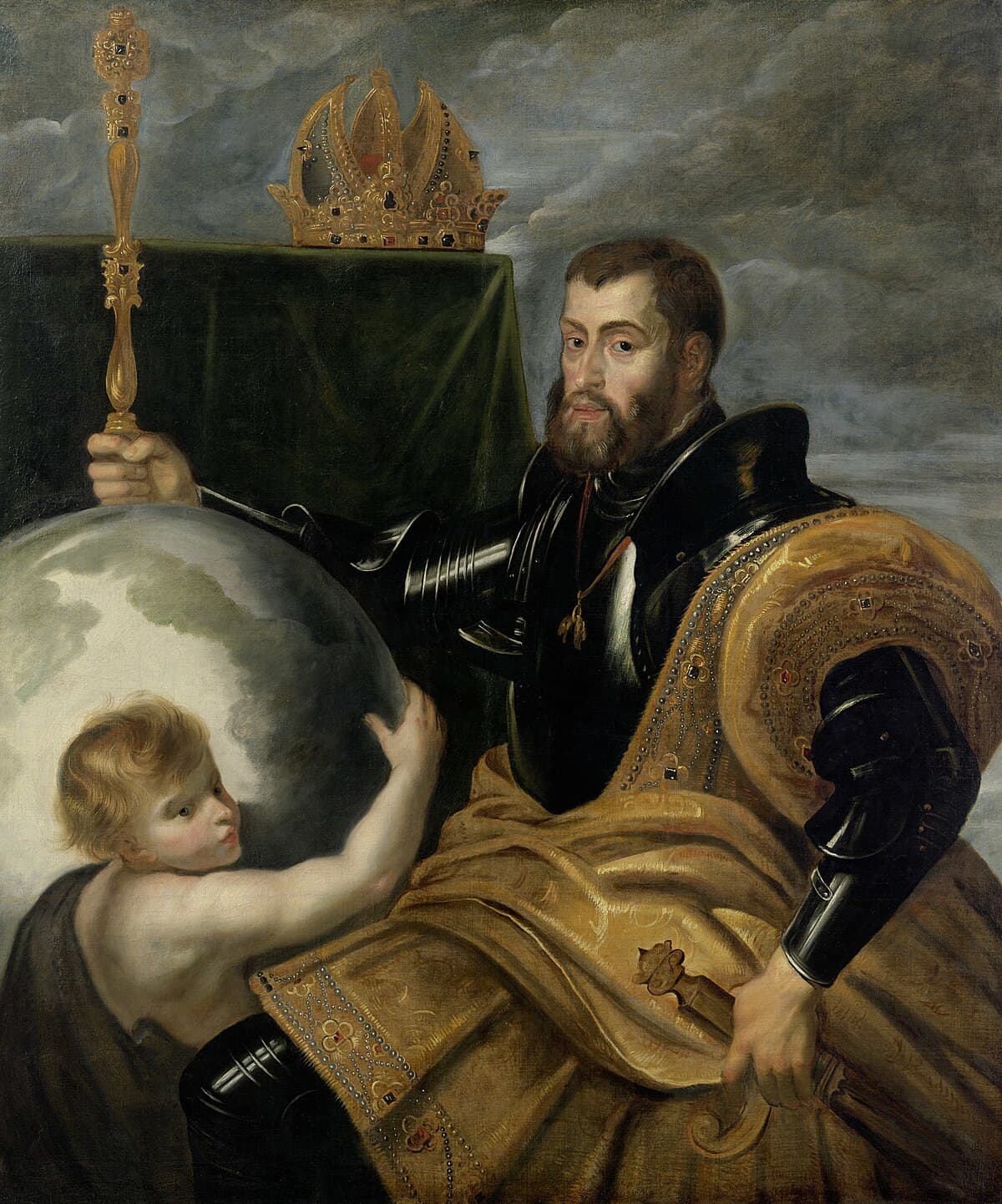
Allegory on Emperor Charles as Ruler of Vast Realms
Artwork Details
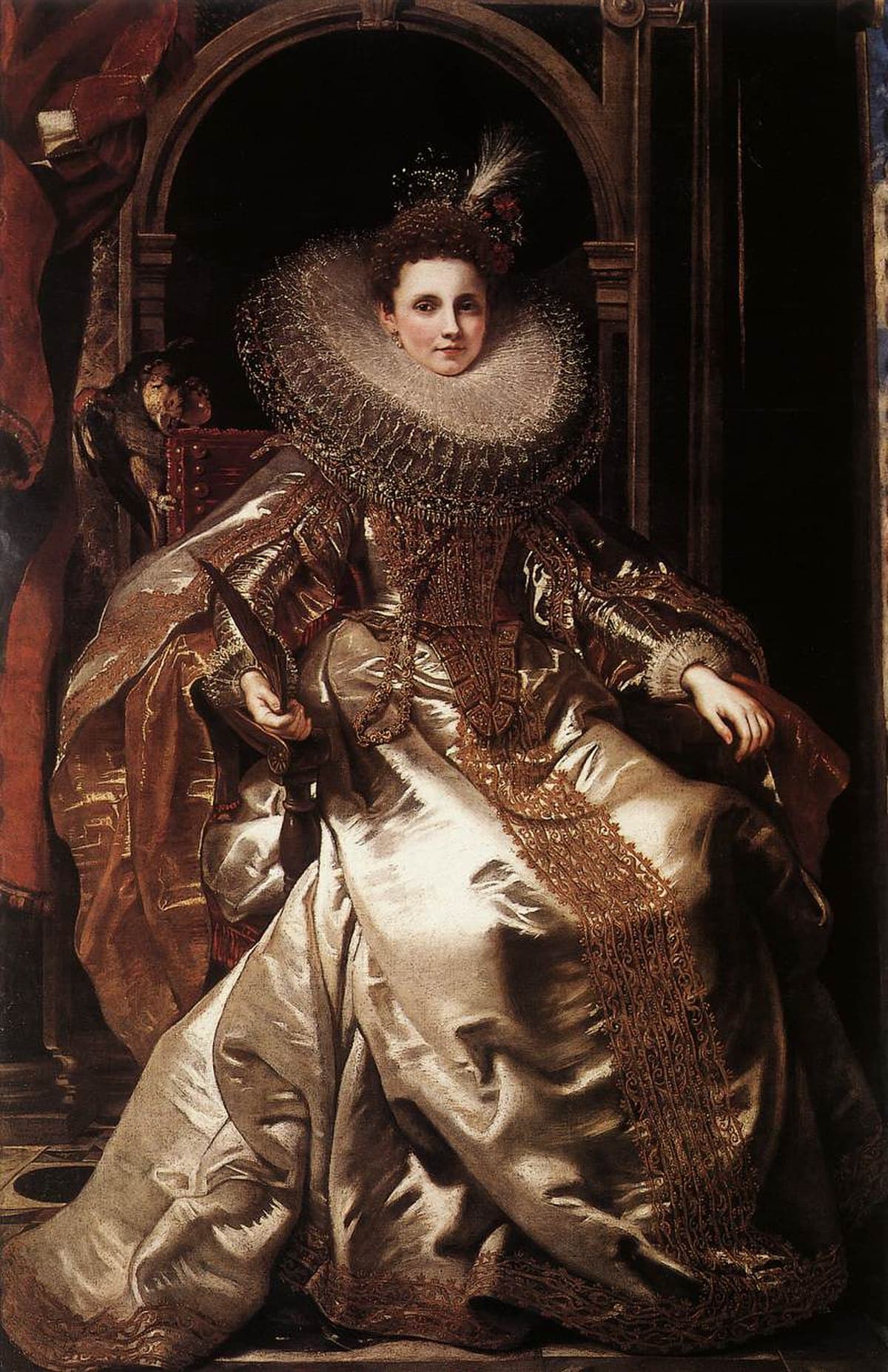
Flemish artist Peter Paul Rubens painted this allegorical portrait around 1604, depicting Emperor Charles V as ruler of vast territories. Charles sits upon his throne in ornate armor and a luxurious golden robe, holding a scepter in his right hand. His left hand rests upon a globe presented by a young nude figure, likely Cupid, symbolizing his worldwide dominion.
The composition uses dramatic chiaroscuro to illuminate Charles while shrouding the background in cloudy darkness. Allegorical figures representing different territories of his empire surround him. The imperial crown, sword, and cross emphasize his power and authority. This Flemish Baroque work showcases Rubens' ability to combine portraiture with political allegory.
The canvas measures 167 by 141 centimeters and hangs at the Residenzgalerie in Salzburg, Austria. Rubens painted it early in his career, around the time he was working in Italy absorbing influences from Caravaggio and Venetian masters.