Wikimedia Commons • Public Domain
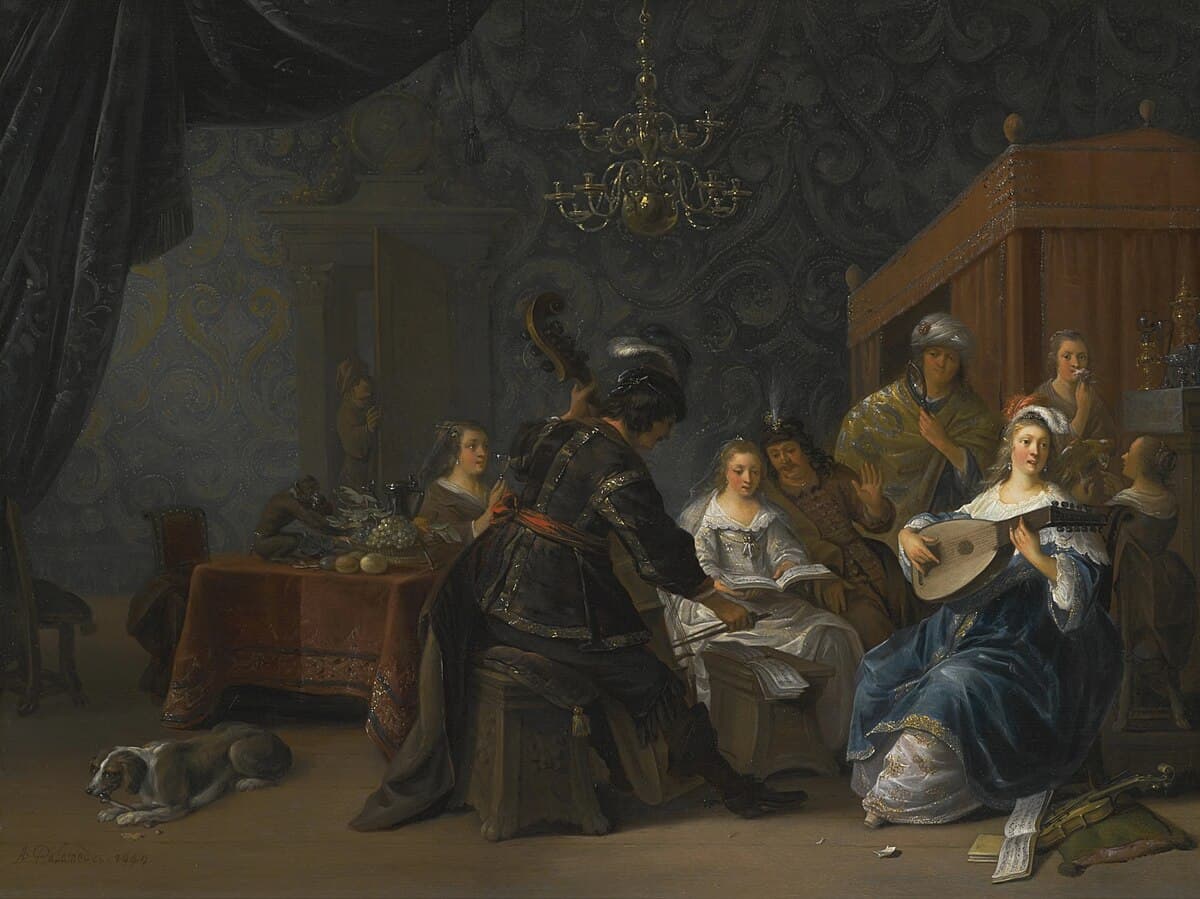
Musical Allegory
Artwork Details
Cite or Embed This Work
APA · MLA · Chicago1-click academic citation and embeddable “On View” museum badge for articles, syllabi, and research.
Rembrandt van Rijn rendered this mysterious scene in 1626, early in his career. The Rijksmuseum describes it as a painting that "refuses to divulge its secrets." The work shows figures gathered around music-making, but whether the scene represents divine praise or earthly seduction remains deliberately unclear.
The young woman wears gaudy garments and red shoes, details that suggested questionable taste to 17th-century viewers. An old woman in the scene looks suspiciously like a procuress, a common figure in Dutch paintings warning against vice. The painting may function as a moral warning about immoral conduct, dressed in the appealing guise of musical entertainment.
This oil on panel measures 63 by 47 centimeters and exemplifies the Baroque style of the Dutch Golden Age. Rembrandt was just 20 years old when he painted it, yet the work already shows his mastery of light and psychological ambiguity that would define his later career.