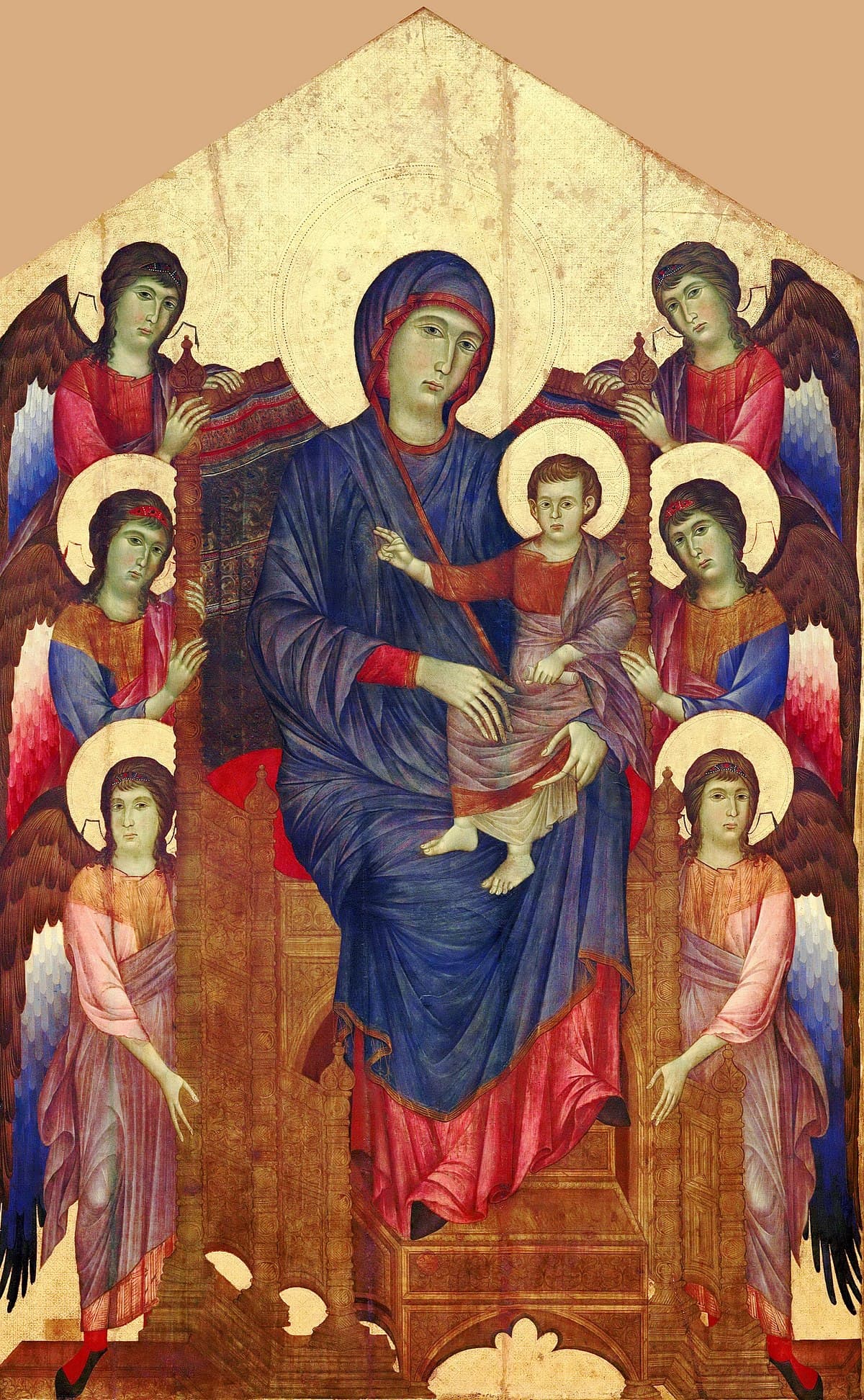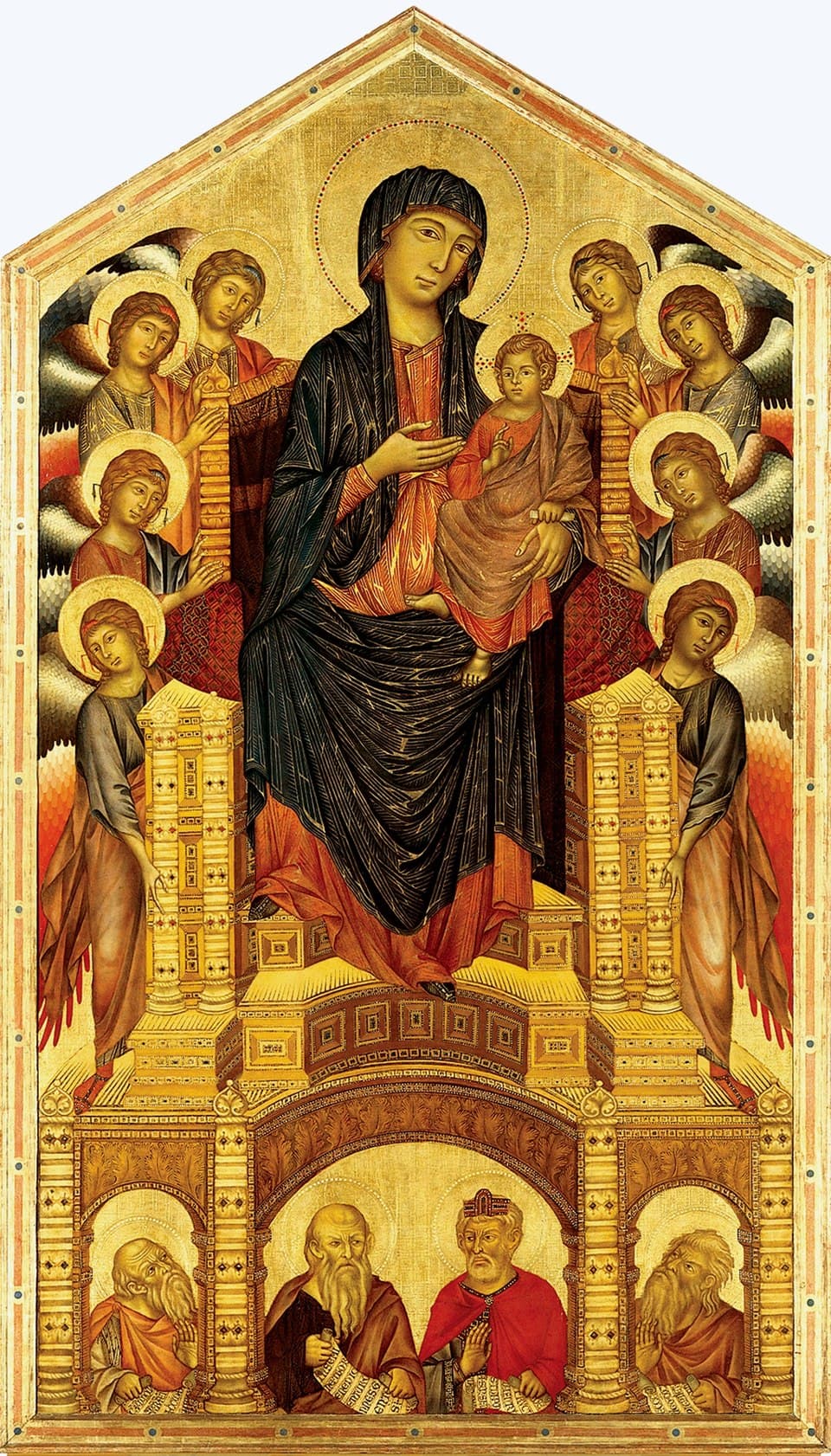
Santa Trinita Maestà
by Cimabue, 1290
Artwork Details
Details
- Year
- 1290
- Medium
- Tempera on panel
- Size
- 385 cm × 223 cm (151.6 × 87.8 in)
Cimabue painted the Santa Trinita Maestà around 1280-1290 for the main altar of Santa Trinita church in Florence. The Virgin and Child sit enthroned in majesty (maestà), surrounded by eight angels. The elaborate throne and gold background follow Byzantine conventions, but Cimabue introduces subtle modeling and spatial depth.
The prophets in the arches below the throne anticipate Christ's coming. Cimabue still uses the gold-ground Byzantine style, but his figures begin to emerge from flatness toward volume. His student Giotto would push these innovations much further.
The Uffizi displays this monumental altarpiece (over 12 feet tall) alongside Giotto's and Duccio's Maestà paintings, forming a notable sequence of Italian art's evolution.