Wikimedia Commons • Public Domain
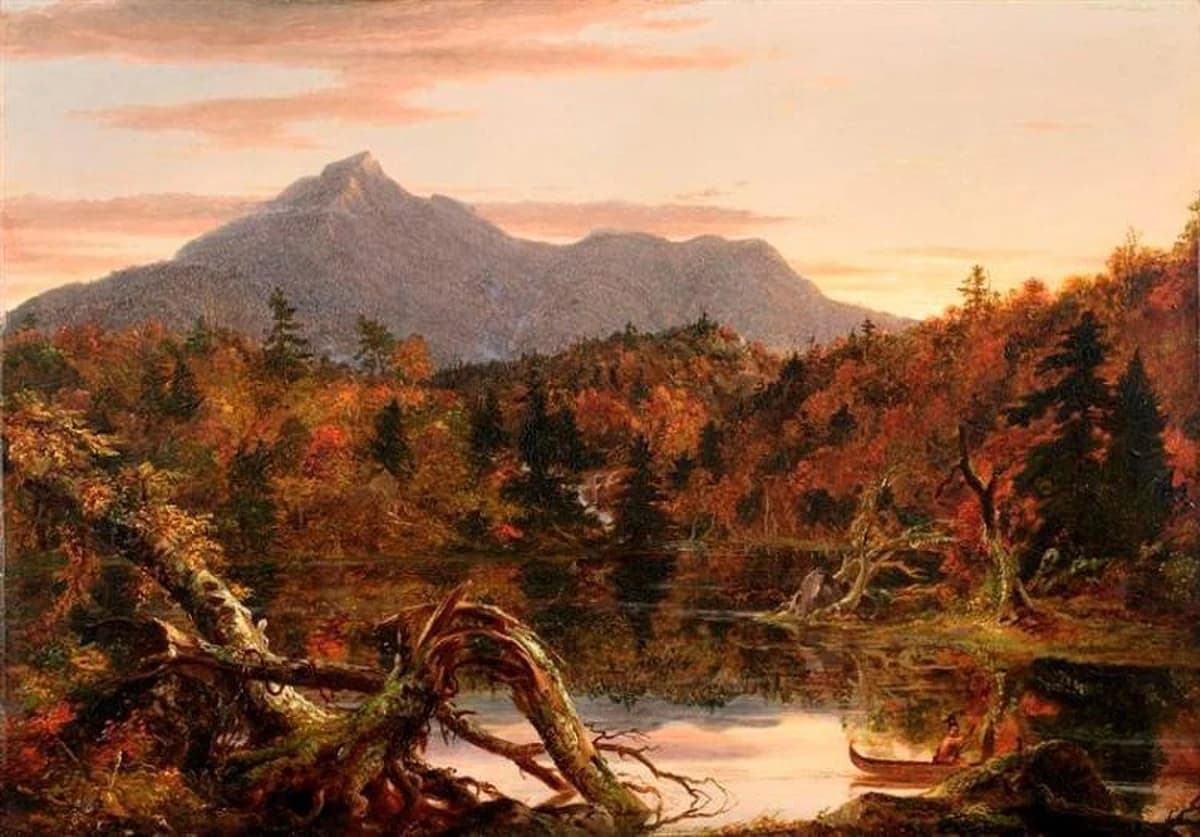
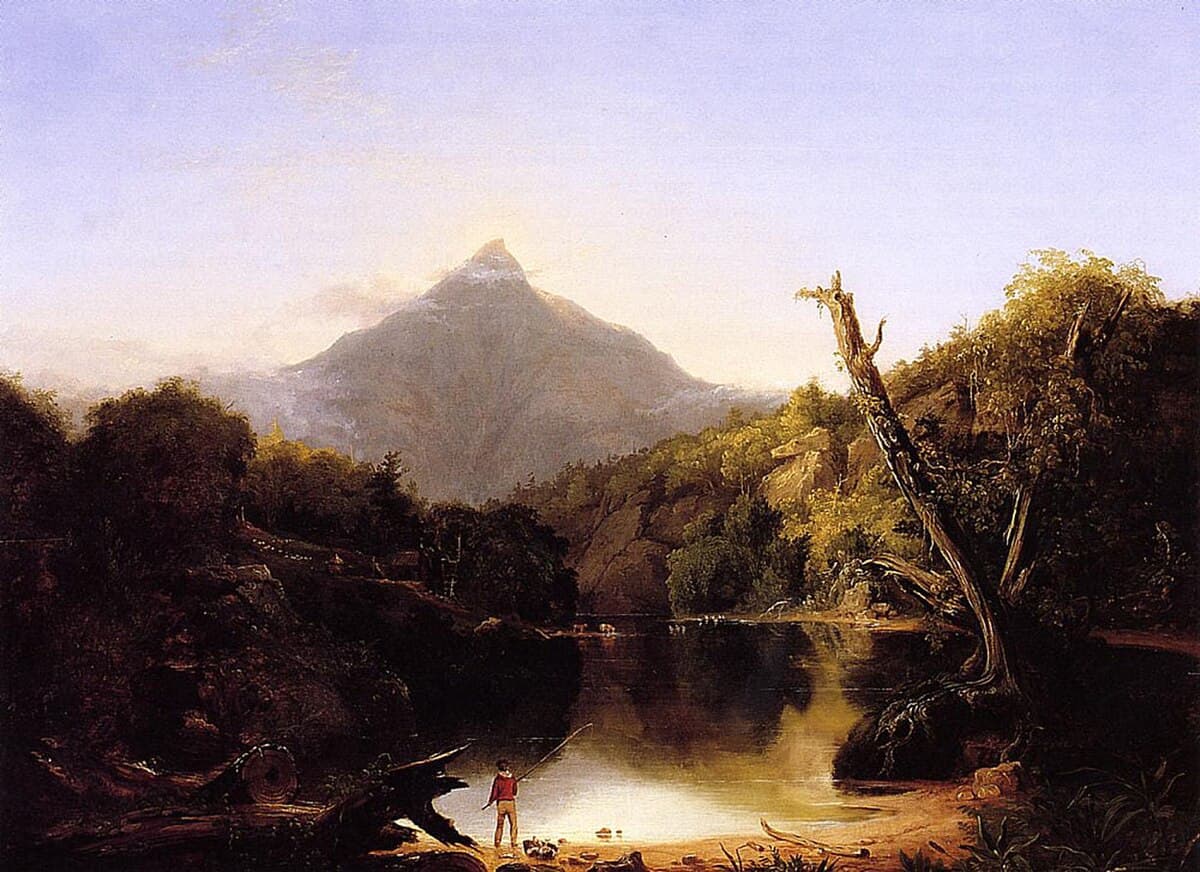
Mount Chocorua, New Hampshire
by Thomas Cole
Artwork Details
Cite or Embed This Work
APA · MLA · Chicago1-click academic citation and embeddable “On View” museum badge for articles, syllabi, and research.
Thomas Cole completed this view of Mount Chocorua in 1827, depicting the distinctive granite peak rising 3,490 feet in New Hampshire's White Mountains. The radiant mountainscape features a lake in the foreground with a tiny fisherman in a bright red sweater at the bottom edge.
Cole, often called the "Father of the Hudson River School," first visited the White Mountains in 1827. The area captivated him, and he returned multiple times. While he's best known for allegorical series like "The Voyage of Life" and "The Course of Empire," his White Mountain landscapes capture the spiritual power he found in American wilderness.
Mount Chocorua holds special significance in American art and literature. Its striking silhouette became a symbol of the American spirit for Romantic artists and writers. This painting is currently held in a private collection. Cole sold it directly to James Abraham Hillhouse of New Haven shortly after completing it.