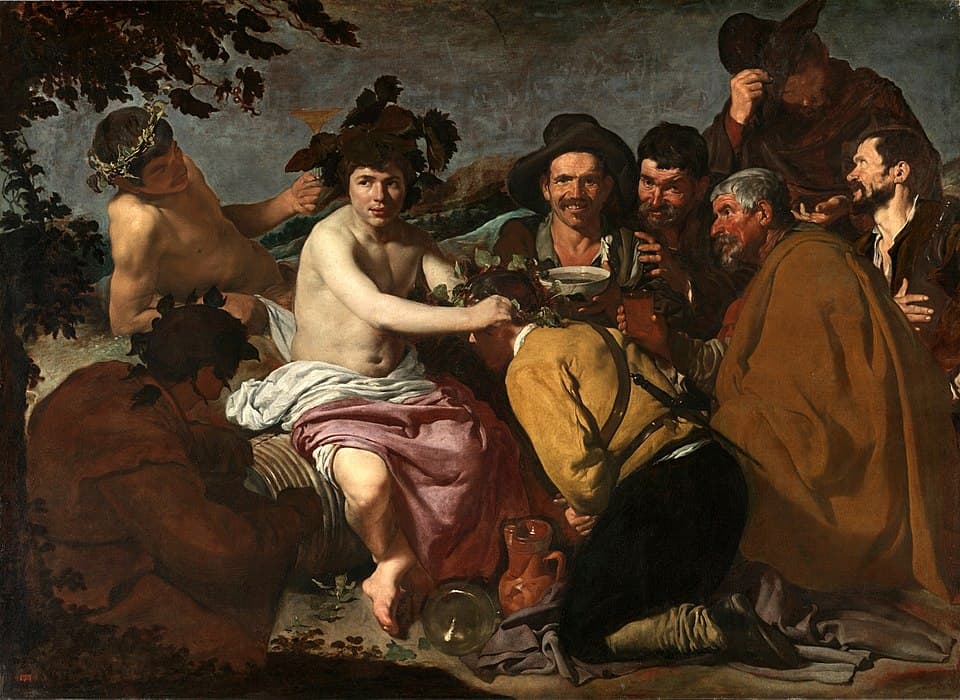
The Triumph of Bacchus (Los Borrachos)
by Diego Velázquez, 1629
Artwork Details
Details
- Year
- 1629
- Medium
- Oil on canvas
- Size
- 165 cm × 225 cm (65 × 88.6 in)
Diego Velázquez painted The Triumph of Bacchus around 1628-1629. The god of wine, pale and semi-nude, crowns a kneeling peasant with ivy while other drunken revelers look on. This mythological scene is also called "Los Borrachos" (The Drunkards) for the earthy realism of its figures.
Velázquez combined classical mythology with Spanish genre painting. Bacchus resembles a studio model rather than an idealized deity, while the peasants could have walked in from any Madrid tavern. Their weathered faces and rough hands contrast with the god's smooth skin. The man in the center grins directly at us, breaking the fourth wall.
King Philip IV purchased the painting for the royal collection. It now hangs in the Prado, one of Velázquez's earliest mythological works and a preview of his later mastery.