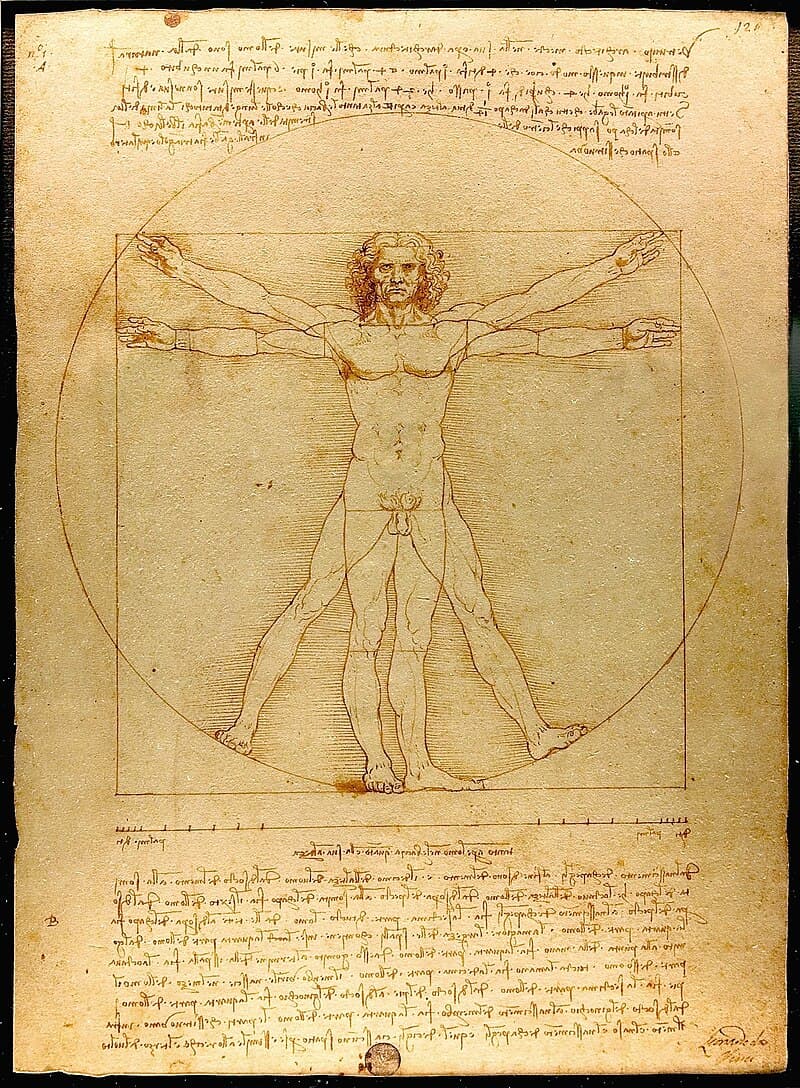
Vitruvian Man
by Leonardo da Vinci, 1490
StyleRenaissance
Artwork Details
Details
- Year
- 1490
- Medium
- Pen, ink and wash on paper
- Size
- 34.6 cm × 25.5 cm
Cite or Embed This Work
APA · MLA · Chicago1-click academic citation and embeddable “On View” museum badge for articles, syllabi, and research.
The Vitruvian Man is Leonardo da Vinci's study of ideal human proportions, showing a male figure in two superimposed positions within a circle and square. Created around 1490 with pen, ink, and metalpoint, the drawing illustrates principles described by the Roman architect Vitruvius, who believed the human body could define perfect geometric forms.
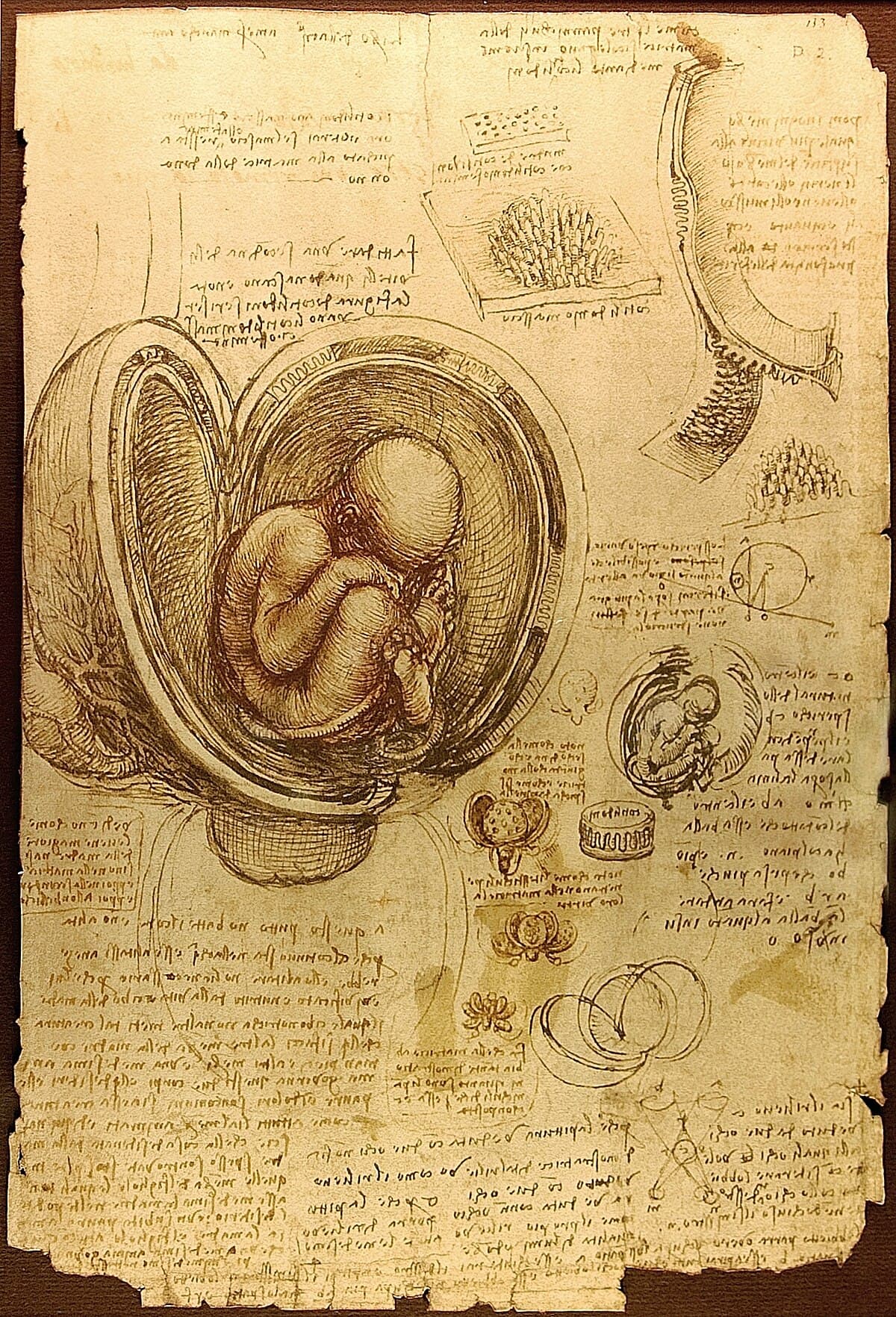
Leonardo's annotations (in his characteristic mirror writing) explore how the body's measurements relate mathematically. A man's arm span equals his height; his face is one-tenth of his height. The dual pose allows both positions to fit the geometry: arms horizontal fit the square, arms raised fit the circle. This fusion of art and science exemplifies Renaissance humanism's belief that man is the measure of all things.
The drawing is rarely displayed due to its fragility. It's held at the Gallerie dell'Accademia in Venice.