Ancient Kongo (Unknown)
Kongo Kingdom

No Portrait Available
The Kongo Kingdom was a vast, politically sophisticated state that spanned parts of present-day Angola, the Republic of Congo, and the Democratic Republic of Congo from the 14th through 18th centuries. Kongo artists produced sculpture in ivory, wood, and stone, with richly decorated ivory oliphants (side-blown horns) and figurative scepters (nkama ntinu) serving as emblems of royal and chiefly authority.
The most recognized Kongo art form is the nkisi power figure, a portable shrine designed to house spiritual forces. After the Kongo king's conversion to Christianity in the late 15th century, artists created a distinctive fusion of Christian and indigenous imagery: crucifixes with African hairstyles, Saint Anthony figures used for both Christian worship and local healing practices. Our collection includes 4 works at the Met and the Quai Branly Museum in Paris.
Sculptures by Ancient Kongo (Unknown)
4 sculptures catalogued with museum locations. Browse all sculptures
Sculpture
D
Dan Mask
Ancient Kongo (Unknown), 1900
Musée du Quai Branly, Paris
Sculpture
F
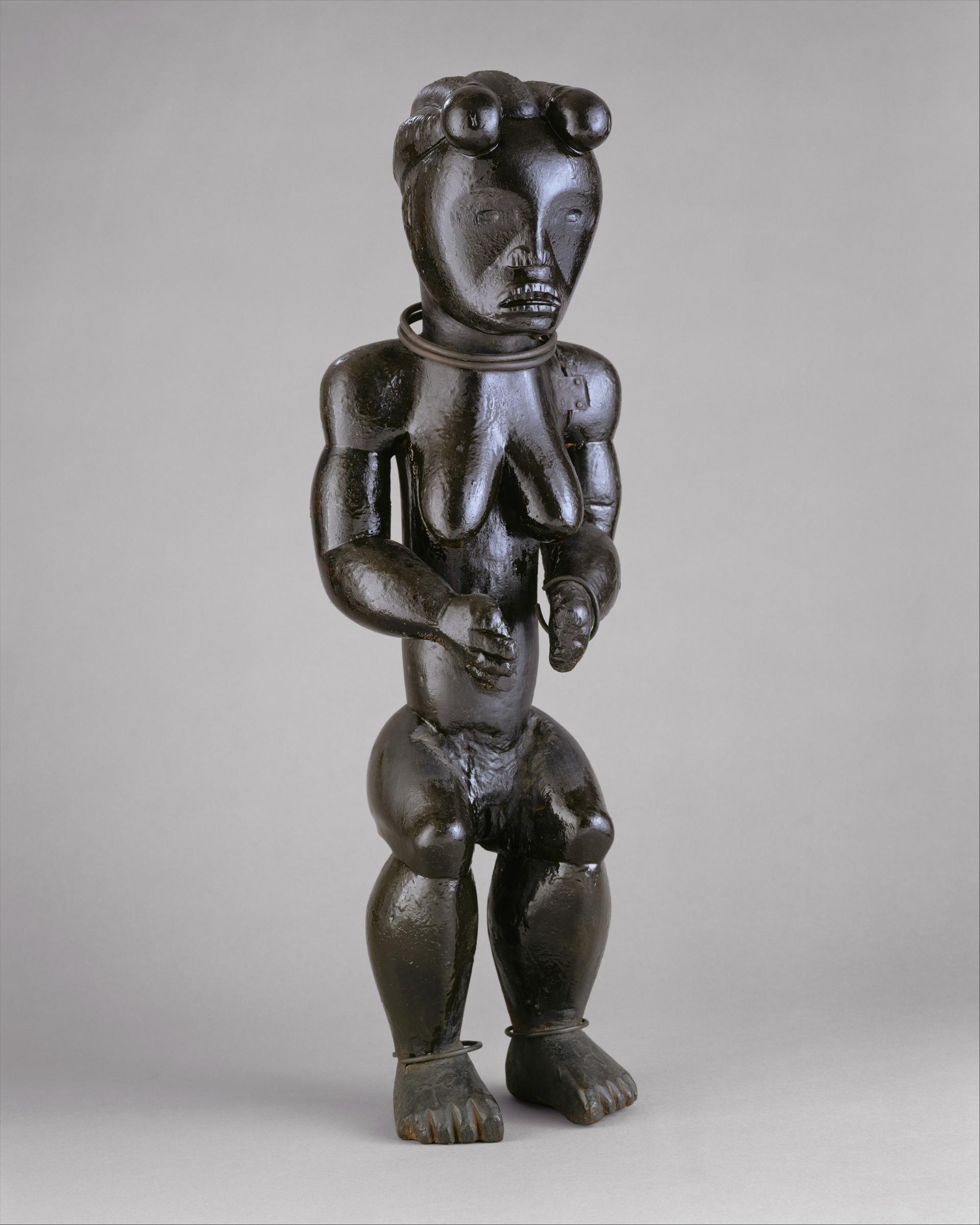
Fang Reliquary Guardian (Byeri)
Ancient Kongo (Unknown), 1850
Musée du Quai Branly, Paris
Sculpture
K
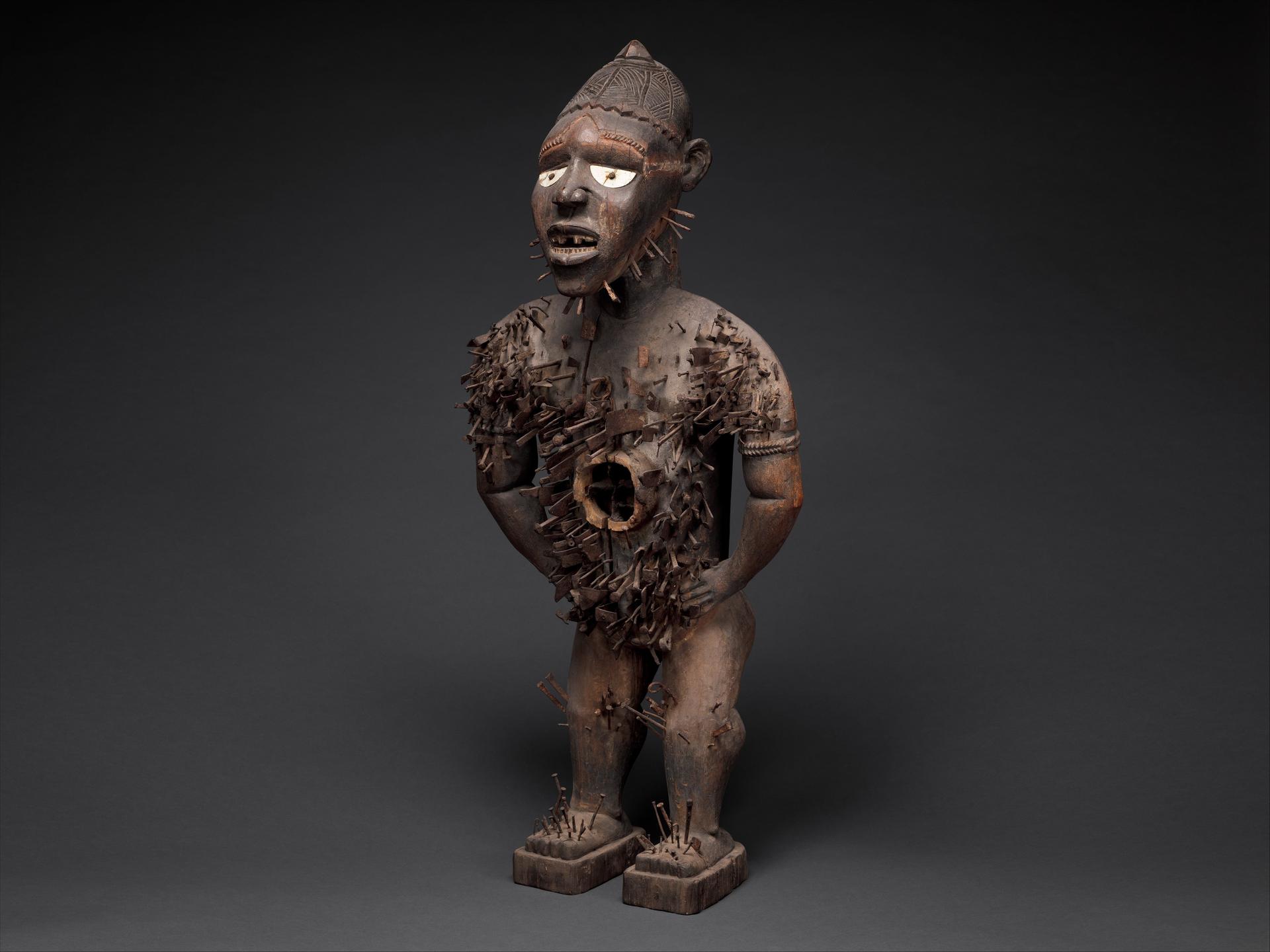
Kongo Power Figure (Nkisi)
Ancient Kongo (Unknown), 1880
The Metropolitan Museum of Art, New York
Sculpture
K
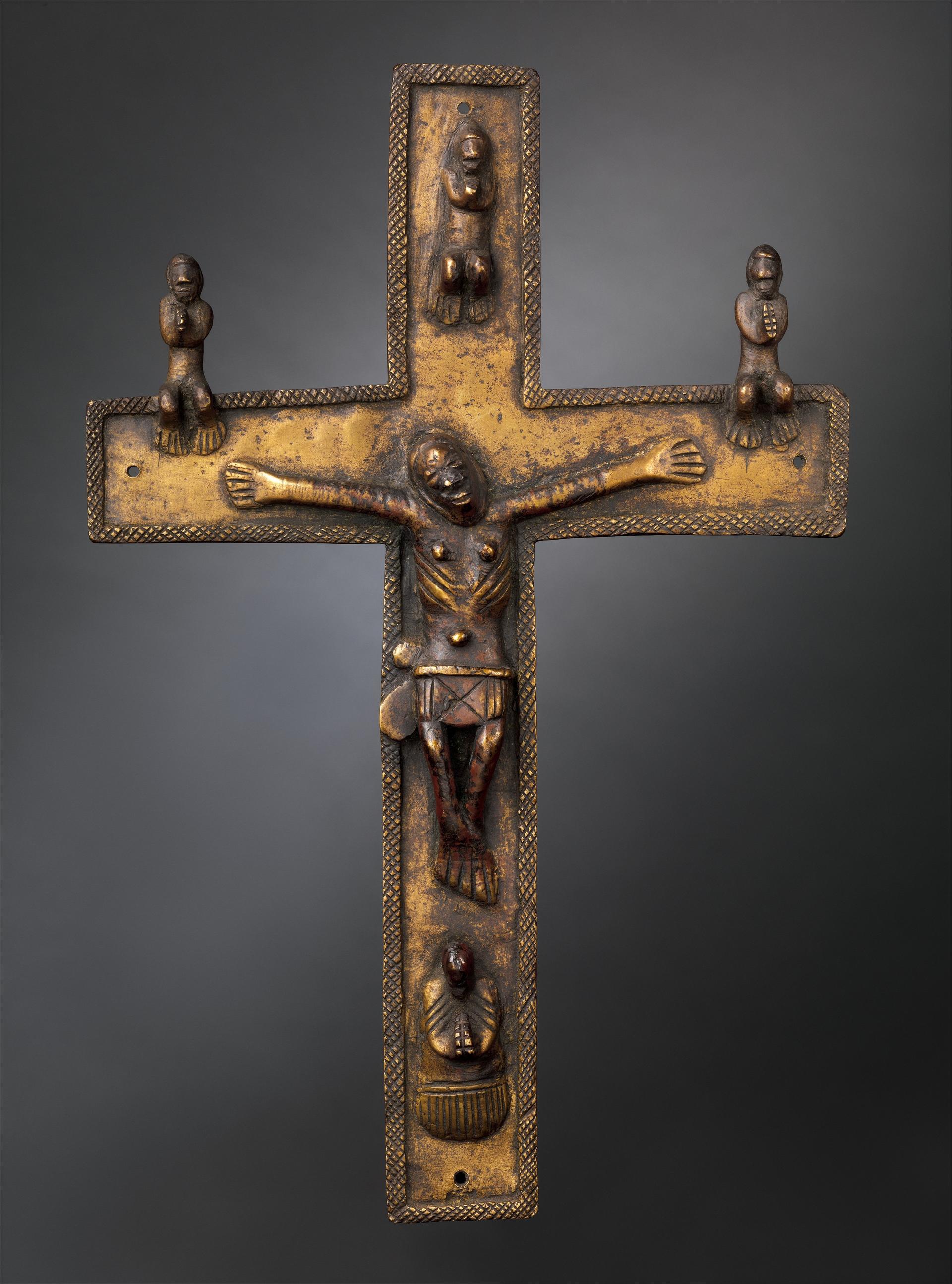
Kongo Crucifix
Ancient Kongo (Unknown), 1600
The Metropolitan Museum of Art, New York
Museums with Ancient Kongo (Unknown)'s Work
2 museums display (Unknown)'s works. Click any museum to see visiting info and the specific works they hold.
About Ancient Kongo (Unknown)
Nkisi figures are portable shrines made from wood and various materials, designed to house spiritual forces. They're the most recognized art form from the Kongo Kingdom, often studded with nails or blades.
After the king's conversion in the late 15th century, Kongo artists created a Christian-African fusion: crucifixes with indigenous hairstyles and Saint Anthony figures blending Christian and local healing traditions.
The Quai Branly Museum in Paris and the Met in New York hold strong collections of Kongo ivory, wood, and stone sculpture.
Love Ancient Kongo (Unknown)'s Style?
Explore art inspired by their style.
Browse CollectionAre you an artist? Sell your art online with Luxury Wall Art.