
Psychedelic Art: A Visual Journey from 1960s Counterculture to Your Walls
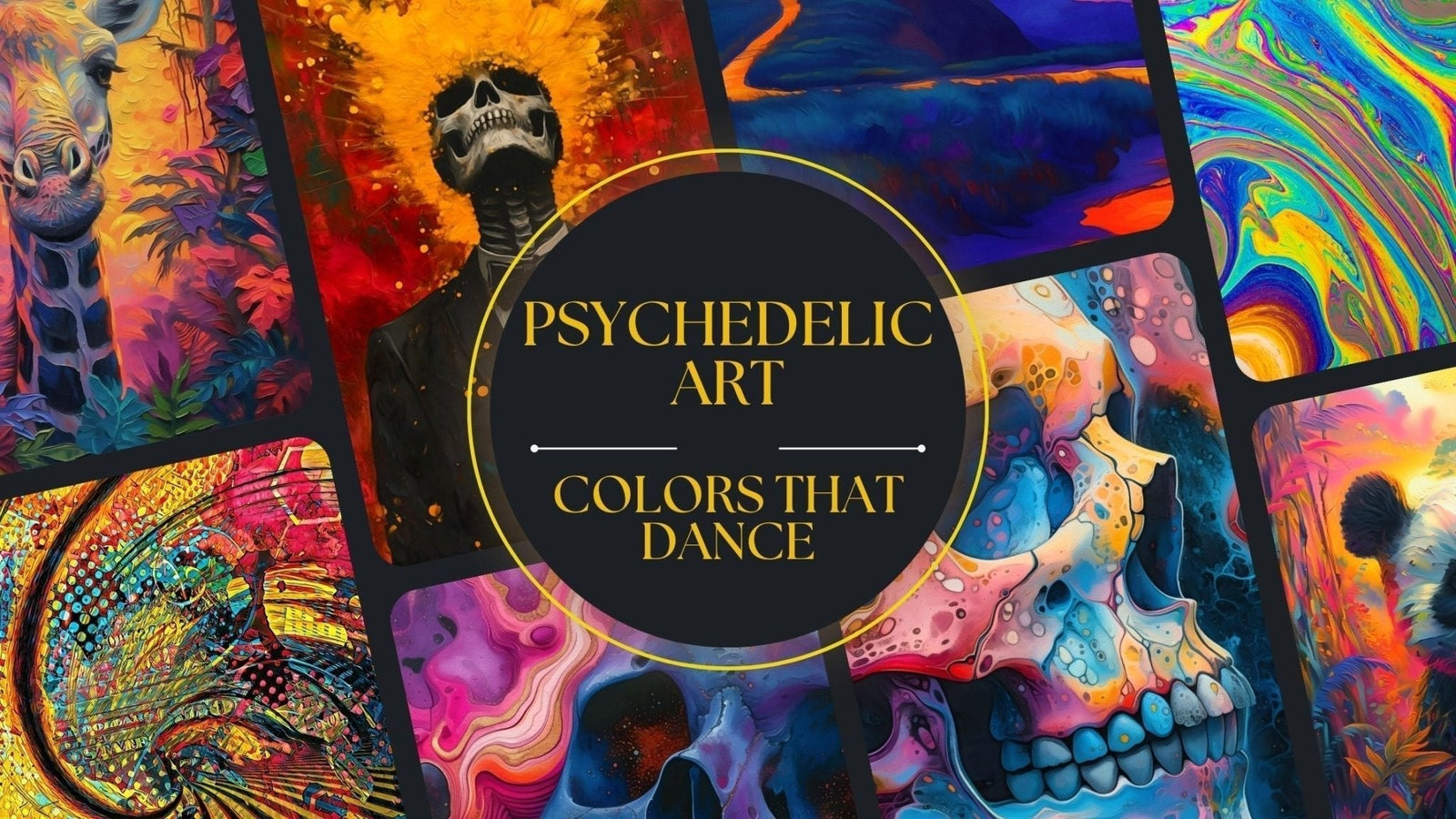

Psychedelic art exploded out of 1960s counterculture, fueled by swirling colors, melting forms, and a generation determined to see the world differently. This piece traces the movement from Haight-Ashbury concert posters to today's revival, covering the artists who defined it, the visual elements that make it instantly recognizable, and how to bring a bold piece into a modern room.
Bold Color1960s CountercultureOptical EffectsModern Decor
At a glance
| Term coined | 1956, by Humphry Osmond |
| Birthplace | San Francisco, mid-1960s |
| Key artists | Wes Wilson, Alex Grey |
| Pairs well with | White or gray walls |
Psychedelic Art: When Colors Learned to Dance
Psychedelic art didn't just appear. It exploded onto the scene in the 1960s, fueled by cultural rebellion, mind-expanding substances, and a generation determined to see the world differently. The movement gave us swirling colors, melting forms, and visuals that seemed to breathe on their own. It was art that demanded you feel something, even if you couldn't quite explain what.
What started in San Francisco's Haight-Ashbury district spread worldwide, influencing everything from concert posters to album covers to the way we think about color itself. Today, psychedelic artwork continues to captivate collectors and decorators who want their walls to hold something more than just a pretty picture. They want energy. They want movement. They want art that refuses to sit still.
The term "psychedelic" comes from the Greek words for "mind" (psyche) and "to reveal" (delos). British psychiatrist Humphry Osmond coined it in 1956 during correspondence with author Aldous Huxley. The word literally means "mind-revealing."
The Birth of Psychedelic Art in 1960s San Francisco
The psychedelic art movement found its spiritual home in San Francisco during the mid-1960s. Artists like Wes Wilson, Victor Moscoso, and Stanley Mouse created concert posters for venues like the Fillmore and Avalon Ballroom. These weren't ordinary advertisements. They were visual experiences that matched the music they promoted.
The style broke every rule of traditional graphic design. Letters melted into each other, becoming almost unreadable. Colors clashed in ways that should have been ugly but somehow worked. Influenced by Art Nouveau curves and Op Art optical illusions, these artists created a visual language for a generation seeking new ways to see.

The connection between psychedelic art and altered states of consciousness was direct. Timothy Leary, the Harvard professor turned counterculture icon, encouraged a generation to "turn on, tune in, drop out." Artists attempted to translate those experiences into visual form, creating images that pulsed, shifted, and seemed to exist in multiple dimensions at once.
Visual Elements That Define Trippy Artwork
Trippy artwork is instantly recognizable, even to those unfamiliar with its history. Certain visual elements appear again and again, creating a vocabulary that artists still use today. Understanding these elements helps explain why psychedelic art continues to resonate decades after its birth.
Signature Elements of Psychedelic Art:
• Vibrant color contrasts – Unexpected color combinations that create visual tension and energy
• Flowing organic forms – Shapes that seem to melt, breathe, or grow before your eyes
• Fractal patterns – Repeating geometric shapes that suggest infinite complexity
• Optical illusions – Images that trick the eye into seeing movement or depth
• Symbolic imagery – Eyes, mandalas, nature motifs, and cosmic themes
The Psychology Behind Psychedelic Artwork
There's actual science behind why psychedelic artwork affects us the way it does. The vibrating color combinations exploit how our visual cortex processes complementary colors. When placed side by side, certain hues create an optical effect that makes edges seem to shimmer or pulse.
The organic, flowing shapes tap into something primal. Our brains are wired to find patterns, and psychedelic art gives us patterns that almost resolve into recognizable forms but never quite do. This creates a tension that keeps the eye moving, searching, engaged.

Key Artists Who Shaped the Psychedelic Art Movement
Beyond the San Francisco poster artists, several figures pushed psychedelic art into fine art territory. Alex Grey became perhaps the most famous contemporary practitioner, creating detailed paintings of human anatomy merged with spiritual imagery. His work for the band Tool brought psychedelic artwork to a new generation.
Mati Klarwein painted the iconic cover for Miles Davis's "Bitches Brew" and Santana's "Abraxas," blending African and psychedelic influences. Isaac Abrams was among the first to have his psychedelic paintings shown in major galleries. These artists proved that trippy artwork could be more than decoration. It could be high art.


The Psychedelic Revival in Contemporary Art
Psychedelic art never really went away, but it's experiencing a genuine renaissance. Renewed interest in consciousness studies, the mainstreaming of mindfulness practices, and a new wave of artists have brought trippy artwork back into galleries and homes. Digital tools allow artists to create effects that 1960s painters could only dream of.
The aesthetic has also found new life in fashion, interior design, and branding. Companies from clothing lines to tech startups have embraced psychedelic artwork as a way to signal creativity and unconventional thinking. What was once countercultural has become surprisingly mainstream, though it hasn't lost its ability to surprise.
Bringing Psychedelic Art Into Your Home
Modern psychedelic artwork fits more spaces than you might expect. The key is balance. A single bold piece can become the focal point of an otherwise neutral room. The vibrant colors actually work well against white or gray walls, where they can pop without competing with other visual elements.
Our psychedelic collection features pieces that range from subtle to intense. Some draw on classic 1960s aesthetics while others push into new territory with contemporary techniques.

Consider the room's purpose when selecting psychedelic art. Creative spaces, entertainment rooms, and personal retreats are natural fits. The style works particularly well in spaces meant for relaxation or inspiration. Even a bathroom or hallway can benefit from a burst of trippy artwork. It turns forgotten spaces into conversation pieces.
Pro tip:Pair psychedelic art with simple, modern furniture. Clean lines provide a grounding contrast that lets the artwork take center stage without overwhelming the space.
FAQ
What is psychedelic art?
Psychedelic art is a visual art style that emerged in the 1960s counterculture movement. It features vivid colors, swirling patterns, and optical illusions designed to evoke altered states of consciousness. The style was heavily influenced by experiences with hallucinogenic substances and Eastern spirituality, though you don't need any substances to appreciate its visual power.
When did the psychedelic art movement begin?
The psychedelic art movement emerged in the mid-1960s, primarily in San Francisco's Haight-Ashbury district. Artists like Wes Wilson created concert posters for venues like the Fillmore that defined the visual style. The movement peaked between 1966 and 1972 but its influence continues in contemporary trippy artwork today.
Who are famous psychedelic artists?
Key psychedelic art pioneers include Wes Wilson, Victor Moscoso, and Stanley Mouse from the San Francisco poster scene. Alex Grey is perhaps the most famous contemporary practitioner, known for his detailed visionary paintings. Mati Klarwein created iconic album covers for Miles Davis and Santana that brought psychedelic artwork to mainstream audiences.
What colors are used in psychedelic art?
Psychedelic artwork typically uses high-contrast, saturated colors that vibrate when placed together. Common combinations include orange and blue, purple and yellow, or pink and green. The goal is to create optical tension that makes the image appear to move or pulse. Neon and fluorescent colors are also popular in trippy artwork.
Is psychedelic art still popular today?
Yes, psychedelic art is experiencing a significant revival. Renewed interest in consciousness studies, digital art tools, and nostalgia for 1960s aesthetics have brought the style back. Contemporary artists continue creating new trippy artwork while collectors seek both vintage and modern pieces for their homes and galleries.
How do I decorate with psychedelic art?
The key to decorating with psychedelic art is balance. Place a bold piece against neutral walls where it can serve as a focal point. Pair it with simple, modern furniture that won't compete for attention. Creative spaces, entertainment rooms, and personal retreats are ideal locations for psychedelic artwork.
What's the difference between psychedelic and trippy art?
The terms are often used interchangeably. "Psychedelic art" typically refers to the specific 1960s movement and its direct descendants. "Trippy artwork" is a broader, more casual term for any art with optical illusions, surreal imagery, or consciousness-expanding themes. Both describe visuals meant to alter perception and create a sense of wonder.
Written by Luxury Wall Art · Art experts passionate about helping you find pieces that speak to your space.
You May Also Enjoy:
• Canvas Pop Art: A Visual Explosion of Color Culture and Iconography
• Top 12 Abstract Art Pieces for Wall: A Visual Masterpiece List
• Euphoric Kaleidoscope: Emotionally Impactful Pop Art Paintings