
The Charging Bull of Wall Street: History and Symbolism for Investors
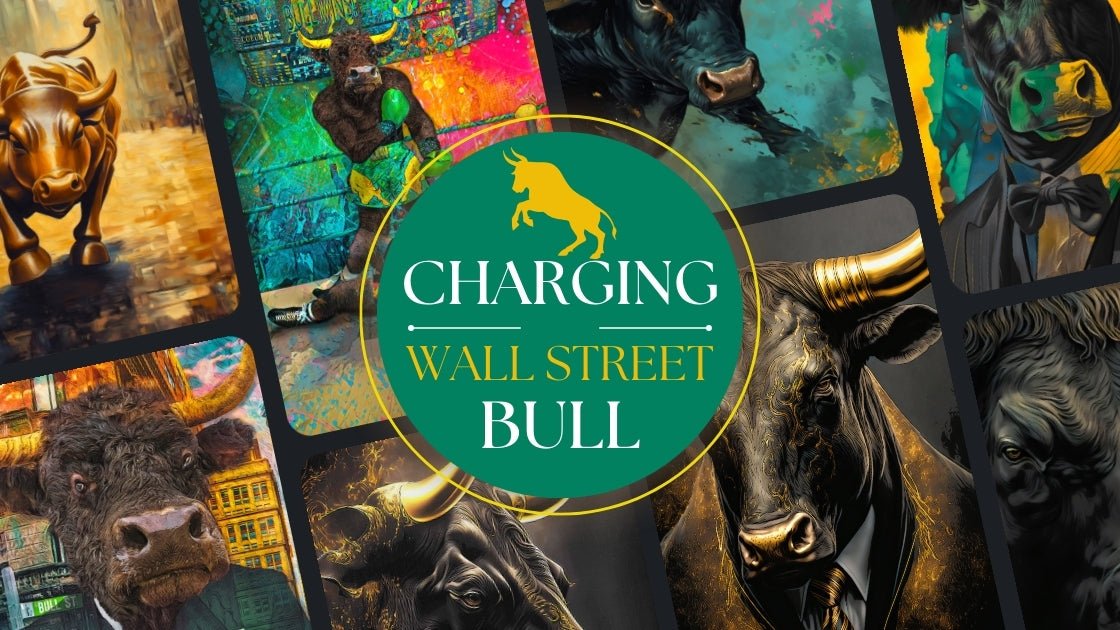

The Charging Bull of Wall Street appeared on Broad Street overnight in 1989 with no permit and no explanation, and it became the defining symbol of financial optimism within days. This piece covers Arturo Di Modica's guerrilla installation, what the bull's posture means for investors, the bull versus bear rivalry, and why the image still shows up in trading floors and offices.
Wall Street Icon1989 Origin StoryInvestor SymbolismOffice Decor
At a glance
| Installed | December 15, 1989 |
| Weight & size | 7,100 lbs, 11 feet tall |
| Sculptor | Arturo Di Modica |
| Symbolizes | Optimism, rising markets |
The Charging Bull of Wall Street: History and Symbolism for Investors
On a cold December night in 1989, a 7,100-pound bronze sculpture appeared in the middle of Manhattan with no warning, no permit, and no explanation. By morning, the Charging Bull of Wall Street had become the most talked-about piece of guerrilla art in American history. Three decades later, it remains one of the most photographed landmarks in New York City and the defining symbol of financial optimism worldwide.
For more finance-themed pieces, Wall Street and finance art collects bull, bear, and money-culture prints.
The bull didn't arrive through official channels. It was dropped off under cover of darkness by its creator, Arturo Di Modica, a Sicilian-born sculptor who spent $350,000 of his own money to create it. His motivation? To offer a symbol of hope after the 1987 stock market crash that had shaken investor confidence to its core.
The sculpture weighs 7,100 pounds, stands 11 feet tall, and stretches 16 feet long. Di Modica worked on it for two years in his SoHo studio before secretly installing it beneath the Christmas tree outside the New York Stock Exchange.
The Guerrilla Art Installation That Changed Everything
Di Modica and a group of friends used a crane to lower the massive bronze bull onto Broad Street at 1 a.m. on December 15, 1989. The Charging Bull sat directly in front of the New York Stock Exchange's Christmas tree, a deliberate placement meant to symbolize financial resilience.
The reaction was immediate. Police had the sculpture towed within hours, but the public outcry was so strong that city officials eventually placed it in its current home at Bowling Green Park. What started as unauthorized street art became a permanent fixture of American capitalism.

The Charging Bull at Bowling Green, New York City. Photo by Harri P via Unsplash.
What the Wall Street Bull Symbolizes
In financial markets, a bull market represents rising prices and investor confidence. The term comes from the way a bull attacks: charging forward with its horns thrust upward. A bear, by contrast, swipes downward with its claws, representing falling prices.
Di Modica's sculpture captures the bull in mid-charge, muscles tensed, head lowered for impact. Every detail suggests forward momentum and aggressive strength. The nostrils flare. The tail whips behind. There's no hesitation in the posture, only raw determination.
For investors, the golden bull represents more than market performance. It's a reminder that wealth is built through action, not hesitation. The bull doesn't wait for perfect conditions. It charges.
This is why Wall Street art featuring bulls has become popular in trading floors, home offices, and entrepreneurial spaces. The imagery serves as daily motivation: stay aggressive, stay optimistic, keep moving forward.

Bull vs Bear: The Eternal Market Battle
The bull and bear have represented opposing market forces for centuries. Some historians trace the terminology to 18th-century London, where bearskin traders would sell skins they hadn't yet purchased, hoping prices would fall. The bulls were their natural adversaries, betting prices would rise.
Today, this battle plays out in real time on trading floors around the world. When bears dominate, markets contract. When bulls take charge, they expand. Most investors have experienced both, and the savviest ones know how to work through each.


Bull vs Bear: Key Differences
• Bulls attack upward, representing rising markets and optimism
• Bears swipe downward, representing falling markets and caution
• Bull markets typically last longer than bear markets historically
• Both animals appear together in Wall Street art to represent market balance
Arturo Di Modica: The Sculptor Behind the Icon
Born in Sicily in 1941, Arturo Di Modica moved to New York in 1973 with dreams of making it as an artist. He opened a studio in SoHo and spent years developing his craft, creating large-scale bronze sculptures that combined classical technique with modern energy.
The 1987 crash hit Di Modica hard, not financially, but emotionally. He saw friends lose everything. He watched confidence drain from a city he loved. And he decided to do something about it. The Charging Bull was his answer: a gift to New York, a symbol that America's fighting spirit couldn't be crushed by a market correction.

Di Modica passed away in February 2021, but his legacy lives on. The original Charging Bull still stands in Bowling Green, visited by millions each year. Replicas have been installed in Shanghai and Amsterdam. And countless artists continue to interpret the Wall Street bull in new ways, from paintings to digital art to the canvas pieces you'll find in our Money Art collection.
Why Investors Display Bull Artwork
Walk into any trading floor, hedge fund office, or successful entrepreneur's home office, and you're likely to spot a bull. It's not just decoration. It's intention. The bull represents a mindset: aggressive, forward-looking, unafraid of risk.
There's psychology behind it too. Studies show that environmental cues affect decision-making. Surrounding yourself with images of strength and momentum can reinforce the mental state needed for bold moves. A golden bull on the wall isn't just art. It's a daily reminder of who you're trying to be.

Popular placement spots for bull artwork: home offices, trading desks, conference rooms, and man caves. Anywhere decisions get made, the bull fits.
The Charging Bull's Cultural Impact
Beyond Wall Street, the Charging Bull has become a global symbol of economic ambition. Shanghai installed its own version in 2010 to represent China's growing financial sector. The image appears on countless business cards, logos, and marketing materials for finance companies worldwide.
In 2017, the sculpture gained new meaning when the "Fearless Girl" statue was installed facing it. The juxtaposition sparked debate about gender, power, and corporate symbolism. Di Modica himself opposed the addition, arguing it changed his sculpture's meaning. The controversy only increased public interest in both works.
Today, the charging bull remains one of the most recognized sculptures in America. It's been featured in films, TV shows, and countless photographs. For many visitors to New York, touching the bull's horns or posing beside its muscular frame has become a ritual, a way to absorb some of that bullish energy for themselves.
FAQ
What does the Wall Street bull represent?
The Wall Street bull represents financial optimism, strength, and forward momentum. In market terminology, a bull market indicates rising prices and investor confidence. The sculpture embodies aggressive determination and the American spirit of wealth-building through action.
Who created the Charging Bull sculpture?
Sicilian-American sculptor Arturo Di Modica created the Charging Bull. He spent $350,000 of his own money and two years of work to complete it. Di Modica installed it as guerrilla art outside the New York Stock Exchange in December 1989 without permission.
Why was the Charging Bull installed secretly?
Di Modica installed the bull as a gift to New York after the 1987 stock market crash. He wanted to restore confidence and show that American resilience couldn't be broken. Without a permit, guerrilla installation was his only option to get the sculpture in front of the Stock Exchange.
What is the difference between a bull market and bear market?
A bull market features rising prices and investor optimism, while a bear market sees declining prices and pessimism. Bulls attack upward with their horns; bears swipe downward with their claws. These movements mirror how each market type affects stock prices.
Where is the Charging Bull located today?
The original Charging Bull stands in Bowling Green Park at the southern tip of Manhattan, near Wall Street. After police initially removed it from its original spot in front of the Stock Exchange, public demand led to its permanent installation at Bowling Green.
How much does the Charging Bull weigh?
The Charging Bull weighs 7,100 pounds (about 3,200 kilograms). It stands 11 feet tall and stretches 16 feet long. The bronze sculpture took Arturo Di Modica two years to complete in his SoHo studio.
Why do people rub the bull's horns?
Visitors rub the bull's horns and nose for good luck, particularly for financial success. The areas touched most frequently have become polished smooth and shiny from millions of hands. It's become a ritual for tourists hoping to absorb some of the bull's prosperity energy.
Written by Luxury Wall Art · Art experts passionate about helping you find pieces that speak to your space.
For more finance-themed canvas art, see new releases like Fighting on the Stock Floor in our Wall Street art collection.