
Purple and Gold: The Royal Color Combination in Art
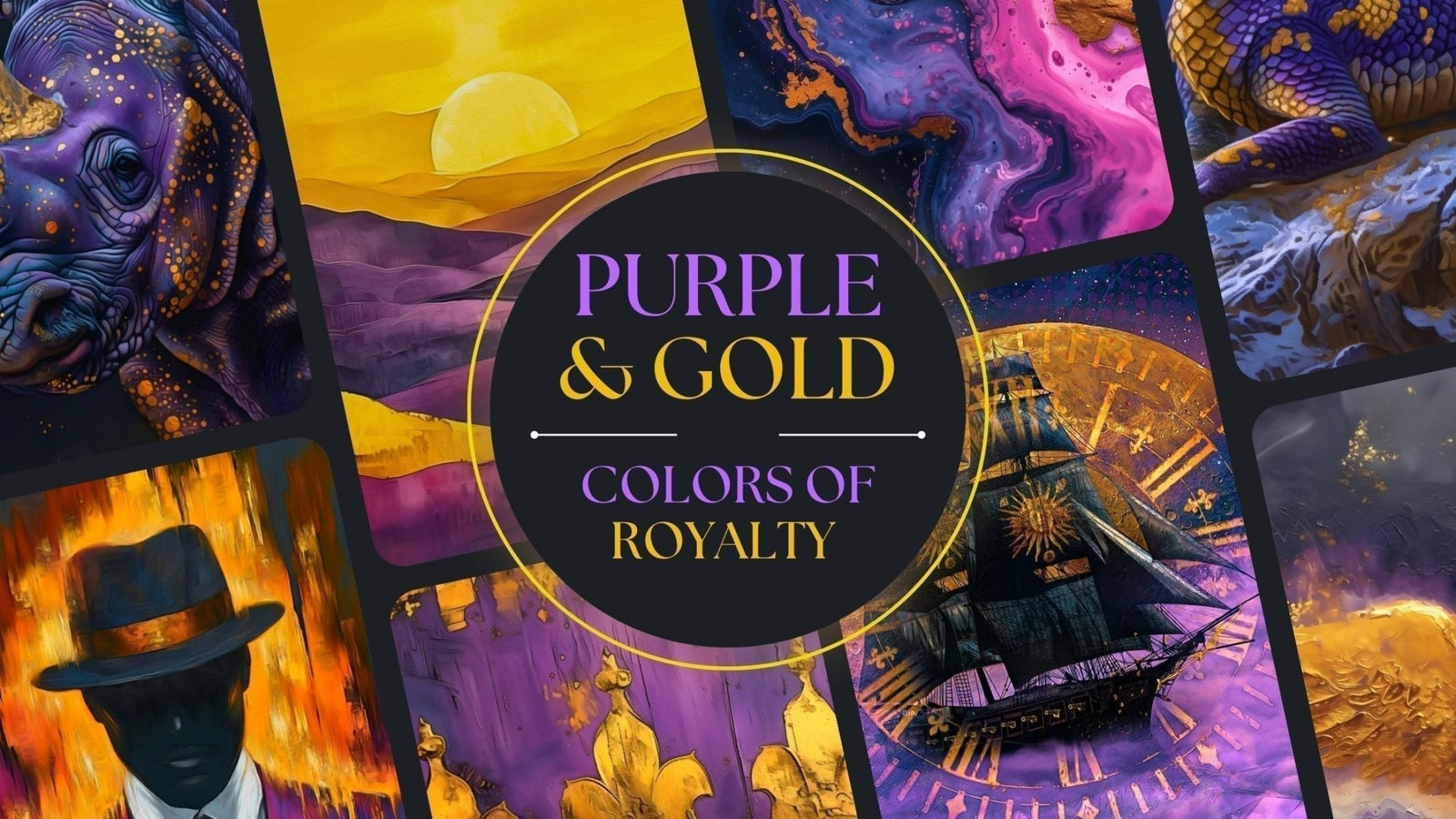

Purple and gold have signaled power, wealth, and divinity for thousands of years, long before either color showed up in a living room. This piece traces that history from Tyrian dye in ancient Rome through Byzantine mosaics and medieval heraldry to the color psychology behind why the pairing still reads as luxury in a home today.
Royal SymbolismPurple & GoldAncient HistoryModern Interiors
At a glance
| Ancient cost | Purple worth 3x gold by weight |
| Byzantine use | Gold leaf for divine light |
| Heraldry rule | Purple reserved for royalty |
| Pairs well with | Gray, white, or cream |
Purple and Gold: Why These Colors Rule the Art World
Purple and gold have been linked to power, wealth, and divinity for thousands of years. This isn't coincidence or marketing. The connection runs deep into human history, rooted in rarity, cost, and the sheer visual impact of these two colors together. They speak a language that transcends cultures and centuries.
From the robes of Roman emperors to the gilded icons of Byzantine art, from medieval European heraldry to modern luxury branding, purple and gold have never lost their association with the extraordinary. Today, these colors continue to command attention in interior design and fine art, carrying that same whisper of something rare and significant.
Purple was once worth more than gold itself. In ancient Rome, a single pound of Tyrian purple dye cost the equivalent of three pounds of gold. Only emperors and the highest nobility could afford to wear it.
The Ancient Origins of Purple and Gold Symbolism
The story of purple and gold as royal colors begins with Tyrian purple, a dye extracted from sea snails along the Phoenician coast. It took roughly 10,000 snails to produce just one gram of dye. This astronomical effort made the color a natural status symbol. You didn't just wear purple. You announced your wealth and power.
Gold, meanwhile, has been treasured since humans first discovered it gleaming in riverbeds. Unlike other metals, gold doesn't tarnish or corrode. Ancient peoples saw it as eternal, a fragment of the sun captured in solid form. When these two materials appeared together, the message was unmistakable: here stands someone touched by the divine.

Byzantine Art: Where Purple and Gold Became Sacred
The Byzantine Empire elevated purple and gold to religious significance. In Constantinople's great churches, golden mosaics depicted Christ and saints against backgrounds of deep purple. The emperors weren't just rulers. They were God's representatives on Earth, and their art reflected this belief.
Byzantine artists used gold leaf extensively, not for decoration but for spiritual symbolism. Gold represented divine light, heaven itself. Purple, still the most expensive dye available, signified sovereignty and the sacred. Together, they created images meant to inspire awe and devotion. Walk into the Hagia Sophia today and you'll still feel the weight of that visual theology.
Where Purple and Gold Dominated Byzantine Art:
• Religious mosaics – Christ and the Virgin Mary depicted with golden halos against purple backgrounds
• Imperial portraits – Emperors shown in purple robes with gold embroidery and crowns
• Illuminated manuscripts – Sacred texts written in gold ink on purple-dyed parchment
• Textiles and vestments – Ceremonial clothing woven with gold thread on purple silk
Purple and Gold in European Heraldry and Royalty
Medieval Europe inherited this color symbolism and codified it. Heraldry developed strict rules about who could display which colors. Purple, called "purpure" in heraldic terminology, remained rare on coats of arms precisely because of its cost and royal associations.
English sumptuary laws explicitly reserved purple for the royal family. France, Spain, and other kingdoms had similar restrictions. Gold, rendered as "or" in heraldry, appeared more frequently but still carried connotations of nobility, generosity, and elevation.

The coronation regalia of European monarchs consistently featured purple and gold. Crowns, orbs, and scepters gleamed with gold, while ceremonial robes draped in purple velvet. Even today, these colors dominate royal occasions from British coronations to the Vatican's papal ceremonies.
The Psychology of Purple and Gold
Color psychology offers insight into why purple and gold remain so powerful. Purple occupies a unique position in the spectrum, sitting between warm red and cool blue. This duality gives it associations with both passion and wisdom, creativity and spirituality. Studies suggest purple can stimulate the imagination and promote introspection.
Gold, psychologically speaking, signals success, achievement, and abundance. It activates feelings of warmth and optimism without the aggressive energy of pure yellow. Together, purple and gold create a balanced palette that feels both energizing and sophisticated. There's a reason luxury brands from Cadbury to the Los Angeles Lakers use this combination.
Purple and Gold in Religious Art
Beyond Byzantine tradition, purple and gold carry meaning in multiple religious contexts. In Christianity, purple represents penance and royalty, worn during Advent and Lent. Gold symbolizes the divine presence, appearing in halos, altar decorations, and sacred vessels.
Hindu and Buddhist traditions also employ gold extensively in temple art and statuary. The combination with purple appears in depictions of enlightened beings and cosmic scenes. This cross-cultural consistency suggests something universal about how humans respond to these colors together.


Modern Applications: Purple and Gold in Interior Design
Today's interior designers understand that purple and gold create instant drama. The key is balance. Too much of either color can overwhelm a space, but thoughtful placement creates rooms that feel both bold and refined.
Our purple and gold collection offers pieces designed with this balance in mind. Art becomes the natural focal point, introducing these powerful colors without requiring a full room commitment.

Deep purple works beautifully with gray, white, or cream backgrounds. Gold accents, whether in frames, furniture hardware, or the artwork itself, catch light and add warmth. The effect is spaces that feel collected and intentional rather than decorated by formula.
Pro tip:Start with neutral walls and introduce purple and gold through artwork and accent pieces. This approach lets you enjoy the color combination's impact while keeping the room versatile and easy to update.
FAQ
Why are purple and gold associated with royalty?
The association comes from ancient scarcity. Tyrian purple dye required thousands of sea snails to produce, making it extraordinarily expensive. Only rulers and wealthy elites could afford it. Gold's rarity and resistance to tarnishing made it similarly precious. Together, these colors became visual shorthand for power and wealth.
What does purple symbolize in art?
Purple carries multiple symbolic meanings in art. It represents royalty and nobility due to historical cost. In religious contexts, it signifies penance and spiritual authority. Psychologically, purple is associated with creativity, mystery, and the imagination. Artists use it to suggest luxury, depth, and the transcendent.
What colors go well with purple and gold?
Purple and gold pair beautifully with neutral tones like white, cream, gray, and black. For added depth, consider navy blue, forest green, or burgundy. Silver can complement gold for a mixed-metal effect. The key is allowing the purple and gold combination to take center stage while supporting colors provide balance.
How do I use purple and gold in home decor?
Start with a neutral base, whether white, gray, or cream walls. Introduce purple and gold through statement pieces like artwork, throw pillows, or accent furniture. Gold frames, lamp bases, or hardware add warmth. Balance is essential: these are powerful colors that work best when they don't dominate every surface.
What is Tyrian purple?
Tyrian purple was an ancient dye produced from the mucus of Murex sea snails along the Phoenician coast. It required roughly 10,000 snails to produce one gram of dye, making it more valuable than gold by weight. This extreme cost led to purple becoming exclusively associated with emperors, kings, and the highest nobility.
Why was gold used in Byzantine art?
Byzantine artists used gold to represent divine light and heavenly realms. Gold leaf backgrounds in icons and mosaics weren't decorative choices but theological statements. The eternal, untarnishing quality of gold symbolized God's unchanging nature. Combined with purple, it created images meant to transport viewers beyond the physical world.
Is purple and gold a good color combination for bedrooms?
Yes, purple and gold can create a luxurious bedroom atmosphere. Deep purples promote relaxation and can aid sleep, while gold accents add warmth without overstimulation. Consider amethyst or plum tones rather than bright violet. Use gold in frames, lighting fixtures, or subtle textile details to complete the regal effect.
Written by Luxury Wall Art · Art experts passionate about helping you find pieces that speak to your space.
You May Also Enjoy:
• Top 21 Gold and Black Wall Decor Must-Haves
• Gold Wall Art: The New Trend in Elite Paintings
• Secrets of the Egyptian Eye: Horus and Ra's Mysteries Uncovered
See new royal pieces in deep purple and gold, such as King Golden Ascendant, in our Kings and Queens collection.