
Elephant Symbolism in Art: Wisdom and Strength Across Cultures
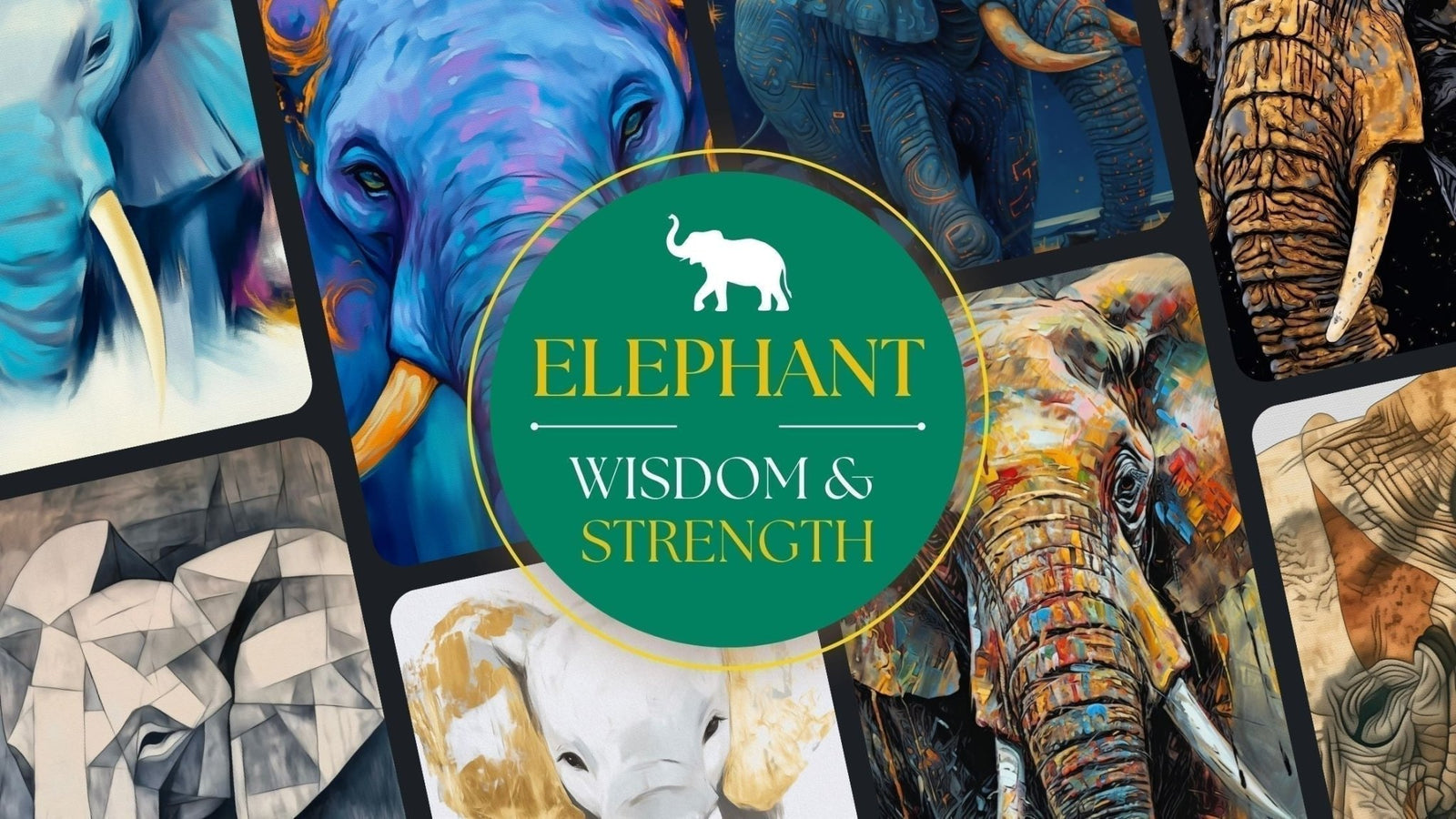

Elephant symbolism spans continents, from Ganesha in Hindu tradition to ancestor spirits in African cultures, all built on the animal's memory, loyalty, and sheer size. This piece covers Ganesha's origin story, the elephant's role in Buddhist teaching on mental discipline, African traditions around chieftainship, and how the symbolism translates into wall art today.
Ganesha & WisdomCultures WorldwideLoyalty & FamilyBlack & Gold
At a glance
| Weight | Up to 14,000 lbs |
| Brain size | About 11 lbs, largest on land |
| Ganesha's role | Removes obstacles |
| Feng shui belief | Raised trunk brings luck |
Elephant Symbolism in Art: Wisdom and Strength Across Cultures
Few animals carry as much symbolic weight as the elephant. Across continents and centuries, elephant artwork has represented wisdom, memory, loyalty, and raw power. In India, elephants are worshipped as gods. In Africa, they're revered as ancestors. In Western culture, they've become symbols of everything from political parties to childhood wonder.
What is it about these gentle giants that captures human imagination so completely? Part of it is their sheer presence. An adult African elephant can weigh 14,000 pounds and live 70 years. They mourn their dead, recognize themselves in mirrors, and remember places and faces for decades. When you look into an elephant's eye, something looks back.
Elephants have the largest brain of any land animal, weighing about 11 pounds. They demonstrate empathy, use tools, and communicate through vibrations that travel through the ground. Science is only beginning to understand what ancient cultures sensed intuitively.
Ganesha: The Elephant-Headed God
In Hindu tradition, Ganesha is one of the most beloved deities: an elephant-headed god who removes obstacles and blesses new beginnings. Millions of Hindus pray to Ganesha before starting businesses, taking exams, or embarking on journeys. His image appears in homes, offices, and temples across South Asia and beyond.
The mythology varies, but most versions tell of Ganesha's mother Parvati creating him from clay to guard her while she bathed. When her husband Shiva returned and found a stranger blocking his way, he beheaded the boy in anger. To console Parvati, Shiva replaced the head with that of the first creature he found: an elephant.

Buddhist Elephant Symbolism
In Buddhism, the elephant holds special significance tied to the Buddha's conception. Queen Maya, Buddha's mother, dreamed that a white elephant entered her side, and this was interpreted as a sign that she would give birth to a great leader. White elephants have been sacred in Southeast Asian cultures ever since.
The elephant also represents mental strength in Buddhist teaching. An untrained mind is compared to a wild elephant: powerful but destructive. Through meditation and discipline, the mind can be tamed like a domesticated elephant: still powerful, but now directed toward useful purposes. Thai and Sri Lankan art frequently depicts white elephants as symbols of purity and royal power.

African Elephant Traditions
African cultures developed their own rich traditions around African elephants. Many communities viewed elephants as reincarnated ancestors or chiefs, worthy of respect and protection. The Ashanti people of Ghana believed that elephants were former human leaders, and killing one required special rituals to appease its spirit.
In some traditions, elephants represent chieftainship itself. Their size, strength, and long memory made them natural symbols of leadership. Chiefs wore elephant-tail fly whisks and elephant-hide sandals as markers of authority. Ivory, despite its tragic history, was considered so precious that only royalty could possess it.

The elephant's family structure also resonated with African societies. Elephant herds are matriarchal, led by the oldest female who remembers migration routes and water sources. Young elephants stay with their mothers for years, learning from the group. This emphasis on family, memory, and elder wisdom mirrored many African cultural values.
Our elephant paintings collection captures this blend of power and gentleness that makes elephants so strong across cultures.

Elephant Art in Western Culture
Western encounters with elephants produced their own symbolic traditions. The ancient Romans brought elephants to Europe for spectacles and war, and the animals became associated with military might. Hannibal's famous crossing of the Alps with war elephants cemented their reputation as symbols of audacious power.
In medieval Europe, elephants appeared in bestiaries as symbols of chastity and temperance. Since Europeans rarely saw actual elephants, artists often depicted them fancifully, with horse-like bodies or tiny ears. The phrase "elephant in the room" emerged much later, in the 20th century, to describe obvious truths that people avoid discussing.


What Elephants Symbolize Across Cultures:
• Wisdom – Their long memory and problem-solving abilities
• Strength – Physical power combined with gentleness
• Loyalty – Strong family bonds and lifelong relationships
• Good Fortune – Especially with trunk raised upward
• Patience – Calm demeanor despite great power
Elephant Art in Your Home
Today, wall art elephants bring all these associations into contemporary spaces. Some people display elephant art for its aesthetic appeal: the animals' distinctive silhouettes, textured skin, and expressive eyes make strong subjects. Others choose elephants for their symbolic resonance with wisdom, family, or good luck.
In feng shui, elephants with raised trunks are thought to attract positive energy and good fortune. Many people place elephant figures or artwork near entrances to welcome prosperity into the home. Elephants facing the door are said to guard against negative influences.

Style-wise, elephant art spans the spectrum. Realistic elephant paintings in earth tones work well in traditional or safari-themed spaces. Abstract interpretations in bold colors suit contemporary interiors. Black and gold elephant pieces add luxury and drama to any room. For broader wildlife themes, our wildlife art collection pairs well with elephant pieces. The key is matching the artwork's mood to your space's personality.
Whether you're drawn to elephants for their cultural significance, their visual impact, or simply because you love these remarkable animals, elephant paintings make thoughtful additions to living rooms, offices, and nurseries alike. They remind us that strength and gentleness aren't opposites, and that the largest creatures can also be the most tender.
FAQ
What does elephant art symbolize?
Elephant art typically symbolizes wisdom, strength, loyalty, and good fortune. In Hindu culture, elephants represent the god Ganesha, remover of obstacles. In Buddhism, white elephants signify purity and enlightenment. African traditions associate elephants with ancestral wisdom and leadership.
Should elephant trunk be up or down in art?
In feng shui, elephants with trunks raised upward are believed to attract good luck and positive energy. A trunk pointing down represents stability and the ability to overcome obstacles. Both are considered auspicious, so choose based on the energy you want to invite.
What is the significance of Ganesha?
Ganesha is the Hindu elephant-headed god of beginnings and remover of obstacles. Hindus pray to him before starting new ventures, exams, or journeys. His large ears represent listening, his broken tusk symbolizes sacrifice, and his trunk is curved like the sacred Om symbol.
Where should I place elephant art in my home?
Elephant artwork works well near entrances to welcome good fortune, in living rooms for family gatherings, or in offices for wisdom and strength. In feng shui, placing elephants facing the door is thought to guard against negative energy and attract prosperity.
Why are white elephants considered sacred?
White elephants are sacred in Buddhist tradition because Buddha's mother dreamed of one before his birth. In Thailand and other Southeast Asian countries, white elephants symbolize royal power and purity. They were so precious that giving one as a gift was both an honor and a burden.
What do elephants represent in African culture?
In many African traditions, elephants represent ancestral wisdom, chieftainship, and family bonds. Some cultures believed elephants were reincarnated leaders. Their matriarchal herds, long memories, and care for their young mirrored values of elder wisdom and community.
What rooms work best for elephant wall art?
Wall art elephants suit living rooms, home offices, nurseries, and entryways. Earth-toned realistic pieces work in traditional spaces, while colorful or abstract interpretations fit contemporary interiors. Black and gold elephant art adds drama and luxury to any room.
Written by Luxury Wall Art · Art experts passionate about helping you find pieces that speak to your space.