
Nature Art Through History: From Cave Paintings to Modern Masterpieces
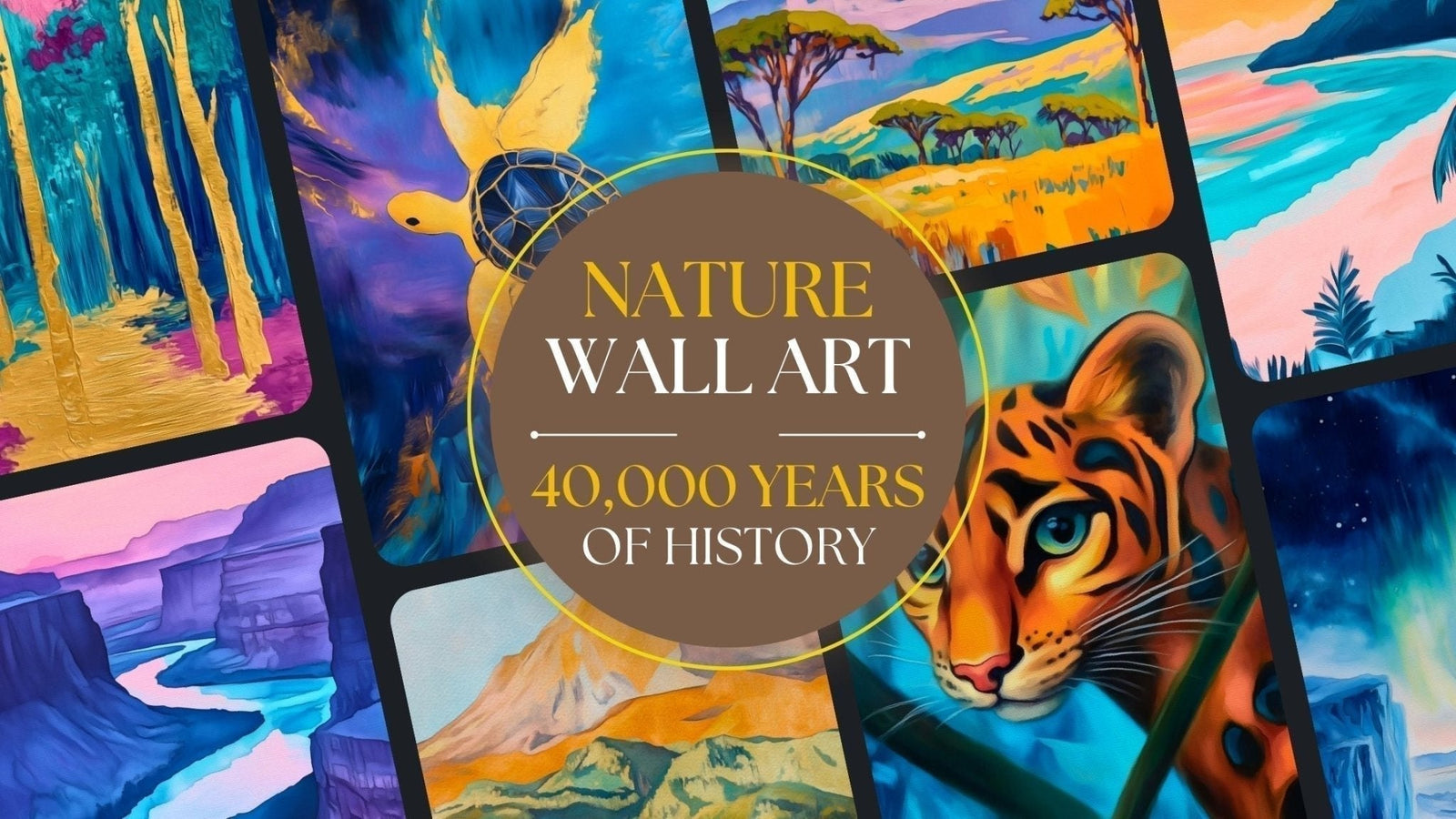

Nature art stretches back 45,000 years to the first cave paintings, making it one of humanity's oldest artistic traditions. This piece traces that history from Lascaux's painted animals through Renaissance botanical studies, the Hudson River School, and Impressionist light studies, showing how each era shaped the greenery paintings and landscapes people hang today.
40,000+ YearsArt HistoryLandscapesBotanical Art
At a glance
| Oldest known piece | 45,000 years old |
| Lascaux caves | c. 17,000 BCE, France |
| Hudson River School | Founded 1820s |
| Impressionism | Emerged in the 1870s |
Nature Art Through History: 40,000 Years of Capturing the Natural World
Humans have been creating nature artwork since before we had written language. The impulse to capture the natural world, to preserve its beauty and meaning, runs deep in our species. From the first handprints pressed onto cave walls to the digital nature prints hanging in modern homes, this tradition spans continents and millennia.
Understanding this history changes how you see greenery paintings and botanical art today. Every forest scene, every floral arrangement, every landscape connects to an unbroken chain of artistic expression stretching back to the Ice Age. Here's how that story unfolds.
The oldest known nature art dates back 45,000 years. Cave paintings in Indonesia depict wild pigs and hand stencils, proving that the human urge to represent the natural world predates civilization itself.
Prehistoric Cave Art: Where Nature Art Began
The Lascaux caves in France contain some of the most famous prehistoric art in the world. Painted roughly 17,000 years ago, these images show horses, deer, bulls, and bison in remarkable detail. The artists understood animal anatomy, movement, and even used the cave's contours to create three-dimensional effects.
These weren't decorations. Archaeologists believe cave paintings served spiritual or ritualistic purposes. Animals provided food, clothing, and tools. By painting them, early humans may have been seeking connection, expressing gratitude, or attempting to influence the hunt. Whatever the motivation, they created the first nature artwork in human history.

Lascaux cave paintings, France (c. 17,000 BCE). Public domain via Wikimedia Commons.
Similar cave art appears across the globe. Spain's Altamira caves, Indonesia's Sulawesi caves, and sites in Australia all show this same impulse: humans looking at nature and feeling compelled to capture it.
Ancient Civilizations and the Natural World
As humans settled into agricultural societies, nature art evolved. Egyptian tomb paintings showed gardens, papyrus marshes, and the animals of the Nile. Roman villas featured elaborate frescoes of trees, birds, and flowers. The famous garden room paintings from Livia's Villa near Rome depict an impossibly lush garden, complete with fruit trees and songbirds.
Chinese landscape painting emerged as its own tradition around 400 CE. These works didn't just show mountains and rivers. They expressed philosophical ideas about humanity's place in the natural order. The vast, misty landscapes with tiny human figures conveyed a worldview where nature dominated and humans were guests.

Renaissance Botanical Illustration
The Renaissance brought scientific curiosity to nature art. Artists like Leonardo da Vinci made detailed studies of plants, flowers, and animals. His notebooks contain careful drawings of oak leaves, star-of-Bethlehem flowers, and acorns. These weren't paintings for display. They were investigations into how nature actually worked.
Albrecht Dürer took this further with works like "The Great Piece of Turf" (1503), which elevated a simple patch of meadow grass to high art. Every blade, every dandelion leaf, every plantain was rendered with devotion. This marked a shift: nature itself became worthy of artistic attention, not just as background for religious or mythological scenes.
Key Moments in Nature Art History:
• 45,000 BCE – First cave paintings of animals in Indonesia
• 17,000 BCE – Lascaux cave paintings in France
• 400 CE – Chinese landscape painting tradition emerges
• 1500s – Renaissance botanical illustration begins
• 1820s – Hudson River School founded in America
• 1870s – Impressionists capture nature through light
• 1960s – Environmental art movement begins
The Romantic Era and Hudson River School
The Romantic movement of the late 18th and early 19th centuries transformed how artists approached nature. Rather than documenting it scientifically, Romantics sought to capture its emotional impact. Wild landscapes, dramatic storms, and sublime mountain vistas became vehicles for expressing human feeling.
In America, the Hudson River School took this approach to new heights. Thomas Cole, Frederic Edwin Church, and Albert Bierstadt painted the American wilderness as something sacred and awe-inspiring. Their massive canvases of Catskill forests, Niagara Falls, and Western landscapes helped define American identity during a period of rapid expansion.
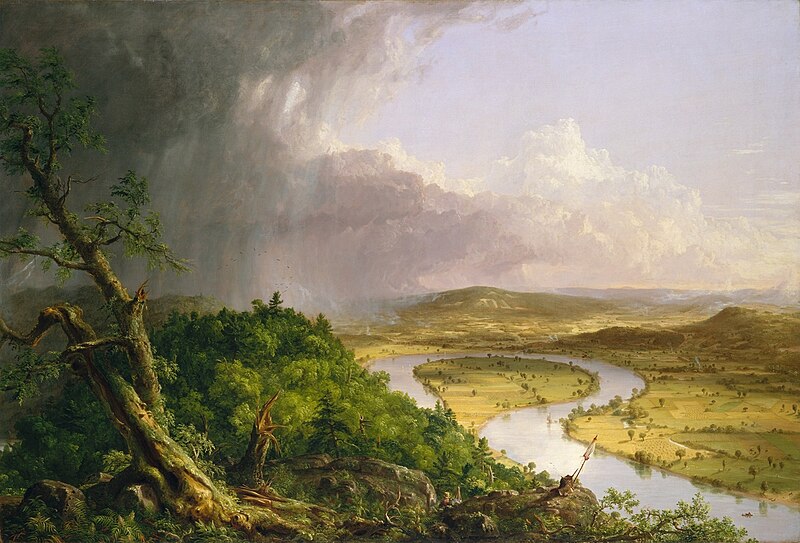
"The Oxbow" by Thomas Cole (1836). Public domain via Metropolitan Museum of Art.
These paintings weren't just art. They were arguments. At a time when America was industrializing rapidly, Hudson River School works reminded viewers of what could be lost. They influenced the conservation movement and helped establish the idea that wilderness had intrinsic value worth protecting.
Impressionism: Capturing Nature Through Light
The Impressionists revolutionized nature artwork by focusing on light itself. Claude Monet's water lilies, haystacks, and garden scenes weren't about depicting nature accurately. They were about capturing how nature feels in a specific moment of light and atmosphere.
This shift changed everything. Rather than studio paintings based on sketches, Impressionists worked outdoors (en plein air), responding to actual conditions. Monet famously painted the same subjects repeatedly at different times of day and seasons, showing how light transformed the same scene into something completely different.
Their influence persists in contemporary greenery paintings. That sense of dappled light through leaves, of atmosphere and mood over precise detail, comes directly from what Monet and his contemporaries pioneered in the 1870s.

Modern Nature Art and Environmental Consciousness
The 20th century brought new dimensions to nature art. Georgia O'Keeffe's enlarged flowers and desert landscapes revealed nature's abstract qualities. Her work showed that botanical subjects could be modern, even avant-garde.
Environmental art emerged in the 1960s and 70s as artists moved beyond representation to direct engagement with nature. Robert Smithson's "Spiral Jetty," built from mud and basalt in Utah's Great Salt Lake, made the landscape itself into art. Andy Goldsworthy's ephemeral sculptures from leaves, ice, and stones blur the line between art and nature entirely.


Contemporary Nature Art in Home Decor
Today's greenery wall art inherits all these traditions. A forest print on your wall connects you to the cave painters of Lascaux, to the Romantic wilderness painters, to the Impressionists chasing light. This history gives nature art a depth that purely abstract or contemporary work sometimes lacks.
Our nature art collection draws from these traditions while fitting modern spaces. Whether you prefer the drama of wildlife pieces or the serenity of forest scenes, you're participating in humanity's oldest artistic tradition.

The appeal of nature art in homes goes beyond aesthetics. Studies consistently show that natural imagery reduces stress, improves mood, and creates feelings of calm. In urban environments especially, nature artwork provides a visual connection to the natural world that many people otherwise lack.
Pro tip:When choosing greenery paintings for your space, consider the mood you want to create. Forest scenes and landscapes tend toward calm and contemplation. Wildlife pieces add energy and personality. Florals bring color and vitality without overwhelming a room.
FAQ
What is the oldest nature art?
The oldest known nature artwork dates back approximately 45,000 years to cave paintings in Sulawesi, Indonesia. These paintings depict wild pigs and hand stencils. The famous Lascaux cave paintings in France, showing horses, bulls, and deer, are roughly 17,000 years old. Both demonstrate that humans have been compelled to represent the natural world since before recorded history.
What is the Hudson River School?
The Hudson River School was a 19th-century American art movement focused on romantic landscape painting. Founded by Thomas Cole in the 1820s, artists like Frederic Edwin Church and Albert Bierstadt painted dramatic wilderness scenes of the American landscape. Their work celebrated nature's grandeur and influenced the conservation movement.
Why is nature art so popular?
Nature artwork remains popular because it connects us to the natural world. Research shows that viewing natural imagery reduces stress, lowers blood pressure, and improves mood. In increasingly urban environments, greenery paintings and landscape art provide visual access to nature that many people otherwise lack. The subject matter also has universal appeal across cultures and time periods.
What makes good nature wall art?
Good greenery wall art balances artistic quality with the mood you want to create. Consider color palette, as forest greens create calm while vibrant florals add energy. Think about scale, as large pieces make statements while smaller works suit gallery arrangements. Quality printing and materials matter too, as they determine how the piece looks and lasts over time.
What is environmental art?
Environmental art is a movement that emerged in the 1960s and 70s where artists work directly with nature rather than just representing it. Robert Smithson's "Spiral Jetty" and Andy Goldsworthy's natural sculptures are famous examples. These works often address ecological concerns and blur the boundary between art object and natural environment.
How did Impressionists change nature art?
Impressionists revolutionized nature artwork by focusing on light and atmosphere rather than precise detail. Working outdoors (en plein air), artists like Claude Monet captured how light transformed scenes at different times of day. This approach emphasized the feeling of nature over its documentation, influencing how we still think about landscape and botanical art today.
What types of nature art work in modern homes?
Modern homes accommodate many styles of nature artwork. Forest and landscape scenes suit minimalist and Scandinavian interiors. Botanical prints work well in traditional and transitional spaces. Abstract interpretations of nature fit contemporary settings. The key is matching the piece's color palette and style to your existing decor while choosing subjects that resonate personally.
Written by Luxury Wall Art · Art experts passionate about helping you find pieces that speak to your space.
You May Also Enjoy:
• Secrets of the Egyptian Eye: Horus and Ra's Mysteries Uncovered
• Elephant Symbolism in Art: Wisdom and Strength Across Cultures
•Zen Art and Minimalism: Finding Peace Through Japanese Aesthetics