Public Domain
Self-Portrait
StyleNorthern Renaissance
GenreSelf-Portrait
Artwork Details
Cite or Embed This Work
APA · MLA · Chicago1-click academic citation and embeddable “On View” museum badge for articles, syllabi, and research.
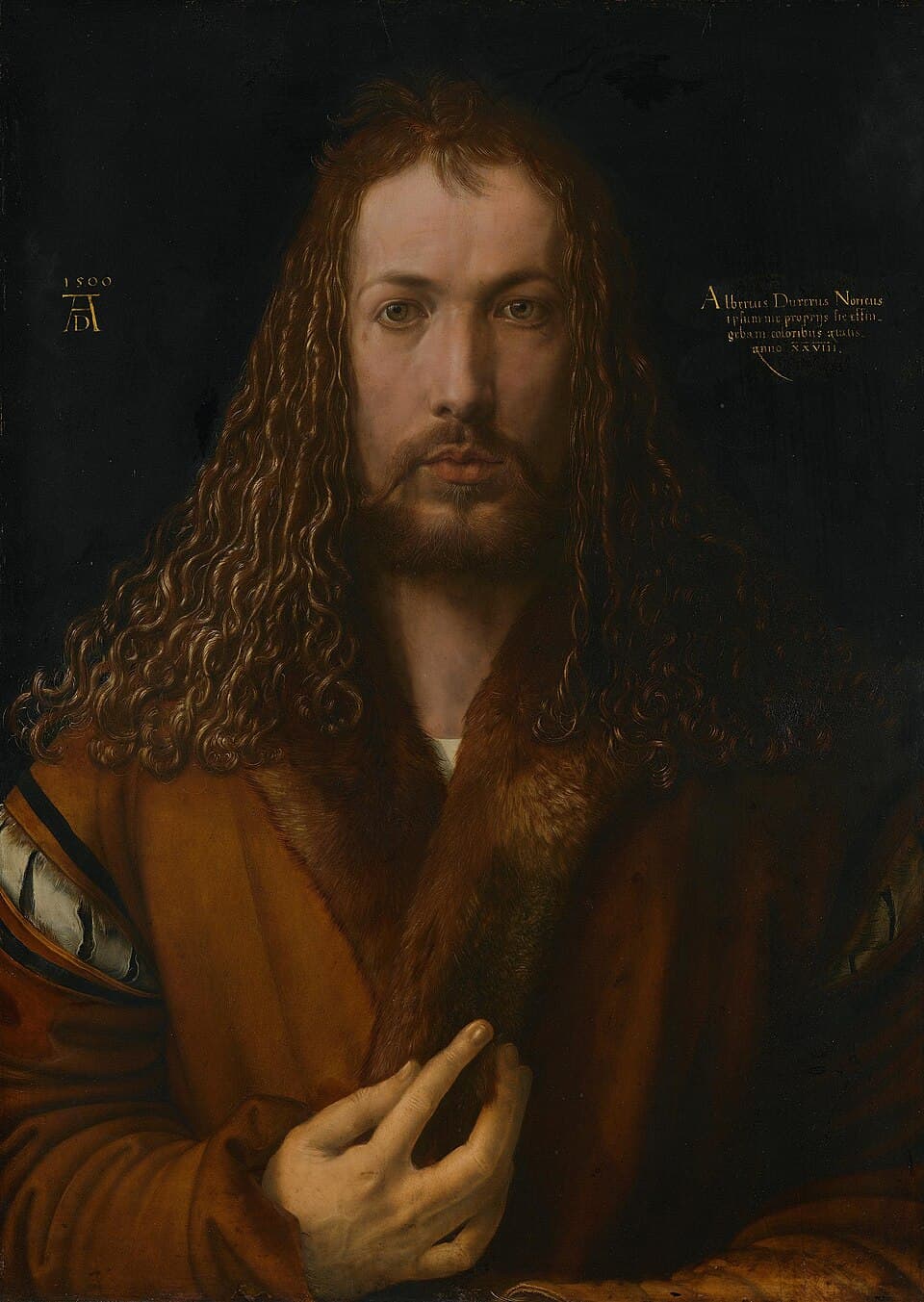
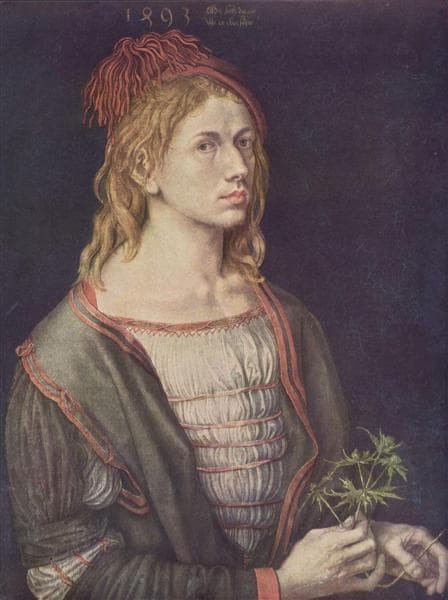
Albrecht Dürer completed this self-portrait in 1493 at age twenty-two, making it his earliest surviving self-portrait in oil. He created the work in Strasbourg during his journeyman travels, intending it as a gift for his fiancée Agnes Frey back in Nuremberg. The young artist presents himself as a fashionably dressed gentleman, holding a sprig of thistle in his right hand.
The thistle's meaning has sparked scholarly debate. Some read it as a symbol of fidelity, appropriate for a betrothal portrait. Others connect it to Christ's Passion, since thistles evoke the crown of thorns. The German word for thistle (Männertreu) literally means "man's fidelity," supporting the romantic interpretation. Whatever its symbolism, the plant draws attention to Dürer's elegant hands and his status as a refined craftsman rather than mere laborer.
Dürer would become famous for self-portraits throughout his career, but this early work already shows his confidence and ambition. He inscribes the painting: "My affairs will go as ordained on high." The mix of piety and self-assurance defined his personality. The portrait now hangs at the Louvre in Paris, representing the beginning of a tradition of artist self-representation that Dürer would raise to new heights.