Arnolfini Portrait
by Jan van Eyck, 1434
Palette
Artwork Details
Details
- Year
- 1434
- Medium
- Oil on oak panel
- Size
- 82.2 cm × 60 cm
- Gallery
- Room 63
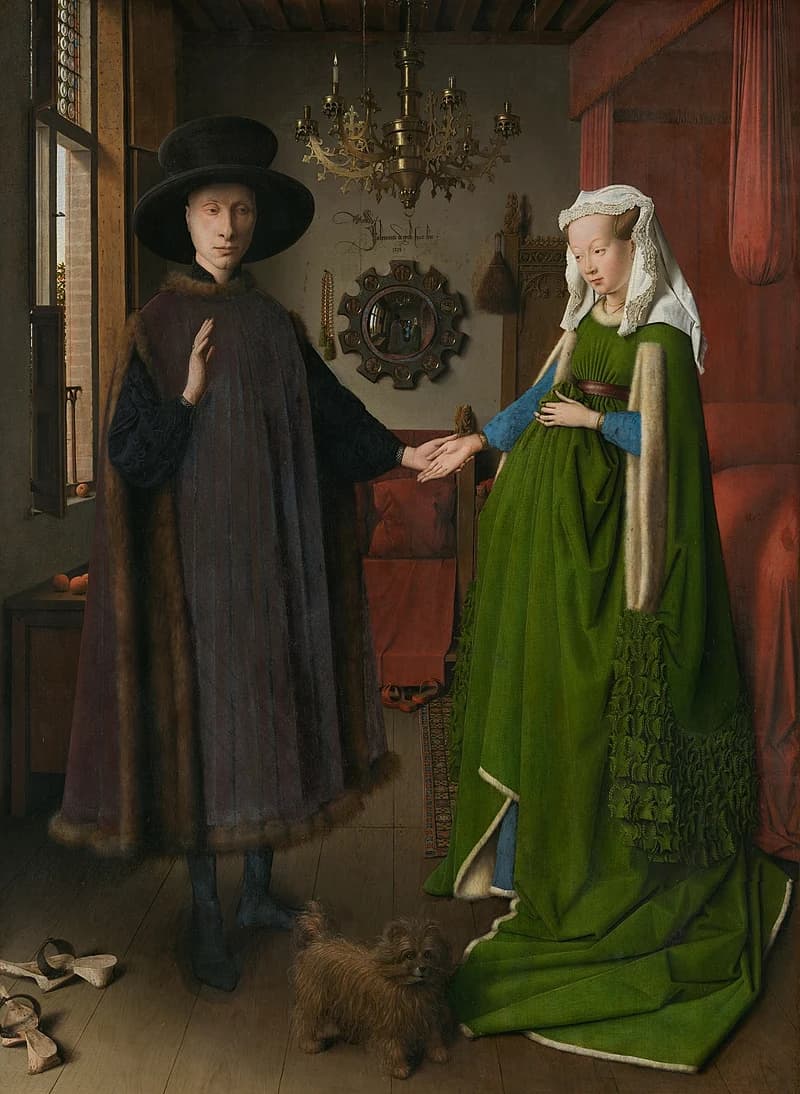
Jan van Eyck created this double portrait in 1434, depicting a wealthy couple standing in what appears to be a Flemish bedchamber. The man, traditionally identified as Italian merchant Giovanni di Nicolao Arnolfini, raises his right hand while holding the woman's hand with his left. The woman wears a fashionable green dress with elaborate fur trim.
The painting brims with symbolic details that scholars have debated for centuries. A convex mirror on the back wall reflects two figures entering the room, and above it Van Eyck inscribed "Jan van Eyck was here 1434" in Latin. The single lit candle in the chandelier, the discarded shoes, the small dog, and the fruit on the windowsill have all been interpreted variously as symbols of wealth, fidelity, or religious meaning.
Van Eyck's mastery of oil painting techniques allowed him to render textures with astonishing precision, from the brass chandelier to the wooden floorboards. The work hangs in the National Gallery in London, having been acquired in 1842.
Historical Significance
A masterpiece of Northern Renaissance art, famous for its intricate symbolism and innovative use of oil paint.