Wikimedia Commons • Public Domain
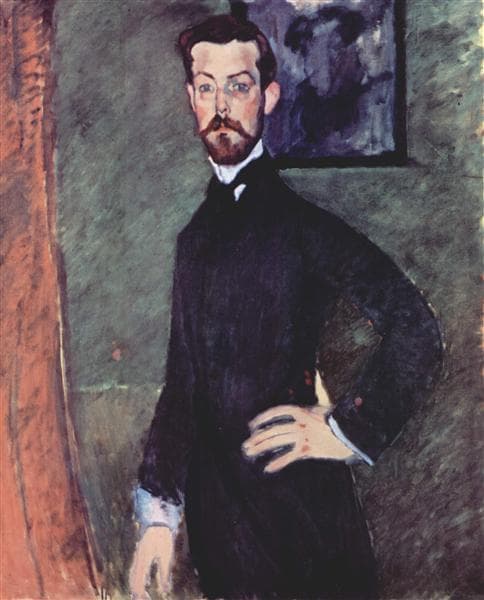
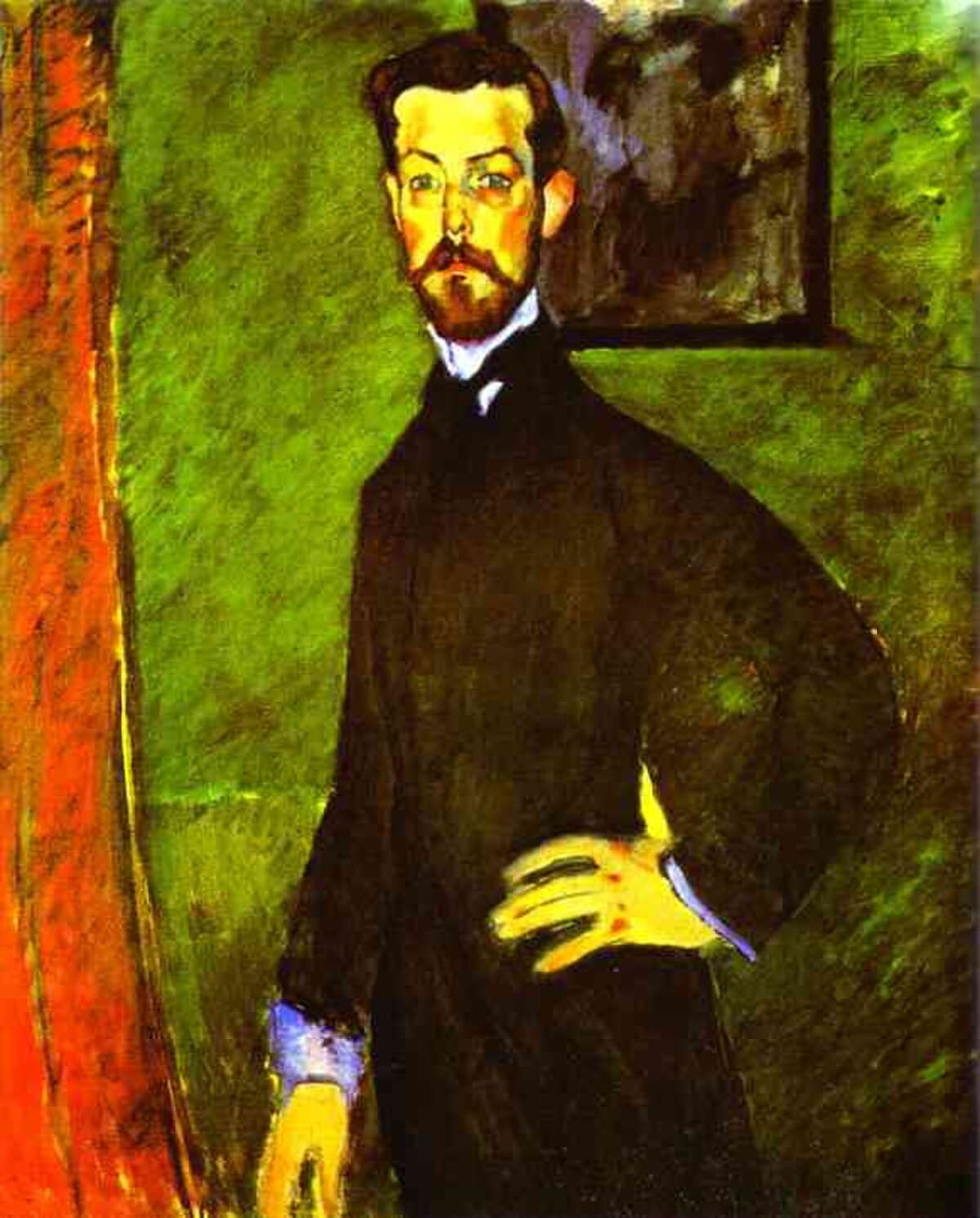
Portrait of Paul Alexandre
Artwork Details
Italian artist Amedeo Modigliani painted this portrait of Dr. Paul Alexandre in 1909, two years after they first met at the Maison du Delta in Montmartre. This version shows the doctor in a three-quarter pose with his left hand placed on his hip, echoing the tradition of Italian Renaissance portraiture that Modigliani had studied before leaving Italy.
The portrait represents a key moment in Modigliani's development. In 1909, he painted three portraits of Alexandre, with this being among the most accomplished. The work still shows conventional elements of academic portraiture before Modigliani developed his signature style of elongated faces and almond-shaped eyes in later years.
Alexandre's support proved crucial during Modigliani's difficult early years in Paris. The young doctor ran a kind of low-budget art colony at the Maison du Delta, where Modigliani could paint rent-free. Alexandre paid modest sums for the artist's work and allowed him to retrieve paintings if better offers came along. This arrangement gave Modigliani the freedom to experiment.
Around this time, Modigliani befriended sculptor Constantin Brancusi, which prompted him to devote several years primarily to sculpture. When he returned to painting around 1914, his style had transformed into the distinctive approach we recognize today. The Tokyo Fuji Art Museum holds this early portrait.