Bacchus
by Caravaggio, 1598
Artwork Details
Details
- Year
- 1598
- Medium
- Oil on canvas
- Size
- 95 cm × 85 cm (37.4 × 33.5 in)
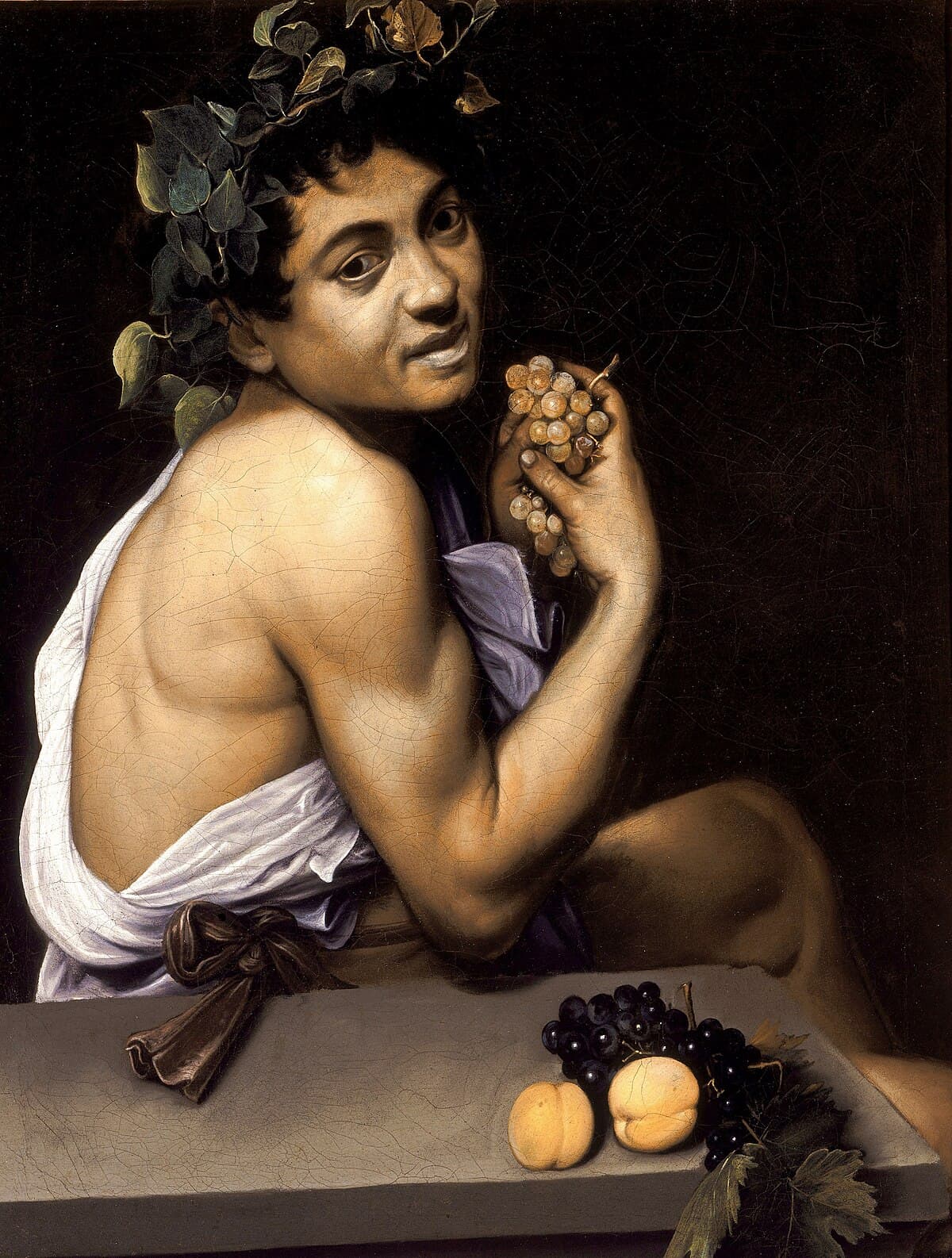
Caravaggio painted this Bacchus around 1598, showing the god of wine as a young Roman street boy. He wears vine leaves in his hair and drapes a white sheet like a toga, offering a glass of wine to the viewer. A basket of fruit, some overripe and rotting, sits on the table before him.
The earthy realism shocked contemporaries expecting idealized classical gods. Bacchus's fingernails are dirty, his complexion flushed from drink, the fruit already decaying. This isn't timeless divinity but a specific moment of mortal pleasure about to fade. The direct address invites the viewer to join the drinking.
The painting was lost for centuries, rediscovered in a Uffizi storeroom in 1913. The Uffizi now displays it as one of Caravaggio's most seductive early works.