Wikimedia Commons • Public Domain
Medusa
by Caravaggio
Artwork Details
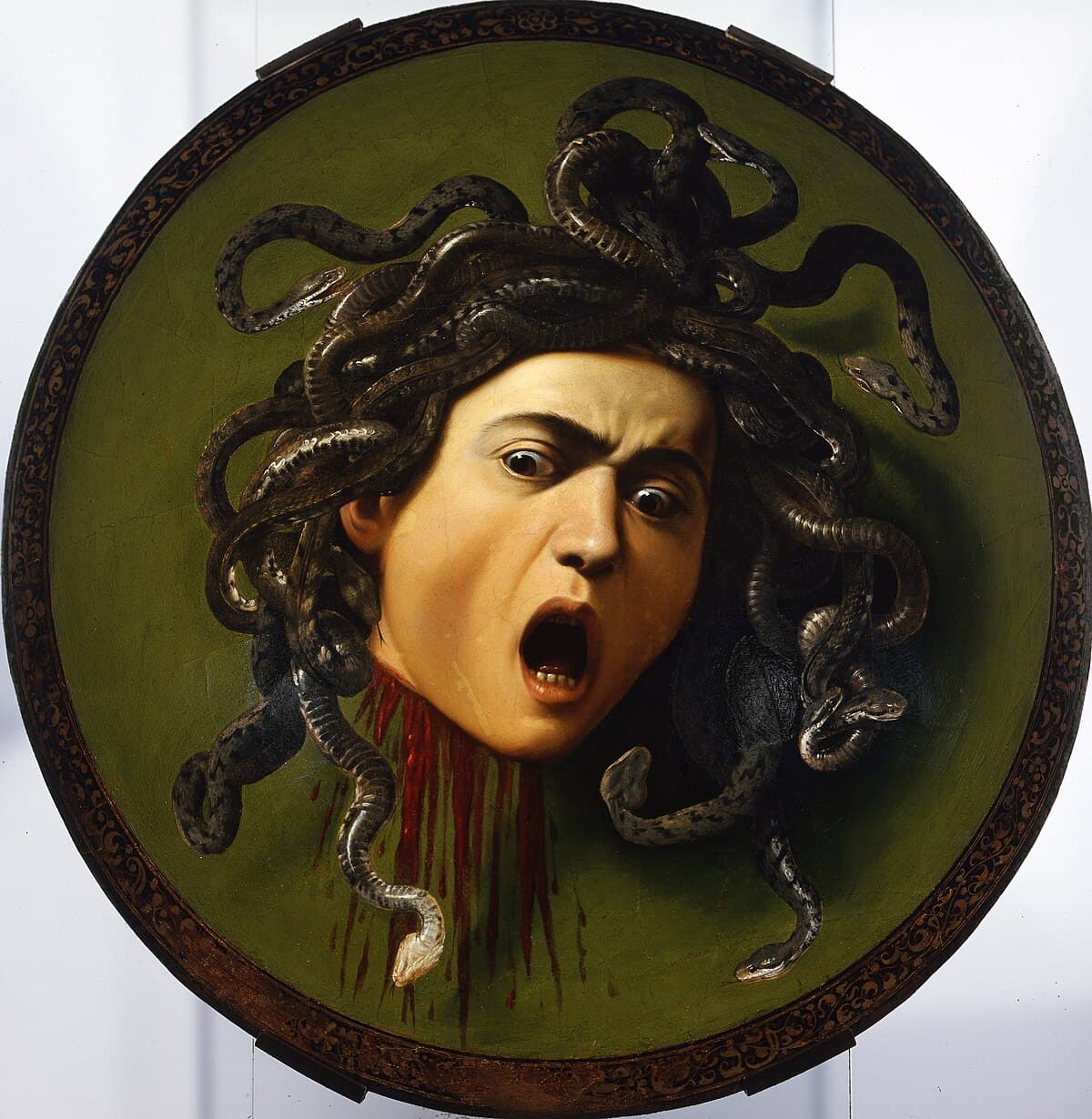
Caravaggio rendered this image of the severed head of Medusa on a ceremonial shield around 1597. The work was commissioned by Cardinal Francesco Maria del Monte, who gave it to Grand Duke Ferdinand I de' Medici as a gift symbolizing the duke's courage in defeating his enemies. The canvas is mounted on a convex wooden surface, creating the illusion that the head protrudes toward the viewer.
According to Greek myth, Medusa was a woman cursed by Athena to have snakes for hair and a gaze that turned men to stone. Caravaggio replaced Medusa's face with his own, positioning himself as immune to her fatal power. The painting captures the monster's final moment of consciousness: eyes widened, mouth agape, blood streaming from the severed neck. This choice of the death moment rather than Medusa alive was unusual for the time.
Caravaggio painted two versions. The first, smaller one (signed "Michel A F") remained in his studio until his death and is now privately owned. This second, larger version at the Uffizi Gallery measures 60 by 55 centimeters. The work draws comparison to a lost shield painting by Leonardo da Vinci, which Caravaggio almost certainly intended.