Wikimedia Commons • Public Domain
Spring
by Edvard Munch
StyleExpressionism
Artwork Details
Cite or Embed This Work
APA · MLA · Chicago1-click academic citation and embeddable “On View” museum badge for articles, syllabi, and research.
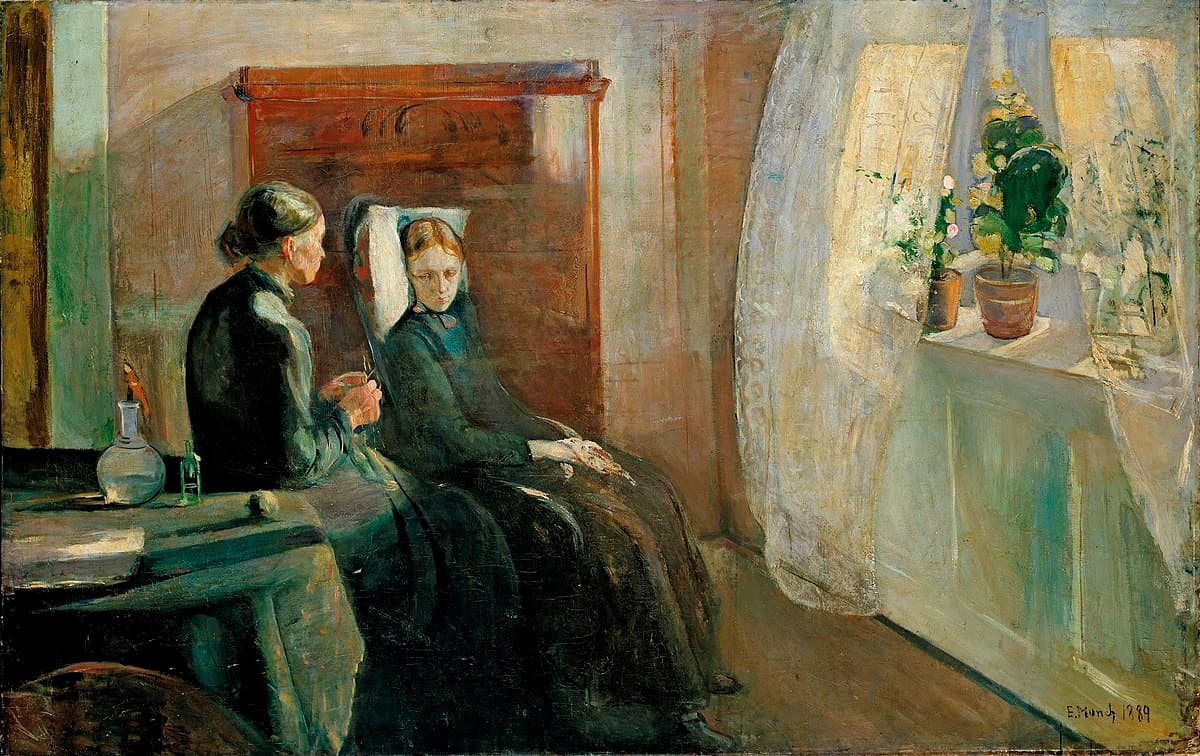
Edvard Munch painted the Spring in 1889, returning once again to the trauma that defined his childhood: his sister Sophie's death from tuberculosis at age fourteen. A sick girl sits by a window where flowers grow, her face pale, a bloody handkerchief in her hands. An older woman, likely an aunt, sits beside her in concern. Sunlight pours through the glass, an emblem of hope set against the desperation of the scene.
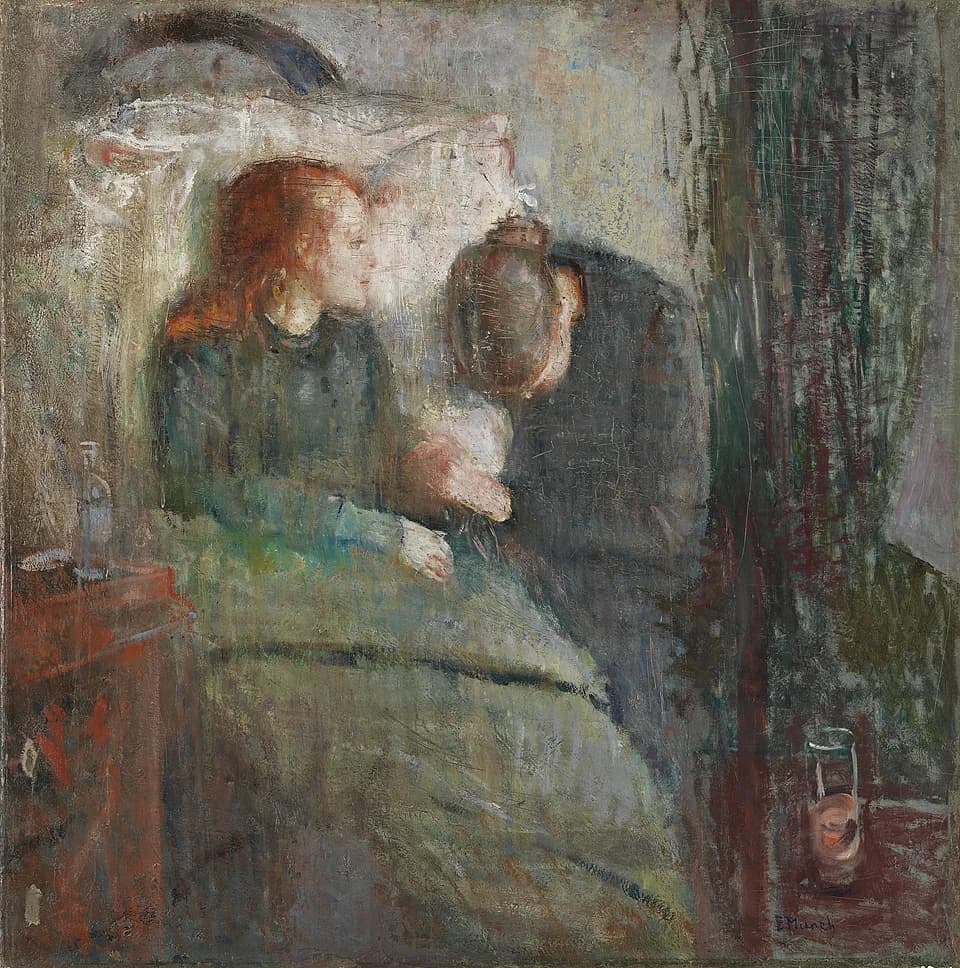
The painting measures 169 by 264 centimeters, a massive canvas that gave Munch room to demonstrate his command of light and atmosphere. Critics had attacked his earlier treatment of this subject, The Sick Child, as unfinished and unskilled. Spring was his answer, painted in a more accessible naturalist style that showcased his technical abilities without abandoning his deeply personal subject matter. The gamble worked. This painting helped secure him a state grant to study with Léon Bonnat in Paris.
Munch used a girl named Betzy Nielsen as his model, struck by her bloodless pallor and red hair as a powerful incarnation of Sophie. The National Gallery of Norway now holds this work, where it stands as perhaps Munch's last major attempt at Impressionist technique before he moved toward the raw expressionism of his most famous works.