Edvard Munch
Norwegian·1863–1944
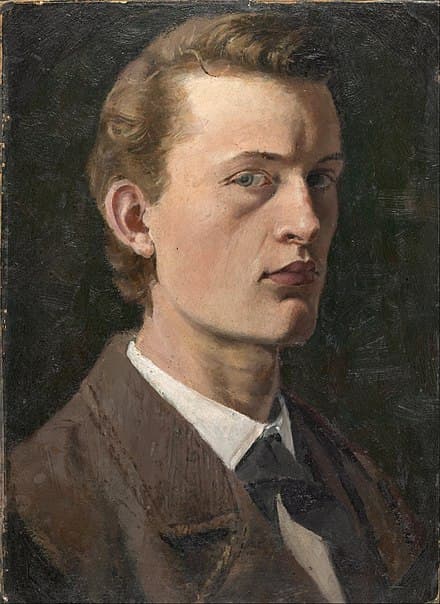
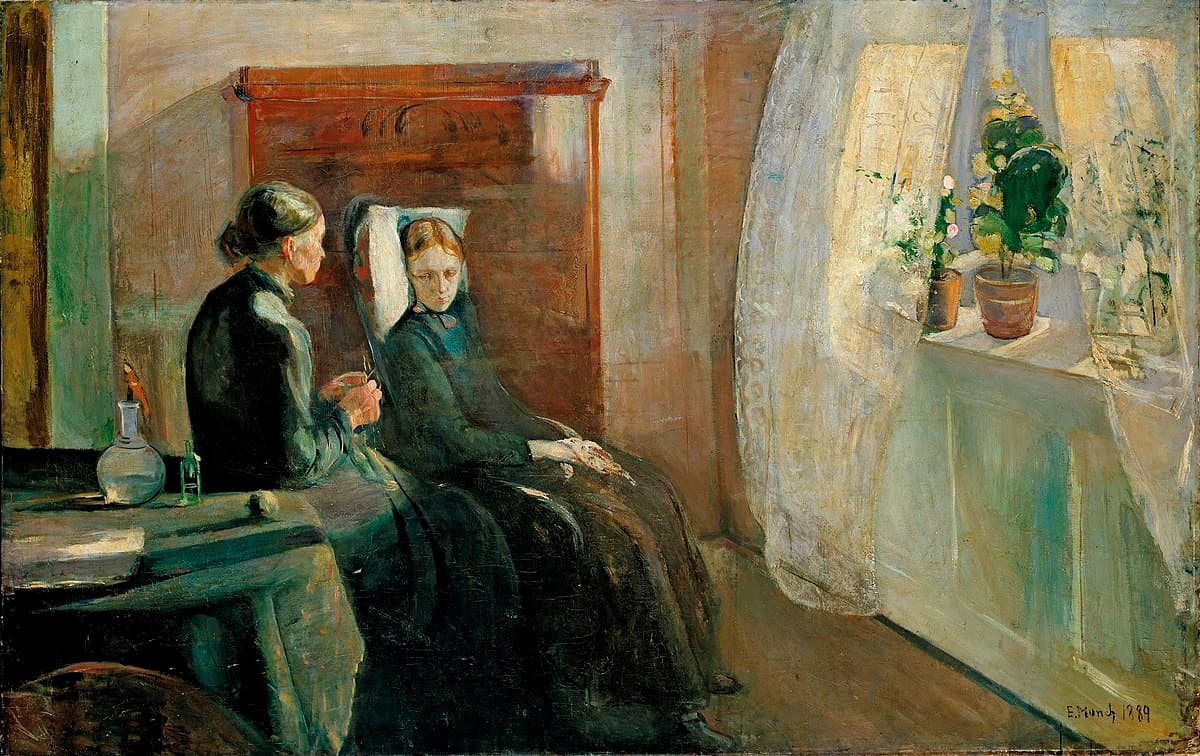
Edvard Munch was born on December 12, 1863, in Ådalsbruk, Norway, the son of a military doctor whose religious fervor bordered on the morbid. Tuberculosis took his mother in 1868, when Edvard was five, and his favorite sister Sophie to the same disease in 1877, at fifteen. A third sibling, Laura, developed mental illness early in life. Munch later wrote that "the angels of fear, sorrow, and death stood by my side since the day I was born," and that early loss shaped nearly everything he painted afterward.
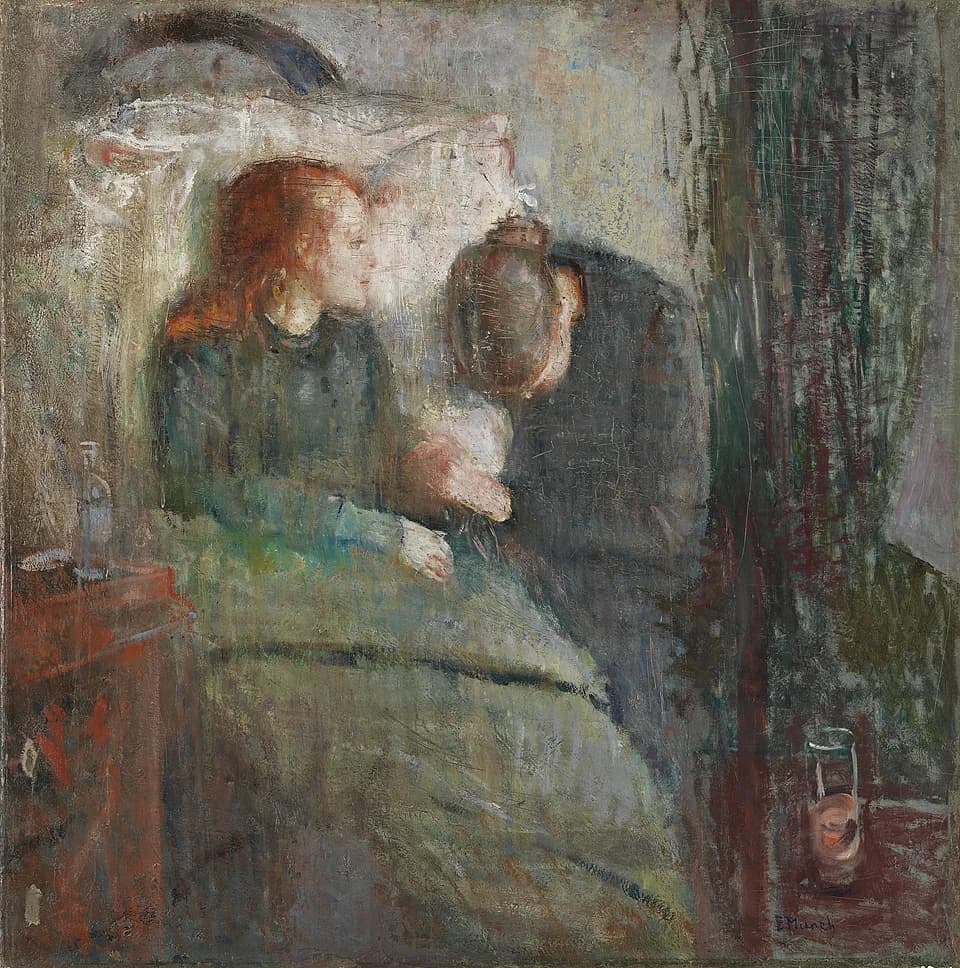
He briefly studied engineering before entering the Royal School of Art and Design in Kristiania (now Oslo) in 1881. There he fell in with the Kristiania Bohème, a circle of nihilists led by the writer Hans Jæger, who argued that art should record inner feeling rather than the visible world. Munch called this "soul painting," and his 1885-86 canvas The Sick Child, built from memories of his sister's death, was his first attempt at it. He scraped the paint down and reworked the surface obsessively, and critics and family alike found the result unfinished and disturbing.
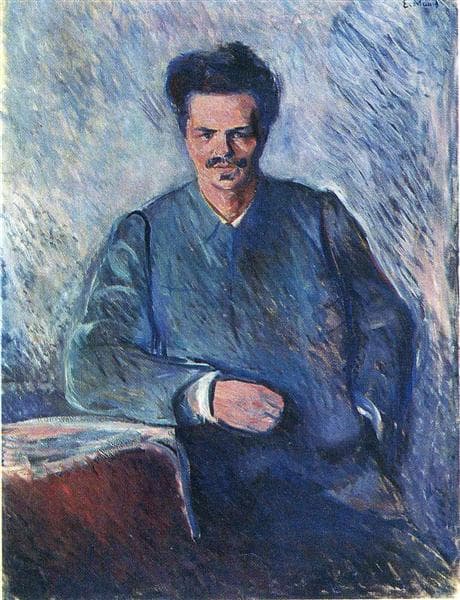
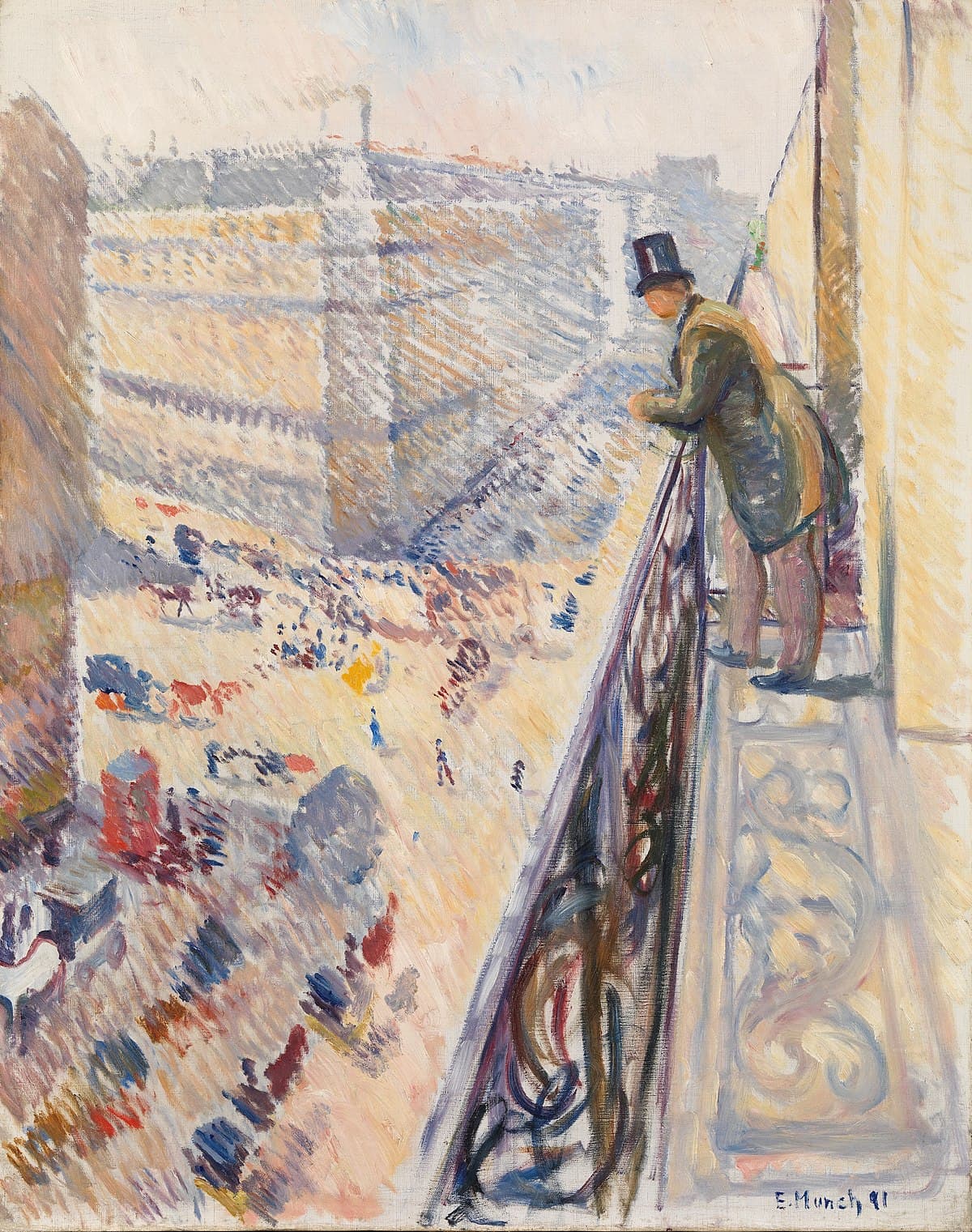
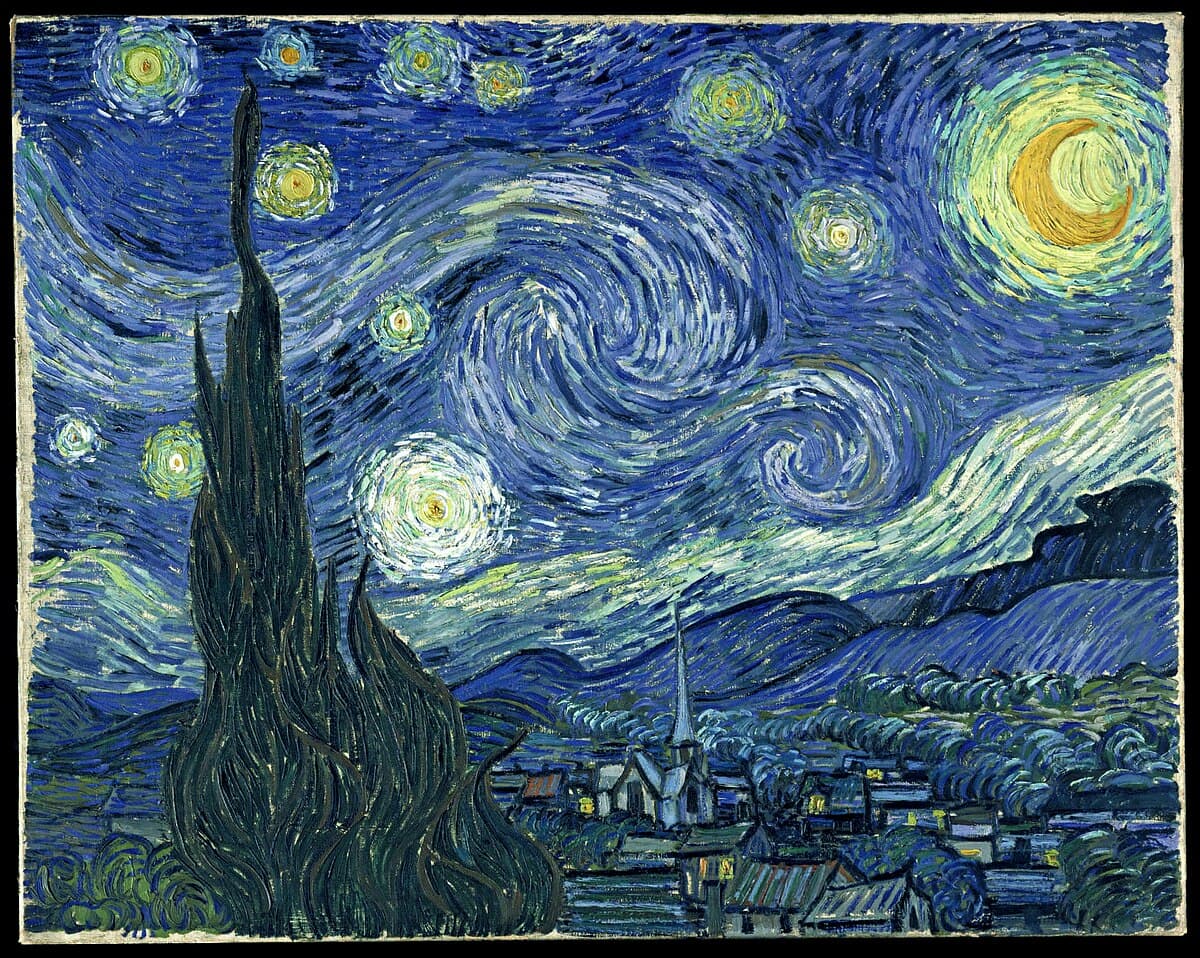
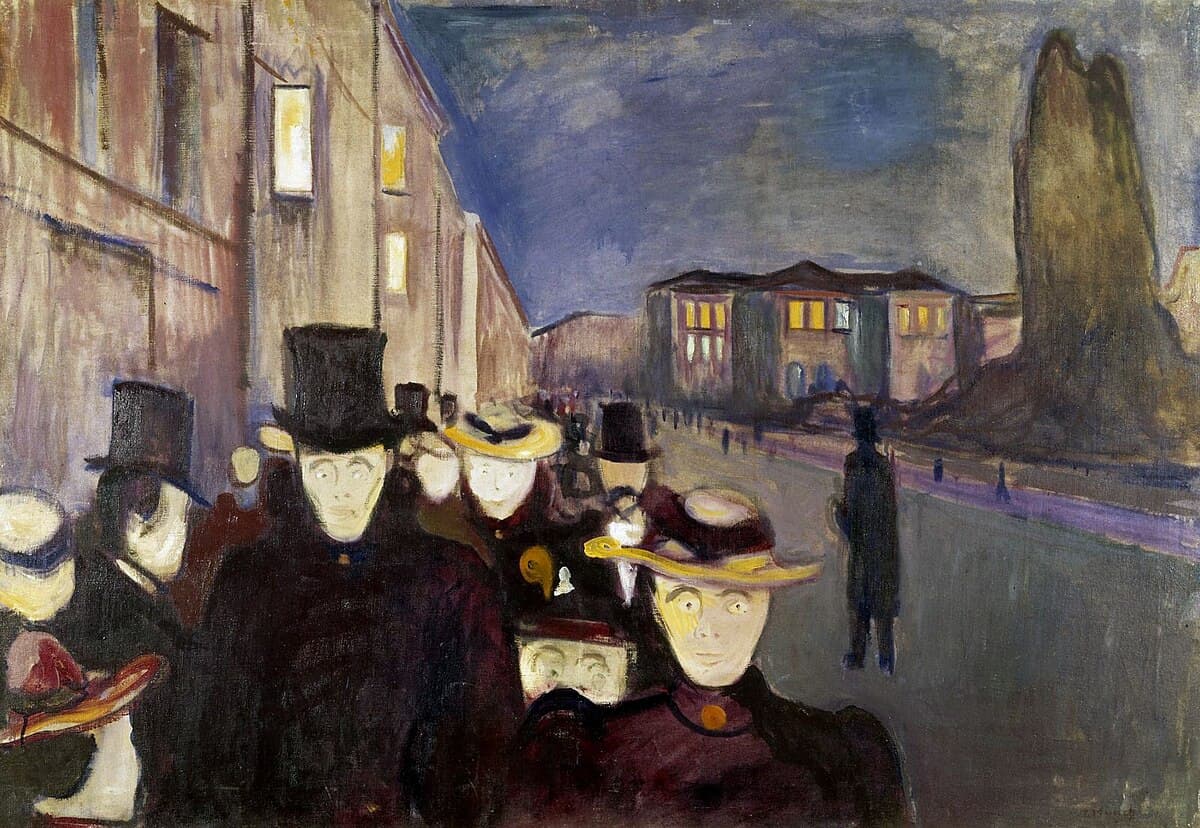
A state scholarship sent him to Paris in 1889 to study under Léon Bonnat, but he learned far more from Gauguin, Van Gogh, and Toulouse-Lautrec than from his official teacher. His father died that December, leaving Munch responsible for the family's finances and pushing him further into depression. He settled in Berlin in 1892, where an exhibition of his work caused enough uproar to close within a week, an episode the local press called "the Munch Affair." There, in the company of the playwright August Strindberg and other Scandinavian expatriates, he began sketching out a linked series of paintings he called the Frieze of Life, tracking love, jealousy, fear, and death through recurring motifs.
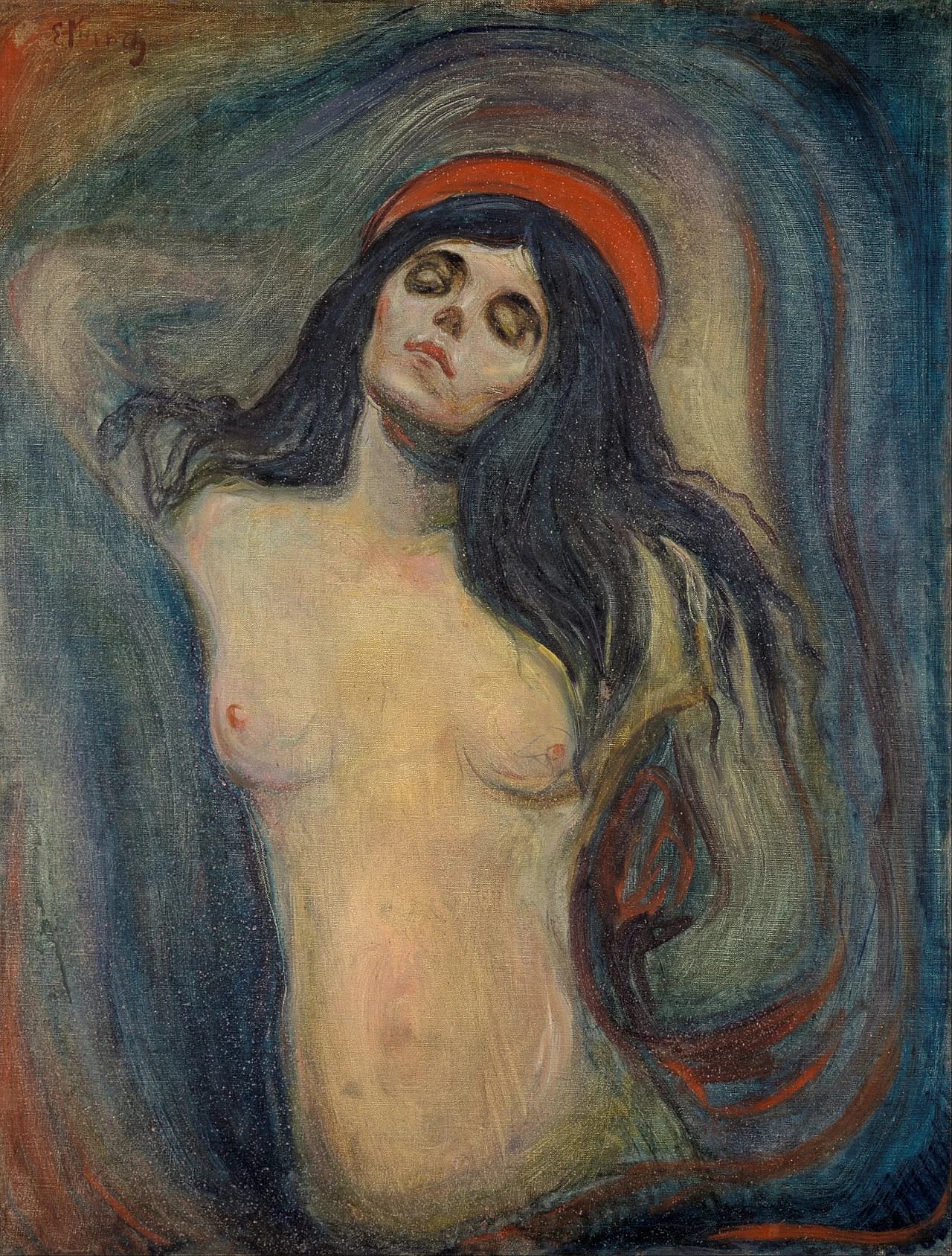
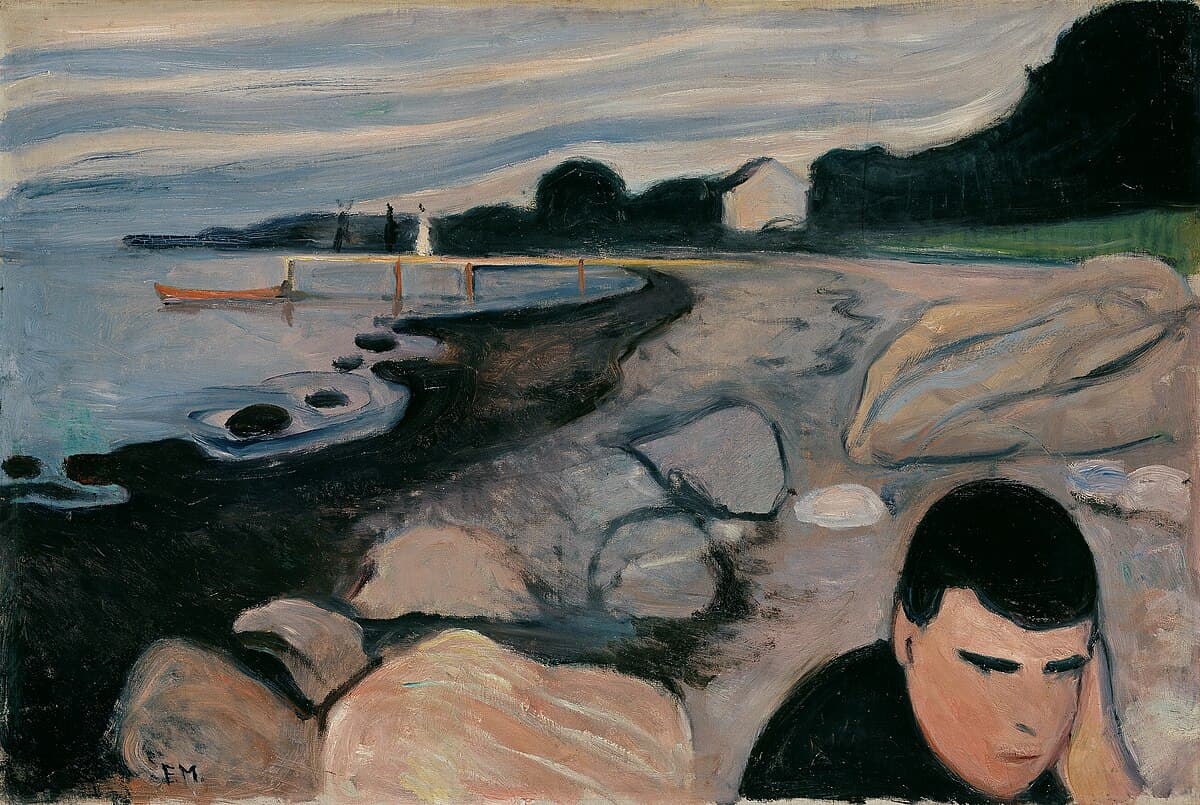
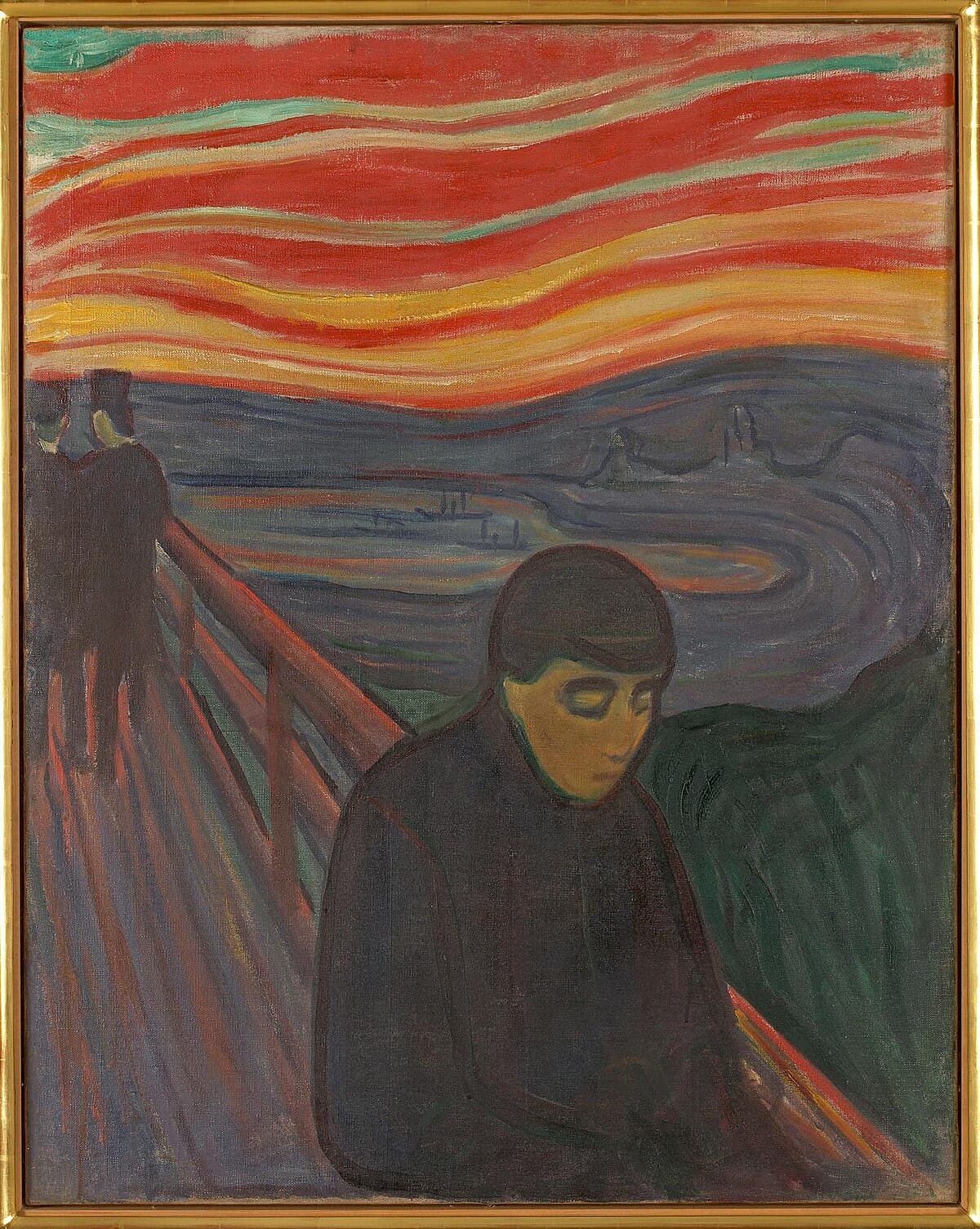
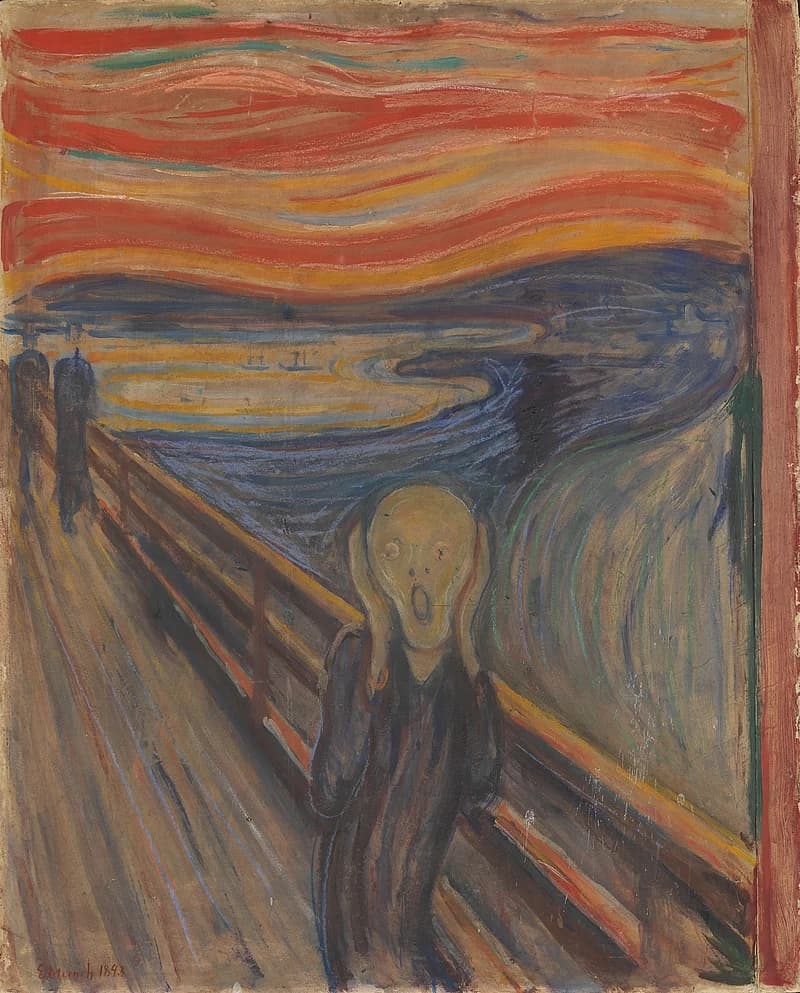
The Frieze eventually included Madonna, Anxiety, and Melancholy, paintings that use color and distorted line to make emotion visible rather than describe it. Its best-known image, The Scream, came from a walk Munch took near Kristiania when the sky, he said, "turned as red as blood" and he felt nature let out an endless scream. He made four versions between 1893 and 1910, and it has since become one of the most reproduced images in art history.
Munch's personal life stayed turbulent well into his forties. A relationship with Tulla Larsen collapsed in 1902 after a struggle over a revolver left him with an injured hand, and he channeled the fallout into paintings of jealousy and betrayal for years afterward. By 1908, heavy drinking and mounting anxiety brought him to a breakdown severe enough to require eight months of hospital treatment in Copenhagen. He came back to Norway calmer and steadier, and his palette brightened noticeably; the Norwegian public, slow to embrace him, finally began buying his work.
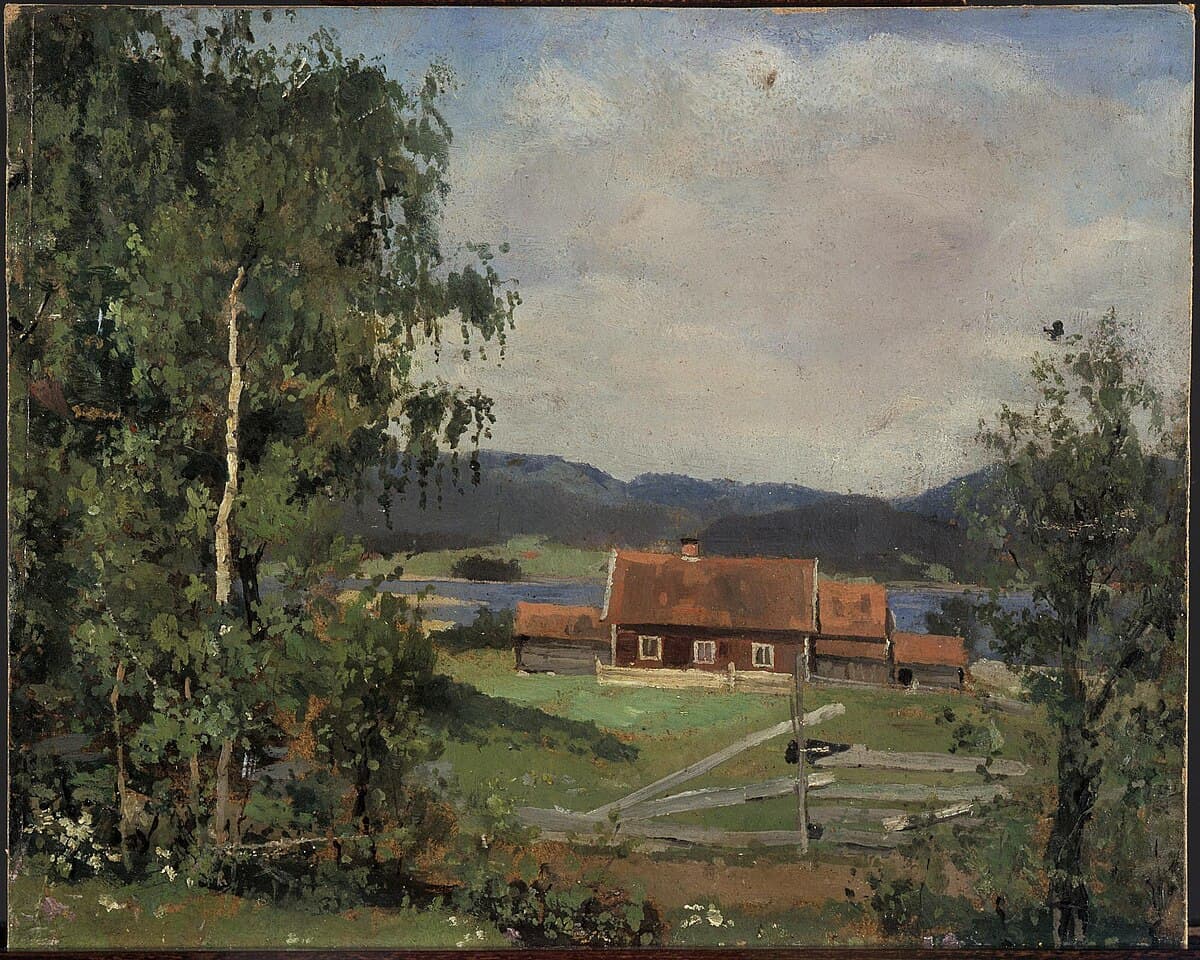
Between 1911 and 1916, Munch completed his largest public commission, a set of murals for the ceremonial hall at the University of Oslo, and spent his later decades largely alone at his estate outside the city, painting farm scenes and self-portraits. Nazi Germany labeled his work "degenerate" and pulled dozens of his paintings from German museums in the 1930s, and when Germany occupied Norway in 1940, Munch, by then in his late seventies, lived in quiet fear of confiscation. He died at home on January 23, 1944, having caught a chill while watching a nearby explosion the previous winter. He left his estate, thousands of paintings, drawings, and prints, to the city of Oslo, which now shows the bulk of the collection at the Munch Museum. Earlier works remain at the National Gallery in Oslo.