Wikimedia Commons • Public Domain
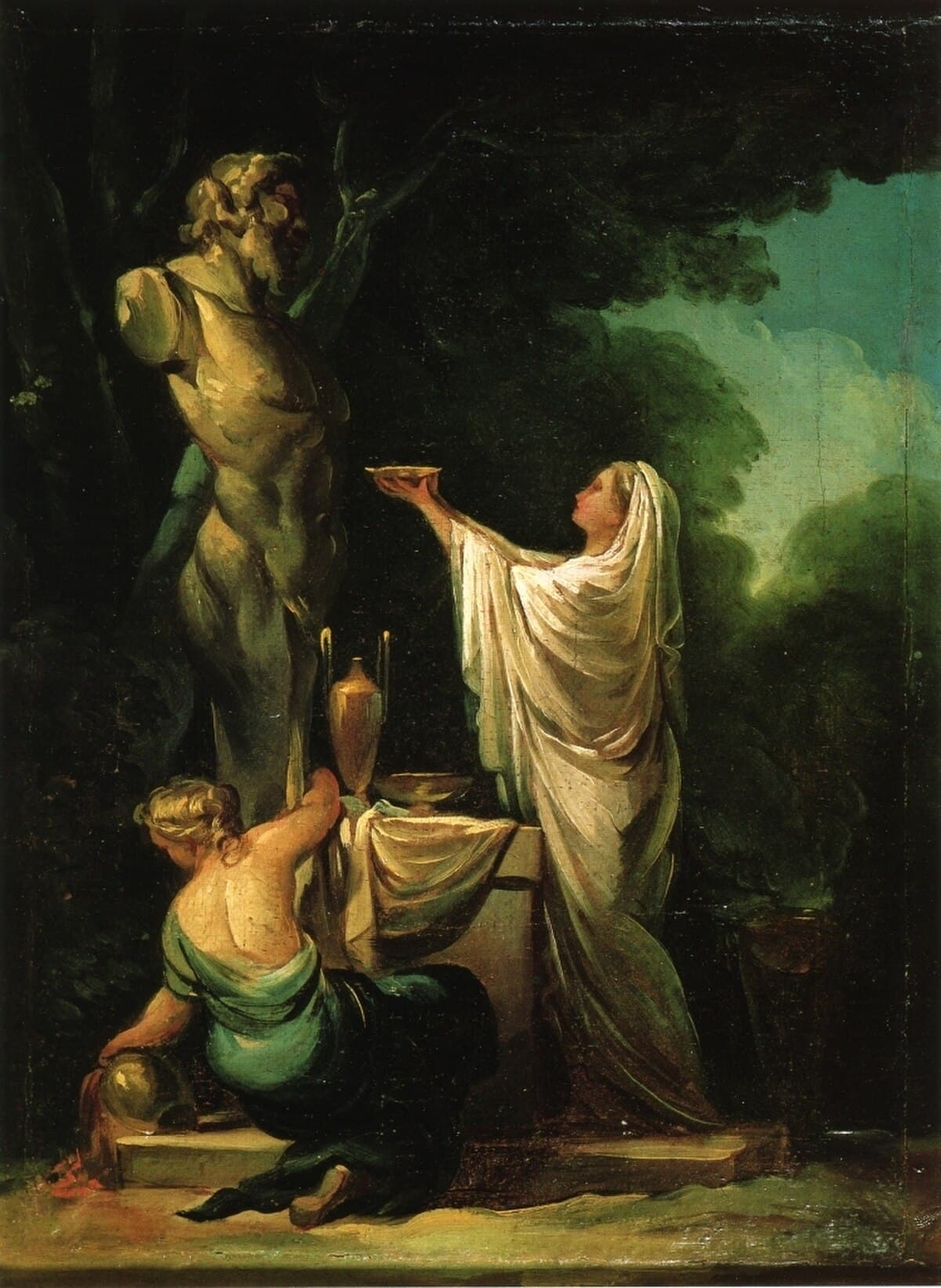
The Sacrifice to Priapus
Artwork Details
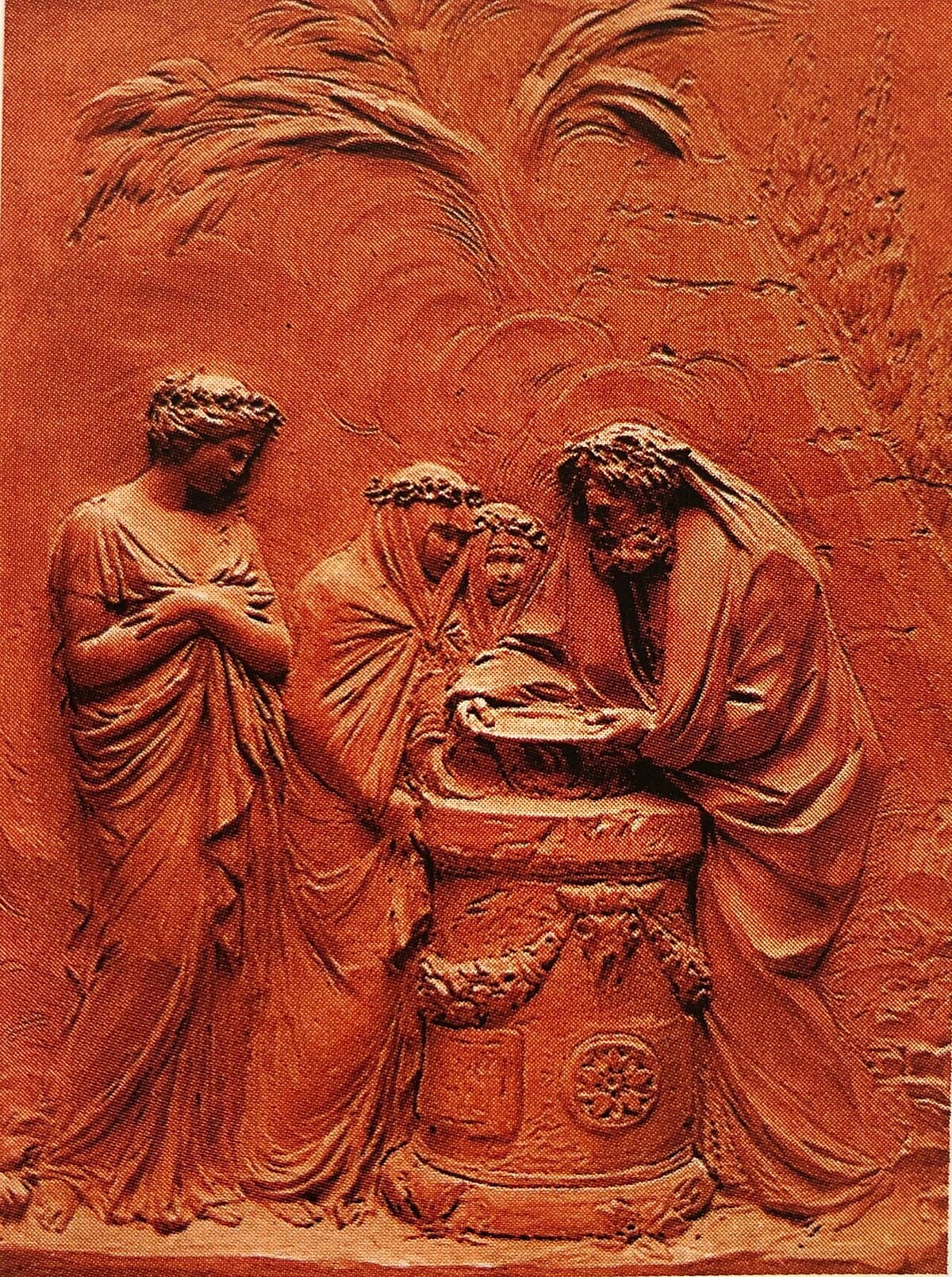
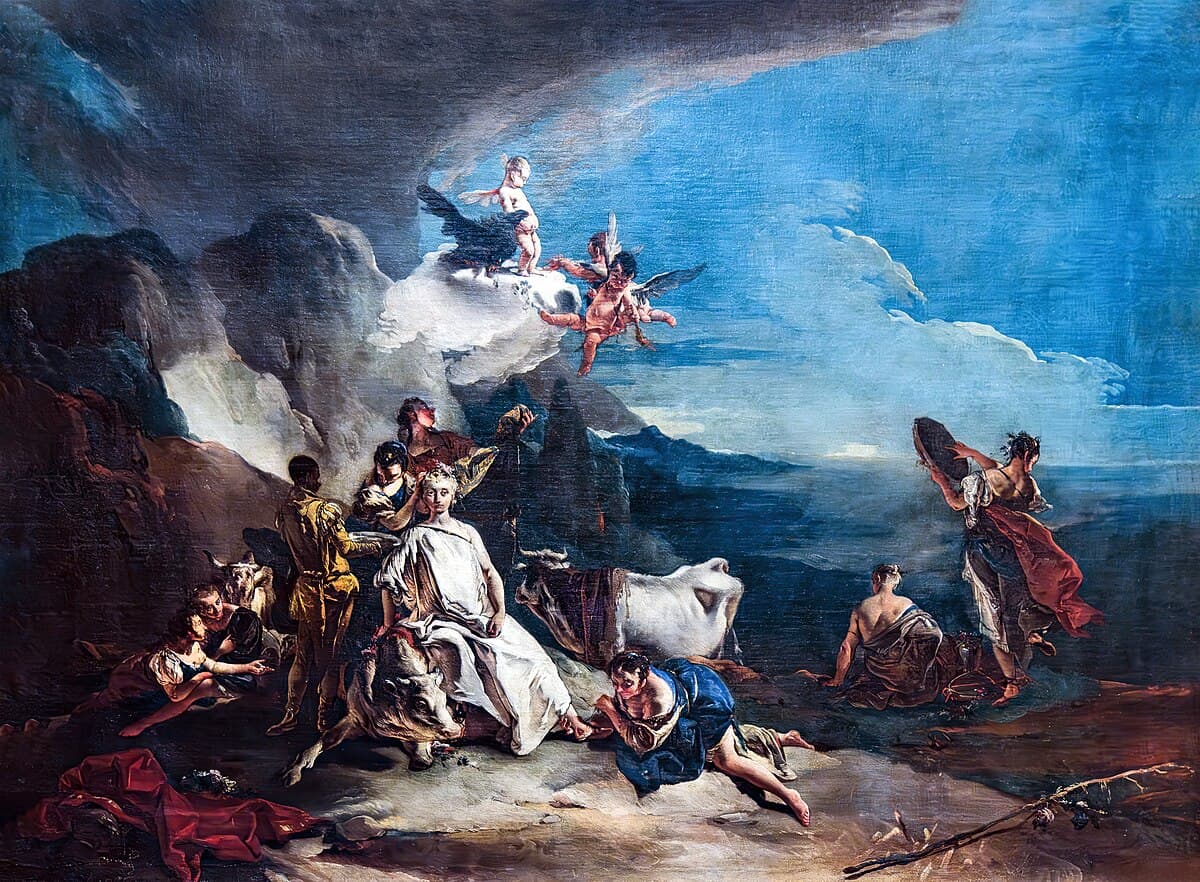
Francisco Goya painted The Sacrifice to Priapus around 1771, early in his career when he was designing tapestry cartoons for the Spanish royal factory. The subject depicts worshippers making offerings to Priapus, the ancient Greco-Roman god of fertility and gardens. The scene glows with the Rococo lightness and bright colors that characterized Goya's work before his later turn toward darkness.
Mythological subjects like this were common decorative choices for aristocratic interiors. Goya treats the pagan fertility theme with playful elegance rather than moral gravity, appropriate for tapestries meant to brighten palace rooms. The figures arrange themselves in graceful groupings, the landscape opens into atmospheric distance, and nothing hints at the disturbing visions that would later emerge from his brush.
This early work shows Goya absorbing the international Rococo style before developing his more personal manner. The career trajectory from charming mythological decorations to the terrifying Black Paintings represents one of art history's most dramatic transformations. The painting remains in a private collection, less accessible than Goya's major works in public museums but valuable for understanding the origins of an artist who would become Spain's most influential painter.