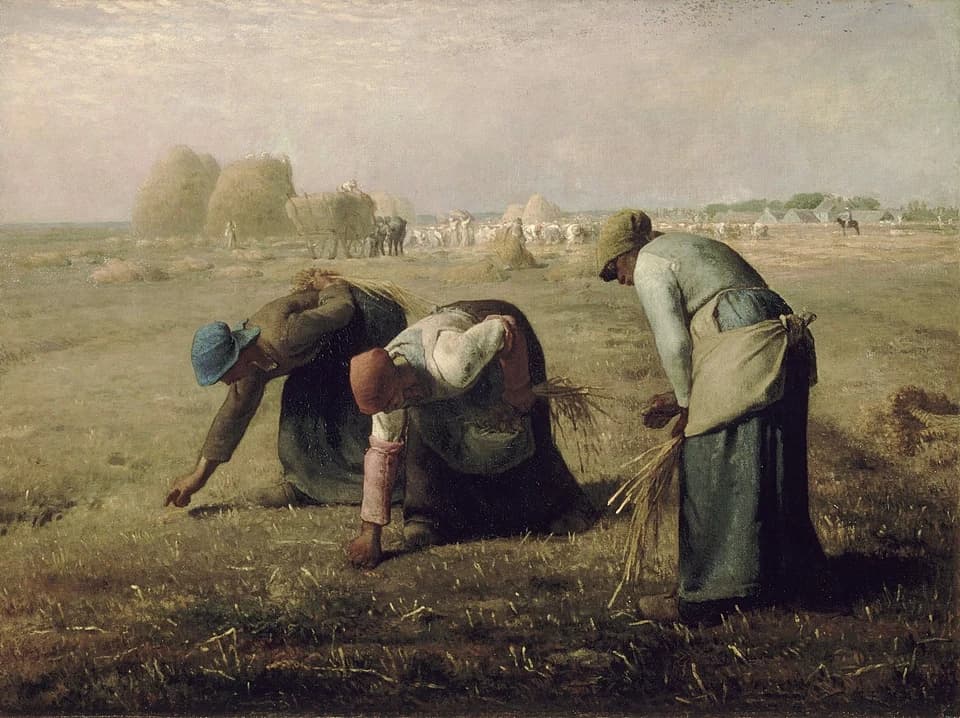
The Gleaners
by Jean-François Millet, 1857
Artwork Details
Details
- Year
- 1857
- Medium
- Oil on canvas
- Size
- 83.5 cm × 110 cm
Working in oil on canvas, Jean-François Millet painted this scene of rural labor in 1857, showing three peasant women gathering leftover grain after the harvest. Gleaning was a legal right that allowed the poor to collect whatever remained in the fields after landowners had taken their share. The women bend low to the ground, their faces hidden, their worn clothing signaling their poverty.
When exhibited at the Paris Salon, the painting provoked strong reactions. Some critics saw it as a dignified tribute to honest labor, while others viewed it as dangerously political, sympathizing with the rural poor during a time of social unrest. The contrast between the workers in the foreground and the abundant harvest visible in the distance makes the class divide unmistakable. Millet grew up on a farm in Normandy and brought genuine understanding to his depictions of country and farm life.
The painting now hangs in the Musée d'Orsay in Paris, where it remains one of the most recognized images of 19th-century French art.