The Raft of the Medusa
by Théodore Géricault, 1819
Artwork Details
Details
- Year
- 1819
- Medium
- Oil on canvas
- Size
- 491 cm × 716 cm
- Gallery
- Romanticism Gallery
Find It In The Museum
Romanticism Gallery
Louvre, Paris, Paris
Part of the permanent collection
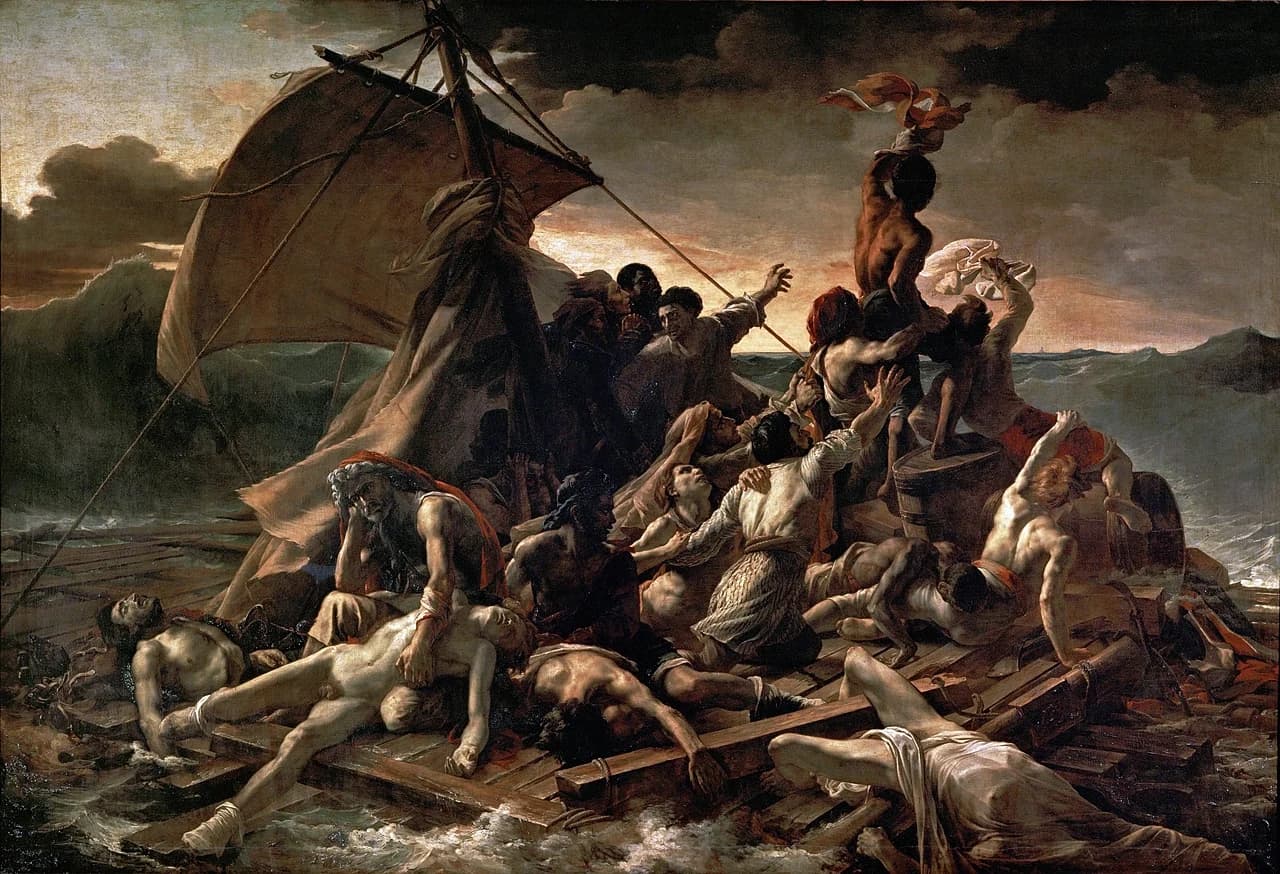
Théodore Géricault painted The Raft of the Medusa in 1818-1819, depicting survivors of the French naval frigate Méduse, which ran aground off Mauritania in 1816. At least 150 people were set adrift on a makeshift raft. After 13 days of starvation, dehydration, and cannibalism, only 15 remained alive. The scandal was political: the incompetent captain had gotten his post through government connections.
Géricault researched obsessively. He interviewed survivors, built a scale model of the raft, visited morgues to study flesh tones of the dying. The resulting canvas is enormous: 491 by 716 centimeters, over 16 feet wide. Bodies pile across the tilted raft. One man waves cloth at a distant ship on the horizon.
Critics at the 1819 Salon were divided. Some called it a "pile of corpses." Others recognized its power. Géricault died in 1824 at age 32, and the Louvre purchased the painting from his heirs. It remains one of the most powerful images in Romantic art, a painting that took a recent atrocity and gave it the scale of history.
Historical Significance
A breakthrough in French Romantic painting that scandalized audiences with its political criticism and unflinching depiction of human suffering.