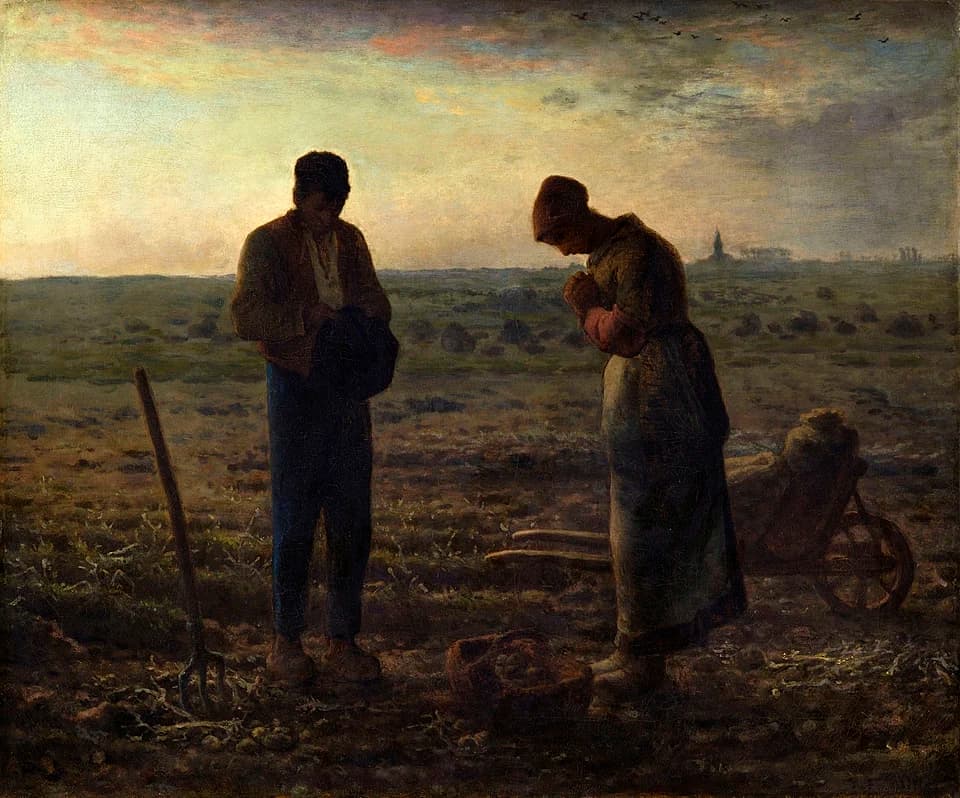
The Angelus
by Jean-François Millet, 1859
Artwork Details
Details
- Year
- 1859
- Medium
- Oil on canvas
- Size
- 55.5 cm × 66 cm
Jean-François Millet painted The Angelus between 1857 and 1859, depicting two peasants pausing in a potato field at sunset. The distant church bell has rung, calling them to prayer. They bow their heads over a basket of their harvest. Nothing more dramatic than a daily ritual of faith and labor.
The painting's simplicity proved enormously popular. After Millet's death, prices for his work skyrocketed. In 1889, the Louvre tried to buy The Angelus, sparking a wave of French patriotism when it risked leaving the country. A madman attacked and slashed it in 1932. Salvador Dalí became obsessed with the image, requesting that the Louvre X-ray the painting. They found a geometric shape at the couple's feet that Dalí interpreted as a child's coffin.
The canvas measures 55.5 by 66 centimeters, small for such an iconic work. It hangs at the Musée d'Orsay in Paris. Millet said the image came from childhood memories of his grandmother making him stop work when the church bell rang to pray for the dead.