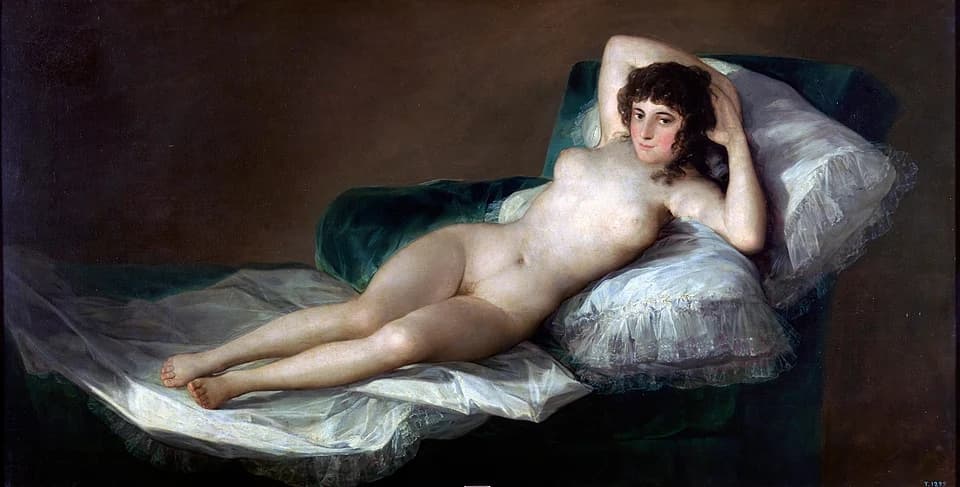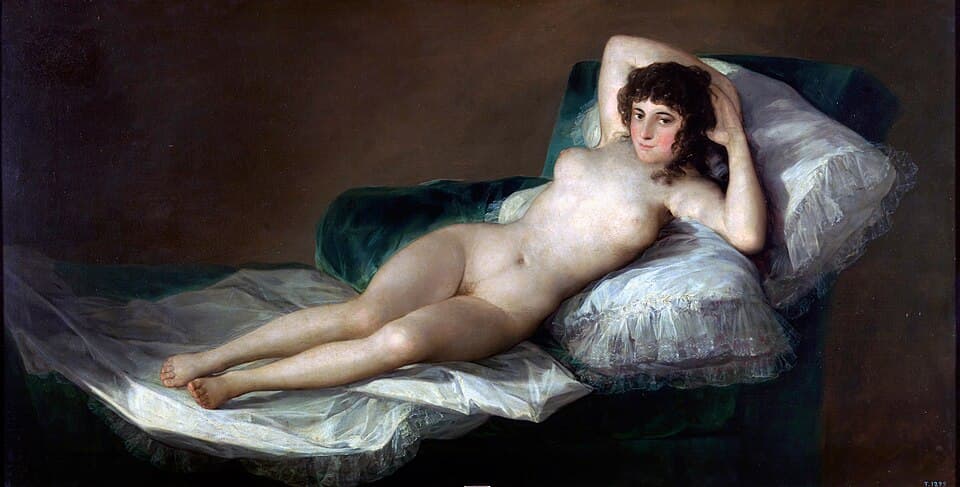
The Naked Maja
by Francisco Goya, 1800
StyleRomanticism
Artwork Details
Details
- Year
- 1800
- Medium
- Oil on canvas
- Size
- 97 cm × 190 cm (38.2 × 74.8 in)
Cite or Embed This Work
APA · MLA · Chicago1-click academic citation and embeddable “On View” museum badge for articles, syllabi, and research.
Francisco Goya painted The Naked Maja around 1797-1800, creating one of the first Western paintings to show pubic hair on a female nude. The young woman reclines on cushions, looking directly at the viewer with neither shame nor coyness. Her identity remains debated: possibly the Duchess of Alba, or a professional model.
The painting scandalized the Spanish Inquisition. Goya was called to explain himself in 1815, though the charges were eventually dropped. The frank, unapologetic nudity broke from the tradition of mythological pretexts that justified nude paintings. This wasn't Venus or a nymph. This was simply a naked woman.
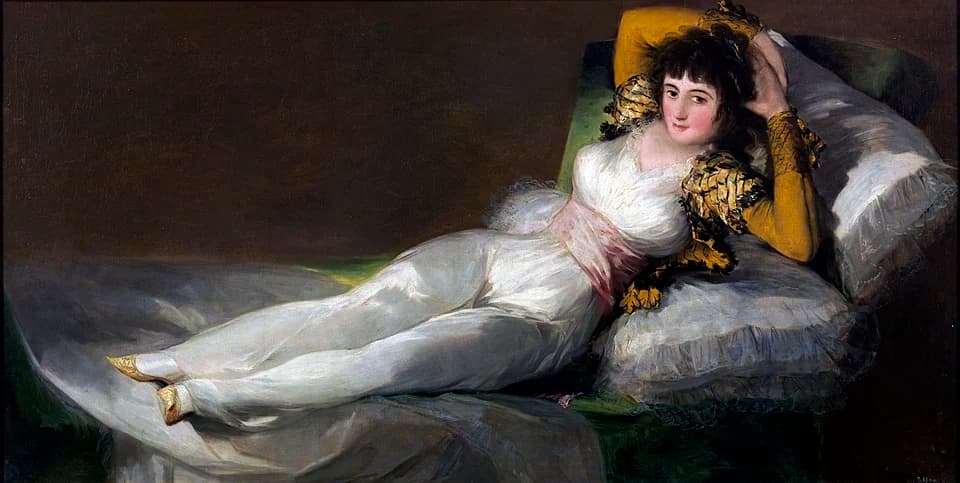
The Prado displays this painting alongside its clothed counterpart. Together they raise questions about revelation and concealment, desire and propriety.