The Jewish Bride
by Rembrandt van Rijn, 1667
Artwork Details
Details
- Year
- 1667
- Medium
- Oil on canvas
- Size
- 121.5 cm × 166.5 cm
Cite or Embed This Work
APA · MLA · Chicago1-click academic citation and embeddable “On View” museum badge for articles, syllabi, and research.
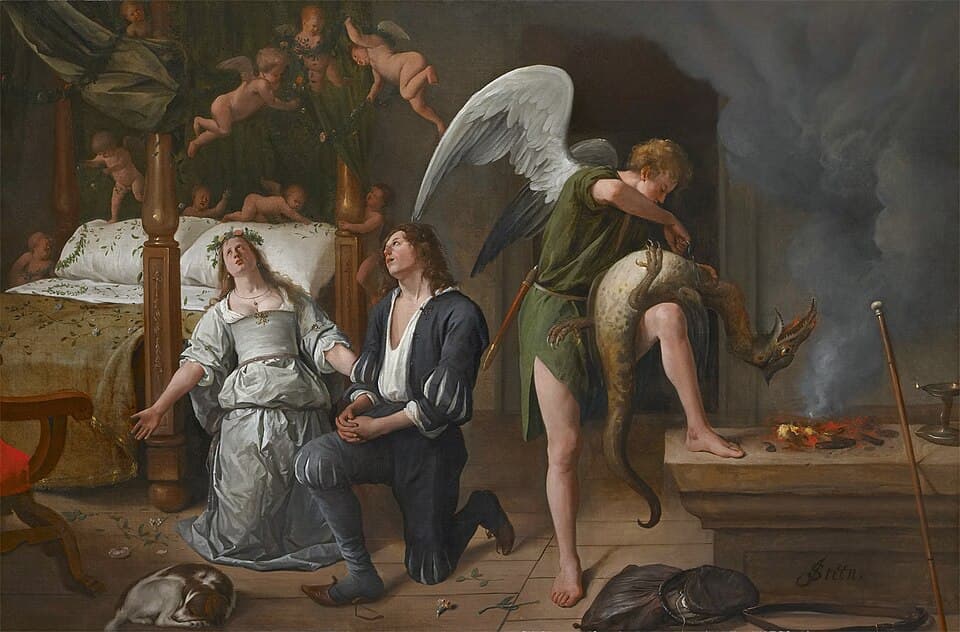
Rembrandt painted The Jewish Bride around 1665-1669, though neither the title nor the subject is certain. A 19th-century collector decided it showed a Jewish father bestowing a necklace on his wedding-day daughter. Modern scholars prefer reading it as Isaac and Rebecca from the Old Testament, posing as siblings to escape danger but revealed as lovers by their tender embrace.
The painting's emotional power lies in a simple gesture. The man's hand rests gently on the woman's chest; her hand covers his. Rembrandt built up the golden and red fabric with thick impasto, scratching into wet paint with his brush handle. The faces glow with soft light against a neutral background.
Vincent van Gogh wept before this painting. He wrote that he would give ten years of his life to sit in front of it for two weeks with only dry bread to eat. The canvas measures 121.5 by 166.5 centimeters and hangs at the Rijksmuseum in Amsterdam, one of the museum's most cherished works.